
Why a Winding Career Path Can Be a Design Superpower
Design careers rarely follow the clean arc that portfolio reviews and LinkedIn profiles suggest. Many of us arrive in product design after years in entirely different worlds — service, retail, construction, or firefighting — and initially treat those years as a detour delaying a “real” career. But those jobs build instincts and habits that design school can’t teach. When recognized and examined, they become an advantage that shapes how you read clients, handle pressure, and collaborate.
Experience Rooted in Pressure
The skills built in high-stakes environments stick with you. Years spent in fine dining, for example, are high-stakes training in adaptability, anticipation, and grace under pressure. They create muscle memory: ways of thinking, reacting, and solving problems that still appear in design work daily. The urgency, the people skills, the instinct to adapt — these become part of how you work.
But those same instincts can trip you up if left unexamined. Speed can override thoughtfulness. Constant anticipation can lead to over-complication. The pressure to polish can push you to over-deliver too soon. Embracing your past also means examining it — recognizing when old habits serve you and when they don’t. With reflection, those experiences become your greatest asset.
Reading the Room
In a restaurant, reading a customer’s mood starts the moment they sit down. Subtle cues — a delay being seated, menus set aside — signal frustration or a desire to linger. Adapting to those signals becomes instinctual through countless repetitions.
The same dynamics apply to clients in product design. The cues differ, but they’re there: project specifics, facial expressions, tone of voice, lack of engagement, or “word salad” feedback. Spotting these signals early lets you ask better questions, challenge assumptions, or offer alternate approaches before misalignment grows.
However, jumping in too early, driven by anticipation instincts, can over-complicate the design process or solve problems that haven’t been voiced. It can also step on others’ roles. The key is learning to pause, check in with the team, and trust the process.
Applying This Today
- Guide direction with focused options. Share 2–3 meaningful variations early — style tiles or small component explorations — to shape the conversation without overwhelming.
- Flag misalignment fast. If something feels off, raise it early and loop in the right people.
- Be intentional about formats. Choose workshop and deliverable formats based on what helps the client open up and share.
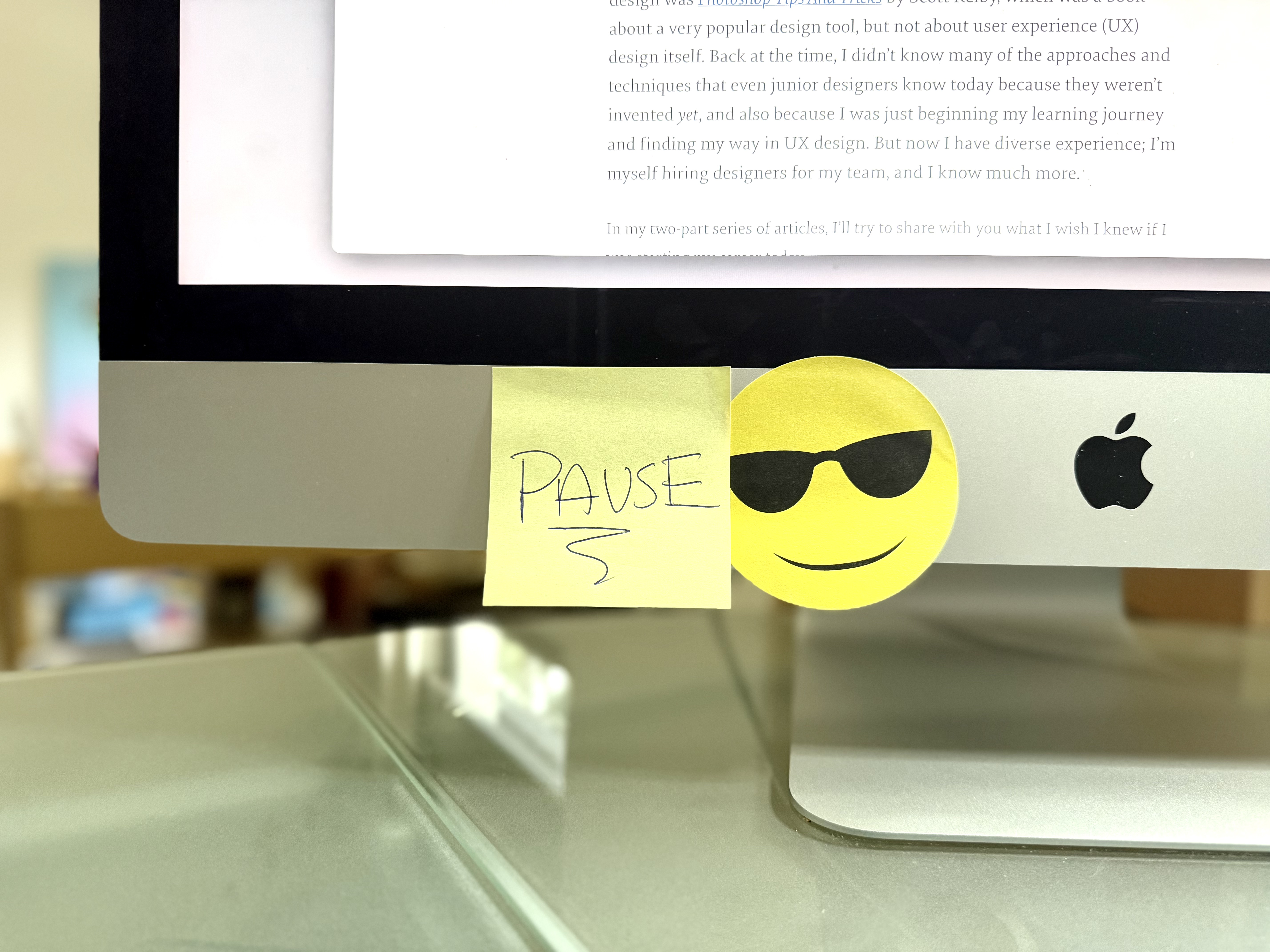
- Pause before jumping in. A sticky note reading “Pause” can help slow down and check assumptions.
Speed Versus Intentionality
In fine dining, multitasking was survival. Every meal required precise timing — a soufflé takes exactly 45 minutes, no more, no less. If guests lingered or rushed, the soufflé risked collapse. Managing that meant small strategies: an amuse-bouche to buy time, a complimentary drink to slow the pace. The result was constant real-time adjustment to keep everything aligned while chaos loomed.
Product design brings layered pressure rather than immediate urgency. Designers juggle multiple projects, overlapping timelines, and evolving stakeholder expectations. That restaurant instinct for managing many plates is useful — but the hustle also hardwired an association of speed with success.
In design, that’s a trap. Speed can undermine depth; jumping to a solution can mean missing the real problem. Staying in motion isn’t always the goal. Design invites experimentation and course correction. Quieting the internal timer and leaning into a slower, more intentional pace yields better work.
Applying This Today
- Make space for inspiration. Schedule untasked exploration — magazines, bookstores, architecture, galleries — before designing.
- Build in pause points. Plan breaks between design rounds and schedule reviews after a weekend gap to return with fresh eyes.
- Stay open to starting over. Let go of work that isn’t working, even full comps; a fresh start often leads to better ideas.
Presentation Matters
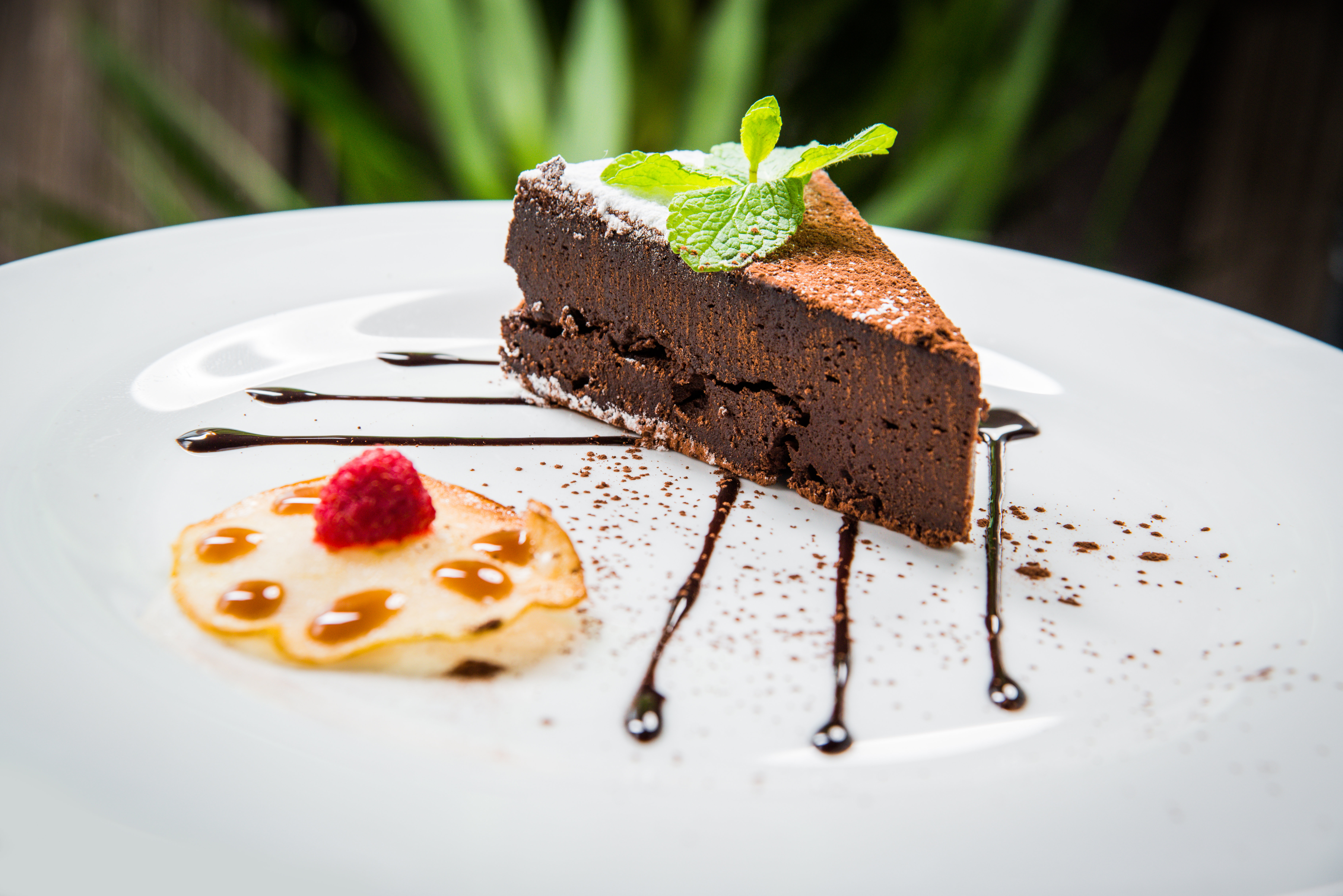
In fine dining, presentation is everything: the mint leaf placed just so, the sauce cascading across the plate. The ritual engages every sense — the smell of truffles, the choreography of four servers setting dishes down at once to create a collective “wow.” That experience directly shapes how diners feel and how generously they spend.
Design presentations carry the same power. Introducing a homepage design can feel mechanical or magical depending entirely on how you frame it. Clear framing and confident storytelling shape how the work is received. Explain the why behind choices, connect patterns to the brand’s identity, and highlight how users will engage with each section. Presentation helps clients connect with the work, understand its value, and get excited to share it.
The pressure to present a pixel-perfect comp that “wows” immediately is intense. But sometimes an excellent presentation isn’t about perfection — it’s about pacing, storytelling, and allowing the audience to see themselves in the work.
Applying This Today
- Frame the story first. Lead with the “why” behind the work before showing the “what.”
- Keep presentations polished. Share fewer, more intentional concepts to reduce distractions and keep focus.
- Skip the jargon. Use clear, relatable terms: say “section” instead of “component,” or “repeatable element” instead of “pattern.”
- Bring designs to life. Use motion, prototypes, and real content to add clarity and energy.
Collaboration Over Ego
Fine dining runs on trust. Hostess, bartender, chefs, bussers, dishwashers — each role is critical, and without one, everything falls apart. There’s no question of doing it alone. Teamwork means temporarily stepping outside your role to buss a table or jump behind the dishwasher. Everyone relies on everyone else.
Product design makes it easier to slip into a silo. Working independently feels natural, but it risks reinforcing assumptions. Great design thrives on intentional collaboration and shared accountability. Joining a UX call even when not officially invited can provide critical insights long before wireframes exist, helping you ask better questions and make smarter assumptions.
The difference: in a restaurant, stepping in unannounced is helpful; in design, it can confuse roles. Collaboration isn’t about taking over but staying connected. Asking before helping, syncing instead of assuming, and treating handoffs as open communication threads rather than endings.
Applying This Today
- Stay involved after handoff. Check in during engineering and QA (quality assurance) to support implementation.
- Keep workshops flexible. Adjust structure based on client energy and decision-making style.
- Invite a fresh perspective. Bring in another designer near the end for polish or feedback.
- Capture intent visually. Document decisions clearly so downstream teams understand the nuance, not just the layout.
Pressure as a Design Skill
In a professional kitchen, pressure isn’t an occasional variable — it’s the environment. Service runs on tight timing, unforgiving expectations, and little patience for error. Staying composed under that load isn’t a personality trait; it’s a practiced skill. When orders back up or a plate comes back mid-rush, there’s no room for visible panic. The only way through is to pause, assess, delegate, and keep moving. In many cases, keeping the night on track came down to nothing more than clear thinking when everything around you is accelerating.
“This notion of problem solving and decision making is key to being a great designer. I think that we need to get really strong at problem identification and then prioritization. All designers are good problem solvers, but the really great designers are strong problem finders.”
— Jason Cyr, “How being a firefighter made me a better designer thinker”
Product design operates on the same principle. When deadlines compress, feedback conflicts, or priorities shift without warning, composure determines whether a project steadies or stalls. Being composed doesn’t mean staying passive; it means remaining adaptable without reacting impulsively. That state allows you to hold space for criticism, ask sharper questions, and keep momentum rather than feeding a spiral of chaos.
Reframing Critique and Perfection
A client who doesn’t connect with a design can feel like a personal rejection. It’s easy to internalize that and freeze. The more productive response is to stop, listen, and adjust course. In most cases, what reads as a flat rejection is actually discomfort with one small detail — something easily fixed once you identify it.
Restaurants treated perfection as the baseline, and the pressure was what produced the polish. Carrying that mindset straight into design creates two problems: overinvesting in flawless execution before the core problem is solved, or freezing entirely under critique. Unlearning that means accepting that first attempts don’t need to be right. Messy collaboration and iterative refinement are signs of healthy process, not failure.
Applying the Instincts Today
- Co-design live to break deadlock. When timelines are short and feedback keeps circling, working through the design together in real time is often the fastest way to get unstuck.
- Mine feedback for its root. Listen for what sits underneath the words, ask clarifying questions, and repeat back what you heard before taking action.
- Build in a pause. If you feel yourself getting reactive under stress, regroup before responding at all.
- Normalize iteration. Reframe revisions as forward motion rather than evidence of a failed attempt.
Owning the Background That Got You Here
The restaurant floor still shows up in dreams, but it no longer reads as the place where a career stalled — it’s where the instincts used daily were sharpened. If you entered design from another field, the same reframe is available. It helps to ask pointed questions about where your own past surfaces: When does a situation feel oddly calm to you while others start to panic? What felt like routine job duty then but functions as a superpower now? Which friction points expose instincts that are different — and possibly more precise — than your peers’? What kinds of group interactions feel easy that others find difficult? And which of your current strengths simply wouldn’t exist without that earlier life?
Once the patterns are visible, use them deliberately. Name the edge you carry. Talk about your non-linear background as an asset in intros, portfolio reviews, interviews, and retrospectives. When a project gets messy, lean on the mechanisms you already built. Trust those instincts — they were earned in real conditions. Just keep an eye on their limits. A strength becomes a liability when speed overrides thoughtfulness or decisiveness masks uncertainty. That awareness is what turns accumulated experience into a reliable tool rather than an automatic trigger.
Your past doesn’t need to look like anyone else’s. It just needs to teach you something.
“
Further Reading
- “If I Was Starting My Career Today: Thoughts After 15 Years Spent In UX Design” (Part One) and (Part Two), by Andrii Zhdan — A two-part series on common early-career design challenges and advice drawn from hiring experience.
- “Overcoming Imposter Syndrome By Developing Your Own Guiding Principles”, by Luis Ouriach — Guidance for building your own principles when a mentor isn’t available, so you can face critique meetings with more confidence.
- “Rediscovering The Joy Of Design”, by Pratik Joglekar — A philosophical look at reclaiming creative joy through mindfulness and introspection.
- “Lessons Learned As A Designer-Founder”, by Dave Feldman — Lessons from operating as a multidisciplinary designer-founder-CEO at an early-stage startup.
- “How Designers Should Ask For (And Receive) High-Quality Feedback”, by Andy Budd — How the framing of a request shapes the quality of the feedback you get from stakeholders.
- “How being a Firefighter made me a better Designer Thinker”, by Jason Cyr — How firefighting develops the ability to evaluate situations, make decisions, and formulate plans quickly under pressure.
- “Advice for making the most of an indirect career path to design”, by Heidi Meredith — A personal account of moving from an English Literature degree into design work.
Thanks to Sara Wachter-Boettcher for coaching that clarified both the writing and the direction of this piece, and to Lea Alcantara for modeling thoughtful creative leadership.