

Why UX Research Ethics Need More Than Good Intentions
UX research is foundational to designing useful products — as the Nielsen Norman Group puts it, “UX without user research is not UX.” But in many organizations, research isn’t confined to dedicated researchers. Designers run usability tests, product managers help analyze interview data, and developers sit in on sessions. Democratizing research this way builds empathy across teams, yet it also expands the surface area for poorly planned studies, misleading protocols, and uncomfortable or harmful participant experiences.
There’s a common assumption that UX research is inherently benign. Interviews are just conversations; usability tests are just observation. But the moment we ask people to share their time, opinions, and experiences, we take on obligations. Without intentional safeguards, we risk conducting research that takes advantage of vulnerable populations, causes distress, or produces unusable findings — an ethical failure even when no individual is visibly harmed.
Formal research disciplines learned this lesson only after repeated abuses over decades. Institutional Review Boards (IRBs) exist in academia because medical and psychological research produced real harm — withheld treatment, negative mental health outcomes, and eroded trust. Today’s UX teams would be naive to assume they have no equivalent risks.

The Blind Spots in Everyday UX Research
It’s easy to think your study is safe. Testing a banking concept or a new form workflow seems low-stakes. But ethics isn’t about the surface topic — it’s about how the study is designed, who is recruited, and what participants are led to believe.
Defining the Ethical Baseline
Ethics here means more than following local laws. In the context of UX research, ethical practice has three obligations:
- Treat study participants with respect and compassion.
- Honor the trust and resources that stakeholders and colleagues put in the work.
- Follow the established norms of social science research with human subjects — including defining protocols and obtaining informed consent.
When a study fails on any of these fronts, it usually falls into one of six common problem areas:
- Recruiting vulnerable populations without justification.
- Misleading participants or using deception.
- Accidentally steering into sensitive topics or triggering extreme emotional responses.
- Creating false expectations.
- Collecting data with no clear path to interpretation or use.
- Misusing or mishandling participant information.
Vulnerable Populations Need a Higher Bar
Some groups are categorically harder to protect in research. The Children’s Hospital of Philadelphia IRB defines these as people who are ill, ethnic or racial minorities, non-English speakers, children, the economically disadvantaged, and adults with diminished capacity. Its guidance is direct: special justification is required to include them as subjects, and measures to protect their rights and welfare must be strictly applied.
That standard comes from medical research, but nothing about UX research exempts it. If you plan to recruit children, patients, the homeless, or prisoners — or anyone who can’t fully consent on their own — you need a compelling reason and strong protections in place. For most teams, the right move is to not go there without experienced oversight.

Deception Can Creep Into Even Simple Studies
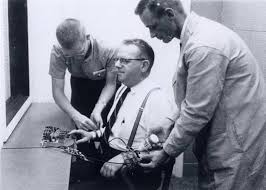
Psychology has a long and uneasy history with deception, and Milgram’s shock experiment remains the cautionary example. Participants believed they were administering real electric shocks to another person; the distress they showed during the experiment was real, and no review board was ever consulted. Few UX studies aim that high, but deception doesn’t have to be theatrical to be harmful.
It’s more often quiet: not fully explaining the purpose of the study, withholding the sponsoring company, showing concept designs that will likely never ship, or implying the participant’s input will shape a roadmap when nothing is decided. Before any session, the product team should be able to answer these questions together and document their reasoning:
- What role is the participant being asked to play, and why?
- Can the research purpose be explained honestly and clearly?
- What expectations is participation creating?
- Could the study cause mental stress — and if so, what’s the plan?
- How open will we be about product timelines, sponsors, and prototypes?
- Does the participant group logically relate to the research topic?
- How might compensation skew participation or responses?
- If a participant says stop — what happens? (The only right answer is: the session stops immediately.)
Handling the Unexpected: Sensitive Topics and Intense Emotions
Research can turn volatile even when the topic is neutral. A participant might arrive with strong grievances against the company you’re working for — a user whose power was cut off isn’t going to be calm about answering billing questions for a study, and no amount of carefully written protocol prepares you for that moment if you’ve never practiced it.
Political topics are a more predictable minefield. Recruiting for a voter education platform guarantees participants with strong opinions and emotional responses. The design of the study itself doesn’t excuse researchers from preparing for what happens when conversation becomes heated.
The right preparation begins before sessions. Teams should role-play common scenarios and rehearse responses to emotional outbursts. During research, participants need time to recover, and researchers need genuine empathy rather than detached script-reading. If you can’t handle the human reality that comes with unpredictable responses, you shouldn’t be facilitating that study.
Designing for What Participants Expect
Participants rarely arrive with a blank slate. They often carry assumptions about the study’s purpose, the researcher’s identity, or how their input will be used. When those assumptions are wrong, you need to acknowledge them without derailing the session. This is a recurring challenge, and it is hard to prepare for every scenario. A common example is a participant who expects to discuss a recent interaction with your client, while your actual goal is to explore broader attitudes and behaviors across an industry.
A lack of direct recruiting access compounds this issue. If someone else is sourcing participants for you, your ability to shape expectations beforehand is limited. You must provide them with detailed criteria for the target audience and stress the need for a diverse, non-convenience sample. In addition, you need to supply a script outlining exactly what participants should know before agreeing to take part. I frequently draft emails for clients to use when reaching out to potential participants on my behalf.
Even with clear instructions, surprises will happen. Regardless of how explicit I am in the recruiting materials, people often show up to a one-on-one interview expecting a group setting. You can address this in the initial moments of your protocol by restating the study’s purpose and format. I typically frame it along these lines:
"Today I’d like to spend the next 30 minutes speaking with you about your experience with XYZ digital product. I want to learn from you, so I’ll ask some specific questions about your experience and spend most of the time listening. I’d also like your feedback on some updated designs for XYZ digital product. After my initial questions, I’ll start sharing my screen and control of my mouse with you so you can show me how you’d use this design. Does that align with what you thought we’d be doing today? [address any concerns or comments]. Do you have any questions for me based on what I’ve shared so far? [address any concerns or questions]"
Justifying the Research
Ethical research is purposeful research. If you cannot articulate the question your study seeks to answer or how the findings will be used, you are wasting the participant’s time and the resources your stakeholders have provided. This respect for the research process is a core part of professional conduct.
Before launching any study, verify that you can answer these points:
- What is the primary question your study is trying to answer?
- If applicable, what hypotheses do you hold about the answer?
- Which specific questions will you ask, and how does each one connect back to your overall research goals?
- What type of data will your chosen method produce?
- How will you analyze that data?
- How do you intend to use the findings and recommendations?
Researchers should champion the growth of UX research within their organizations, but that advocacy must not devolve into research for research’s sake. Participants already face survey fatigue and competing demands on their attention. If you cannot offer a clear justification for the study, you should not be conducting it.
Handling Personal Data and Observation
Researchers routinely request personal information from participants. You must be transparent about how that information will be handled, including any data entered by users testing a prototype. A common pitfall is having participants submit sensitive details to generate realistic results. In my own work, I have asked users to provide personal information for this purpose, but only after making that requirement explicit during the consent process. Never present a screen asking for a social security number without having previously informed the participant that they will need to provide such details.
You should clarify whether data will be kept or destroyed after the session. This data management plan should address storage, protection, access, retention time, and the potential for future access. Academic researchers are already required to submit such plans with their study proposals, and this is a discipline worth borrowing.
When clients or team members observe research, participants must be informed. If an observer holds power over the participant—such as a supervisor listening in on calls with staff—this must be disclosed. This applies to post-hoc observation of recorded sessions too. You have an obligation to prevent a participant’s feedback from leading to negative repercussions.
Data retention is not a case of one-size-fits-all. Immediately deleting data may seem safe, but it removes your ability to defend findings if they are challenged later. Prolonged storage increases risk. Similarly, granting raw data access to clients or internal leadership diminishes your control over how it will be used. A thoughtful policy should account for these trade-offs.
Building Better Research Practices
Most ethical failures in UX research stem from untrained researchers. The remedies therefore center on education and oversight. You can start addressing them immediately or over a longer horizon, depending on cost and logistics.
- Participant experience focused protocols with informed consent script (immediate).
- Peer review of research protocols (immediate).
- Ethical research and sensitivity training (near term).
- Data analysis training (near term).
- Mentoring/Modeling (near term to midterm).
- IRB review (long-term/aspirational).
Protocols and peer review come at little cost and can be implemented today. Training requires budgeting and scheduling, so it sits on a slightly longer timeline, though urgency should still be high. While an Institutional Review Board (IRB) style governance structure offers significant protection, the time and cost involved make it a goal to promote for the field rather than a near-term standard.
Protocols and Informed Consent
Every study should begin with a carefully documented protocol. This must include the research purpose, the questions to be asked, and enough procedural detail that someone else could administer the study in your absence without losing fidelity.
Informed consent is a mandatory element of study initiation. Participants must know they can withdraw at any time and exactly how their data will be used. If you plan to record audio or video, you must obtain explicit permission. You should also give participants a point of contact in case they need to follow up after the session.
Consent documents should not be legalistic walls of text. The University of Michigan’s Office of Research Ethics & Compliance, which offers detailed guidelines, recommends writing consent forms at an 8th-grade reading level and having others review them for clarity. Consent is only as meaningful as your adherence to it. If you promise a right to withdraw, you must honor it. If you commit to protecting data, you must safeguard it. And if you tell participants their data will only be used for a stated purpose, you cannot repurpose it without additional permission.
Peer and Educational Support
Peer review is one of the strongest safeguards against ethical blind spots. UX practitioners should routinely ask colleagues—both within their organization and beyond—to review protocols. If you have a large team, build formal review into your workflow. If not, reach out to peers in your professional network. Seeking critical feedback also models vulnerability for others in the field, which benefits the community.
Anyone working with human subjects requires training on research ethics. Choose a provider carefully; the goal is a curriculum that covers issues like informed consent, privacy, and participant welfare. Initial training is not enough. Sensitive topics evolve along with societal and professional standards. Refresh courses should be continuous. Sensitivity training should also address the specific characteristics of the populations you work with and raise awareness of unconscious bias during data collection and analysis.

Data analysis also hinges on training. A team cannot derive sound findings without knowing how to handle the data they collect. Researchers should demand both formal and informal learning opportunities for their teams. Experience remains the best teacher in qualitative analysis, so aim to practice as often as possible, ideally under the supervision of seasoned researchers. This is how the field builds the judgment necessary to identify and avoid ethical issues before they arise.
Passing Good Practice On
Experienced researchers have a responsibility to model ethical practice for colleagues with less experience. That can happen through formal mentorship or by simply having team members sit in on sessions and take part in supervised protocol design and analysis.
Where sensitive topics are involved, less experienced colleagues can watch how you handle emotional or provocative reactions. Role-playing likely responses to unexpected participant behavior before a session also helps build readiness. When it comes to interpretation, involve juniors in early discussions about the research questions and hypotheses — before data collection starts. Explain the expected data types and analysis approach, then bring them into sense-making sessions where raw data becomes findings and recommendations. These “data jam sessions” show how the messy middle of research turns into presentable output.
Observation is another powerful training tool. Ask a colleague to watch a session and take notes. Afterwards, review their notes together and explain what you were thinking and why you reacted at specific moments. You will learn from the exercise too — their observations can surface habits or biases you have not noticed in yourself.
When IRB Review Makes Sense
Institutional Review Boards exist for good reason, and we should use them. IRB review adds time and money, but any research conducted under its authority meets a gold standard for ethical practice. That said, no one expects a standard usability test with six people testing an online banking app to go through IRB approval.
There are clear situations where IRB review should be expected:
- The research is intended for publication as academically valid work.
- The participants are from vulnerable populations, including children.
- The study touches on mental or physical health — for example, testing a device with a heart rate monitor that requires physical exertion from participants.

Building Ethics Into Your Process
As research involvement grows across teams, the risk of ethical missteps by inexperienced collectors and analysts grows as well. No one is the sole authority on ethics, which is why safeguards are necessary. Unethical research damages the credibility of UX and UX research as a whole.
The most accessible starting point is having protocols reviewed by other UX practitioners and requiring that step for all team members. Codify the language your informed consent documents must contain — coverage of participants’ rights and how their data is used and stored at minimum.
| Pitfall | Solutions | Comments |
|---|---|---|
| Vulnerable populations | Ethical training and sensitivity training,Peer Review of Research Protocols,Mentoring/Modeling, IRB review, Participant experience focused protocols with informed consent script | IRB is the ultimate authority on vulnerable populations and protocols for studies that might include vulnerable populations. Guidance is to avoid vulnerable populations without IRB approval/oversight |
| Misleading Users/Deception | Ethical training and sensitivity training, Peer Review of Research Protocols,Mentoring/Modeling, IRB review, Participant experience focused protocols with informed consent script | Solutions focus on avoiding misleading users through education, effective protocol, and review of protocol. IRB approval/oversight is recommended if you intend to intentionally mislead users as part of a study |
| Inadvertent sensitive topics/extreme experiences | Ethical training and sensitivity training, Peer Review of Research Protocols,Mentoring/Modeling, Participant experience focused protocols with informed consent script | Solutions focus on gaining education, experience and comfort in handling unexpected issues as they arise. Effective protocols include carefully worded questions and prompts for potential responses if they arise. |
| False expectations | Peer Review of Research Protocols,Mentoring/Modeling, Participant experience focused protocols with informed consent script | Solutions focus on clarifying the purpose of the research in the protocol and all communication, while gaining experience and comfort in handling participant concerns and expectations, and responding to unexpected situations as they arise |
| No idea how to use/interpret the findings | Data Analysis Training, Mentoring/Modeling | Training and experience are key for effective data interpretation. Effective protocols will tie questions back to hypotheses which will assist in data analysis. |
| Information misuse | Ethical training and sensitivity training, Peer Review of Research Protocols, Mentoring/Modeling, IRB | Protocols need to account for how data will be used and kept secure, peer review and IRB are outside sources we can use to screen our protocols for ethical data use and storage |
Push for more formal review of protocols involving vulnerable populations. Advocate for budgets that cover training and refresher courses for both new and veteran practitioners. For findings shared publicly — in journal articles or conference presentations intended to be generalizable and gathered under valid conditions — a standard of IRB approval should be explored.
Further Reading
- How To Build Custom Data Visualizations Using Luzmo Flex
- Interview With Björn Ottosson, Creator Of The Oklab Color Space
- Building A User Segmentation Matrix To Foster Cross-Org Alignment
- Understanding Privacy: Protect Your Users, Protect Yourself