
Figma widens access to design with new FigJam and Enterprise plans
Design is no longer confined to design teams. More often, companies are inviting employees across departments to brainstorm, contribute, and build together. That broader participation brings new challenges: more files, more noise, and more of the administrative load falling on a few people. Figma is responding with two plan updates—graduating FigJam out of beta with standalone pricing, and launching a new Enterprise tier aimed at large, design-centric organizations.
FigJam leaves beta with its own pricing
FigJam, Figma's whiteboarding tool for brainstorming, diagramming, and planning, has spent roughly a year in beta while the company watched how teams adopted it. Use cases have ranged from editorial idea crowdsourcing at Dwell to onboarding at Square and cross-functional bug bashes at Twitter. During that period, Figma also added plugins, widgets, and templates to expand the tool's capabilities.
With the beta now over, FigJam follows the same business model as Figma itself. The Starter plan remains free, including unlimited personal whiteboards and up to three shared whiteboards with unlimited collaborators. Teams needing unlimited shared whiteboards across an organization can pay starting at $3 per editor per month.
Scalable structure for sprawling organizations
As design work opens up company-wide, organizations can end up with thousands of files and a mix of teams and departments functioning with different workflows. Figma's new Enterprise plan aims to ease that friction, shaped in part by feedback from companies including Cisco, Dell, and Grammarly during a beta of nearly a year.
The centerpiece is a new structural layer called workspaces. These provide dedicated areas for specific departments or teams, letting users zero in on what’s relevant to them without losing org-wide access to content.
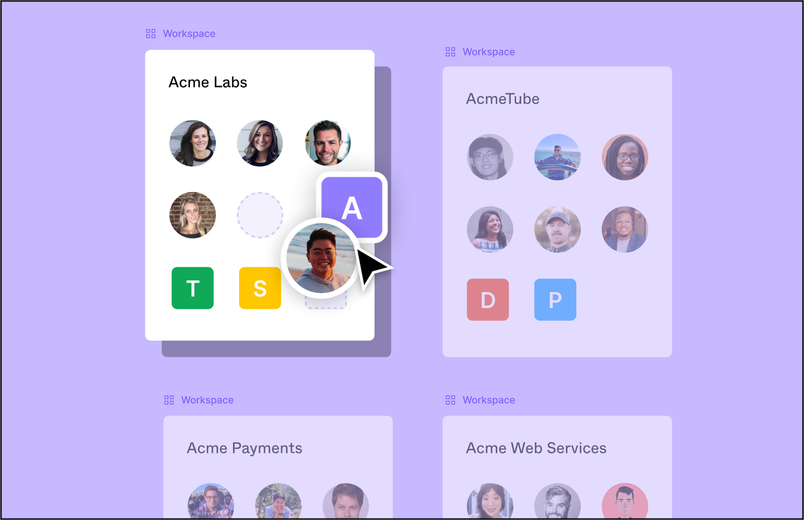
To keep things organized, administrators can set default teams and libraries per workspace so it’s clear where to start. Users can also filter search results to a specific workspace when hunting for files, components, or people.
Administration that keeps up with growth
With more people involved, management tasks can compound. Figma Enterprise offers several ways to distribute and automate that workload. Workspace administrators can be delegated authority over membership, roles, and true-ups for their specific areas. Role-setting via SCIM lets organizations assign user roles automatically through their identity management provider. Additionally, administrators can choose to default new users to a viewer-restricted role, requiring approval to claim a paid seat, which helps manage licensing costs.
For Cisco's Head of Design for WebEx Suite, the benefit was clear: "Figma Enterprise gives us the flexibility to meet the different needs of each team."
Granular security controls
Broader collaboration and a distributed administrative model demand more precise security boundaries. The Enterprise plan lets companies define their guest access policy, controlling whether and how external collaborators can gain access to the organization. An upcoming Enterprise API is also planned, enabling organizations to manage users and permissions and retrieve activity logs programmatically.
Figma Enterprise pricing is $75 per editor per month, with FigJam on the Enterprise plan at $5 per editor per month. Features described will ship either immediately or over the coming months.