

Content Is a Deliverable, Not an Afterthought
Website projects tend to begin with the parts designers enjoy most: layout, color, typography, interaction. The actual words, images, and media that will fill those carefully crafted pages are frequently treated as a client obligation, something to be supplied later. Too often that later never comes until the deadline is pressing, and what finally arrives is unstructured, unfocused, and unsuited to the medium.
Jakob Nielsen made the point more than two decades ago and it has not aged poorly:
“The biggest problem is that most people are (and always have been) bad content creators. That's why we have professional writers, graphic designers, filmmakers, speakers, musicians, and other types of media professionals. When an average person tries to create content, they typically don't have much to say and what they do say is often said badly.”
— Jakob Nielsen, 2000
Clients are rarely skilled at producing persuasive, informative copy. They excel at knowing their business, not at expressing it in a way that prompts action. Leaving content production to them almost guarantees delays and rework. Many designers can point to a project where they spent more time coaching a client through a document editor than designing, only to receive content that was unusable and had to be sent back for another attempt.
The fix is not to hope for better client writing. It is to treat content as a professional deliverable with its own place in the process and its own budget.
Design and Content Are Separate Disciplines
Content is the material users consume: words, pictures, video, audio. Design is the presentation of that material, shaping how the user feels in the moment. The two are symbiotic but distinct. Conflating them makes it hard to know where the designer’s job ends. Most web designers would not take on video production, yet many drift into writing copy — often without the expertise or the time to do it well. Neither the designer nor the client is usually equipped to cover that ground, which is precisely why it falls through.

Form Follows Function, Online Too
Architect Louis Sullivan’s nineteenth-century maxim that form follows function applies as much to websites as to buildings. A structure that does not meet real needs is impractical no matter how attractive it looks. The UX designer was meant to be the glue between form and function, but few projects carry the budget for a dedicated one. That responsibility drifts to the web designer, who is often more comfortable with aesthetics than with information architecture or copy.
Clients come to a designer for guidance but their contribution is their business objectives and specialist knowledge — not page after page of prose. The result is a gap where content production was supposed to happen. Closing that gap means creating a space for content at the very start of the project, not bolting it on at the end.
That inevitably adds cost, and clients will push back. The argument for investing in professional content production must be made on business terms.
Selling the Value of Professional Copy
Clients often claim they cannot afford copywriting because they do not see what it returns. The pitch needs to be framed around outcomes. Professionally written website copy will:
- Consolidate and solidify the overall brand message.
- Save a lot of time for you and the client.
- Make the design (and the design process) more effective.
- Result in a better end user experience.
The bottom line is that professionally written content drives a higher return on the overall investment. If the offer is compelling, simple economics dictates that the client will want it. Those bullets are a useful starting point for demonstrating why content matters, not only on the web but in business communications more broadly.
One project working with a company whose services were hard to grasp at first illustrates the payoff. A copywriter helped develop a sitemap that met end-user needs and covered the offer succinctly. That freed the designer to focus on the visual system and technical integrations. Without that content investment, the final result would have been noticeably worse.
Making Content A First-Class Deliverable
If you want to deliver a site that hits the client’s business goals without scrambling for copy at the last minute, content needs the same attention as layout and code. The practices below have helped keep content integrated throughout the project lifecycle rather than treating it as an afterthought.
Start With A Content Workshop
A focused session with the client can surface what actually matters for the project. It also signals to everyone involved that content is a serious deliverable. Useful exercises include:
- Asking open-ended questions about visitor intent, such as “What might a visitor want from the homepage?” or “How should someone feel after reading this page?”
- Deliberately steering conversation away from visual style and toward messaging and tone.
- Opening with examples of strong and weak content, then inviting live feedback to calibrate expectations.

Beyond generating ideas, the workshop’s real function is symbolic: it positions design and content as separate, both essential workstreams. Some teams go further and sell the workshop as a standalone paid engagement before any design talk begins.
Bring A Copywriter Into The Core Team
Instead of itemizing copywriting as an optional add-on, treat it as a standard line in every proposal. When services are listed separately, clients may push back on individual components. A better approach is to bundle content development into the core scope, with language like this in your proposal:
Note: A strong content strategy is fundamental to making your website redesign a success. As part of this proposal we will develop content for your new website that will resonate with your visitors and prompt action from them. We will conduct an interview with you to understand your audience and objectives, and integrate this into our content writing process.
If the client questions the line item, return to the core benefits of investing in copy early.
Design With Real Copy, Not Placeholders
Lorem Ipsum makes it nearly impossible to judge whether a layout serves its purpose. Design should wait until at least some genuine content exists. Writing copy while designing rarely works either — the text tends to get absorbed into the visual process and forgotten until launch, when fixing it becomes a major headache. Retrofitting a content strategy late in the project is always harder than starting with it.
Dig Into The Brand's Core Questions
A client’s mission and values offer a deep well of content ideas that most projects never tap. Stepping back from the interface to interrogate the brand can feel uncomfortable, but it reveals the motivations behind the work. Ask clients questions like:
- Why do you do what you do?
- How does your product or service make your customer’s life better?
- How do your customers describe you?
- Who are your competitors and how do you differ?
- Where will this project take you?
These conversations often produce the “lightbulb moments” that help clients see value in substance over decoration. For an extra dimension, consider bringing customers into the loop through existing feedback, surveys, video interviews, or even inviting a few into the workshop. The goal is to understand how real people experience the company, which makes for content that resonates.
If The Client Writes The Copy, Remove Every Obstacle
When the client has in-house writers, your job is to make success easy. Practical steps include:
- Holding off on visual design until real content exists.
- Setting a firm content-delivery deadline.
- Providing Word or Google Drive documents that mirror the sitemap and wireframes, so writers have a clear framework.
- Using templates with constraints, such as a “page title” field limited to 6–8 words.
- Sharing pre-recorded material or an article that explains why good content matters, especially if there is no budget for a workshop.
- Assigning a single owner for content production to avoid the project spiraling from too many voices.
Left alone, clients will likely deliver content piecemeal, and the assembled result can feel disjointed. Guided structure prevents that outcome.
Tools And A Process That Keeps Everyone Involved
Regardless of who writes the content, you need a repeatable workflow. The pattern that works best follows three steps:
- Audit the current site to classify existing content as rewrite, delete, or create from scratch.
- Define the sitemap collaboratively with the client and writer. Tools like Gloomaps work well for quick diagrams, while Miro offers a richer collaborative space.
- Build wireframes of key pages to mock up content layout. Dedicated apps like UXPin and Mockflow are an option, but Adobe Illustrator with a wireframe UI kit also does the job.
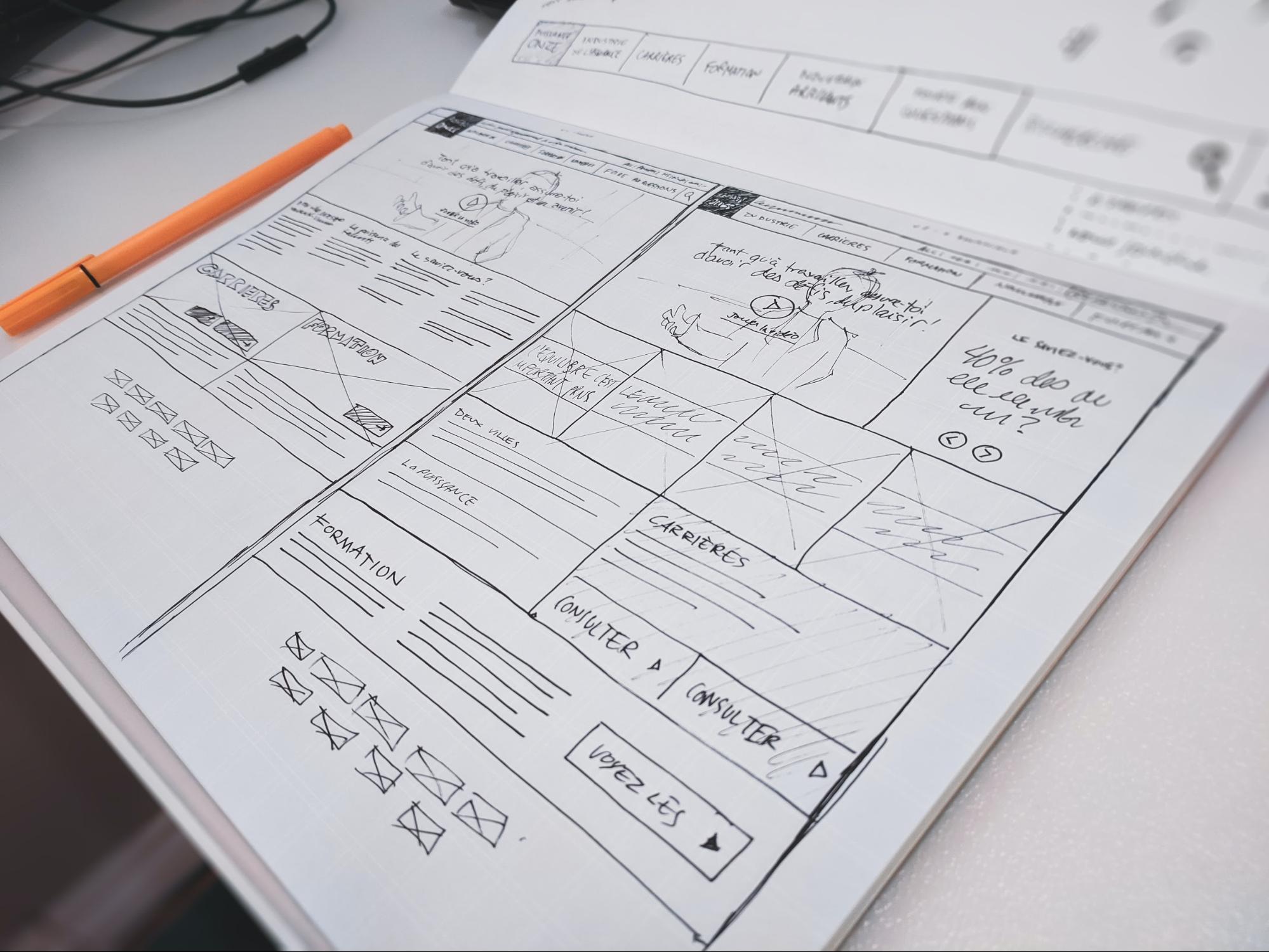
Throughout this workflow, keep the client part of the conversation. Too many designers disappear and re-emerge with a finished product. Clients who are invited into content and structure discussions are more satisfied, and the work improves when you draw on their domain knowledge.
The Design Is The Container, Not The Message
Content is the thing you are actually designing. As the copywriter Eugene Schwartz put it:
“Copy is not written, it is assembled.”
Your role is to compose the user experience around the substance the reader seeks. It is easy to lose sight of that amid project politics, trend-chasing, and technical enthusiasm. But the most effective work stays aligned with the project’s core aim: communicating a message as clearly as possible.
Better content on the web requires deliberate investment. Designers who champion professional copywriting produce stronger work, faster, and with less friction than those who let aesthetics rule the process.