
From Autocoder to Copilot: How We Got Here
AI coding tools have a longer history than the current generative AI hype suggests. The lineage runs from IBM's Autocoder in the 1950s, which translated symbolic language into machine code, to John McCarthy's LISP in 1958, whose symbolic processing and recursive functions became foundational for AI programming.
(defun factorial (n)
(if (<= n 1)
1
(* n (factorial (- n 1)))))
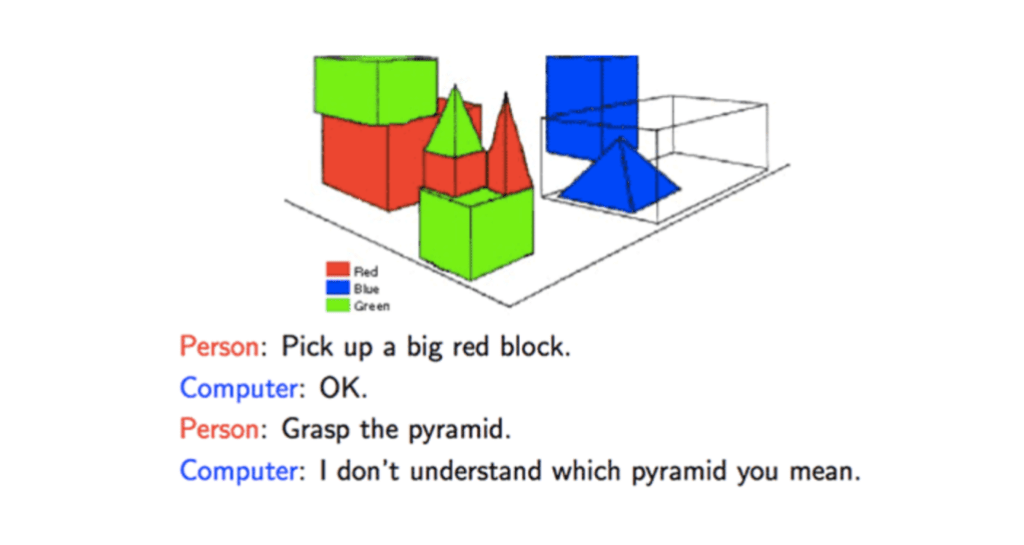
By 1970, Terry Winograd's SHRDLU at MIT demonstrated natural language understanding, interpreting commands in restricted English and responding accordingly.
That foundation led to the emergence of code generators like The Last One in the 1980s, which automated code production based on user specifications. Although not AI-powered in the modern sense, it established the baseline for later automated code generation.
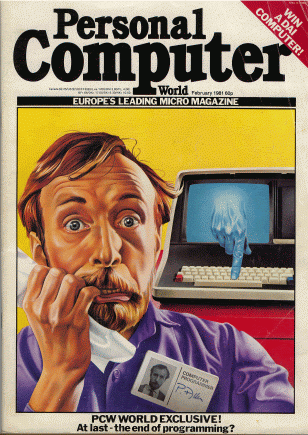
Through the 1990s, neural networks began tackling code-related tasks such as predicting program behavior and detecting defects. The 2000s saw AI-assisted refactoring tools that analyzed code patterns and proposed restructurings without changing behavior. These steady increments built up to today's GenAI coding assistants, which now drive a more rapid evolution every day.
AI's Expanding Role
For most of this history, AI tools remained bound to the integrated development environment, helping developers write and refine code. That is changing: AI now touches every stage of the software development lifecycle — which research indicates boosts productivity, improves team collaboration, and accelerates innovation for engineering organizations.
- Code completion and suggestions: Tools like GitHub Copilot employ large language models (LLMs) to analyze repository context and produce suggestions that often comprise entire lines of code, not just context-free autocomplete. Copilot draws from GitHub's open-source code base to deepen its understanding of programming languages, frameworks, and libraries.
- Generative AI in your repositories: GitHub Copilot Chat allows developers to ask questions about their codebase and receive real-time answers. GitHub Copilot Enterprise extends this to gather context from legacy code and organizational processes, helping maintain consistency and best practices across teams when suggesting solutions.
- Natural language processing (NLP): AI has made notable strides in understanding and generating code from natural language. Tools like ChatGPT enable developers to state intent in plain language and receive executable code or functional explanations in return.
- Enhanced debugging with AI: AI tools can examine code for potential errors and suggest fixes by drawing on historical data and recognized patterns to identify and address bugs more effectively.
What It Means for Developers
Despite rapid advancement, AI coding tools remain instruments that require a pilot. They mark an evolution in software development that starts and ends with the human developer. Recent research shows AI can help alleviate the cognitive burden of complex tasks. Instead of functioning merely as a second pair of hands, AI increasingly acts as a second brain, enabling developers to work more well-rounded and efficient.
The practical effect: AI reduces mental strain enough for developers to concentrate on learning new languages or producing high-quality solutions for complex problems. When debating whether to learn to code or how AI might fit into one's coding career, the answer remains embedded in the work itself and how these tools are deployed.
What developers actually need to work with AI
Bringing AI tools into a development workflow pulls on two distinct skill sets. The technical side — knowing how to frame requests, review generated code, and verify tests — is the obvious prerequisite. But the soft side, the ability to communicate, adapt, and think ethically, matters just as much when the output of an AI system has to be shaped into something real users can rely on. Both are required to make AI tools genuinely productive rather than just novel.
The technical fundamentals
Prompt engineering
Generative AI models produce output based on the instructions they receive, so crafting clear, purposeful prompts is the first line of defense against useless results. When an AI coding assistant returns something off the mark, the problem is often in how the request was framed. Effective prompts tend to share a few traits:
- Be clear and specific. Direct, contextually relevant instructions guide models more reliably.
- Experiment and iterate. Try variations on your prompts and refine based on the responses you get.
- Validate everything. Treat AI-generated code the way you would a colleague's pull request: inspect it, test it, and verify it before you trust it.
Code review skills
Large language models are not inherently aware of programming semantics — they are trained on data, not on the rules of software. That means generated code can carry syntax errors, logic flaws, or subtle misunderstandings of the problem domain. Reviewing AI suggestions demands real coding competence. A productive review starts with a simple framing: does this change actually accomplish what it's meant to? From there, developers need to methodically check the suggestion against the codebase's existing patterns and purposes.
Testing and security
AI tools can automate a portion of test generation, shifting more of a developer's testing work from writing test cases to assessing them. That assessment step requires foundational programming knowledge, plus familiarity with testing principles and security best practices — otherwise it's hard to know whether generated tests cover the right ground. Evaluating AI-generated tests means looking at assertions for verifiability, checking for scenario coverage and any missed edge cases, watching for data or algorithmic bias in the tests themselves, and investigating failures to understand their actual root cause.
Why the soft skills are load-bearing
AI tools can write code, but turning that code into a shipped feature is a fundamentally cooperative process. Strong collaboration abilities are becoming a more central part of the job, not less. Several are particularly relevant:
- Communication. Setting clear project requirements, sharing findings productively, and discussing challenges with stakeholders all hinge on well-crafted communication. That mindset also carries over to prompt writing — framing thoughts precisely and with intent is the same core skill, whether the audience is a human or a model.
- Problem solving. Working with AI introduces unpredictable output and unexpected edge cases. When those arise, adaptable and creative thinking is needed to find workable solutions.
- Adaptability. The pace of change in AI is fast enough that new tooling and frameworks emerge constantly. Cultivating a growth mindset helps developers keep current with the methods as they evolve.
- Ethical thinking. AI-generated code raises real concerns around bias, fairness, transparency, and privacy. Responsible development that protects user well-being depends on developers who can recognize and reason about these issues.
- Empathy. Building valuable user experiences means actually understanding the needs of the end users. AI can generate solutions quickly, but without genuine empathy for those users, there is no grounding for prioritizing the well-being and preferences of the diverse groups who interact with the final product.
These interpersonal skills compound technical capability. Developers who can communicate clearly, think critically, and collaborate well are better positioned to use AI tools effectively and to integrate AI-generated code into products that actually serve stakeholders.
Take this with you
AI is reshaping how developers learn and write code, but it is not a replacement for the craft. It is a complement — one that lets developers concentrate more on honing their programming skills and their capacity to work with the people around them. The shift is in focus, not in fundamentals: the code still has to be right, and the people still have to work well together to ship it.