
Every Generation Fears This
CSS shipped in 1996 inside Internet Explorer 3. Within two years, the first no-code website builder, Homestead, was on the market, letting anyone assemble a web page without touching markup.

That pattern has repeated ever since: WordPress in the 2000s, Webflow in the 2010s, a wave of "no code" tools in the early 2020s. Each time, the industry asked whether web developers had a future. And each time, the nature of the work shifted while the role survived.
In fact, the predictions have quietly come true for part of the market. A local bakery or dentist doesn't hire a developer to build from scratch anymore; they grab a Squarespace template for $20 a month. Yet developers are still employed — the work did not disappear, it moved upmarket into larger, more complex projects.
OpenAI's recent GPT-4 showcase looked dramatic: a hand-drawn wireframe turned into a working page with JavaScript wired to a button.
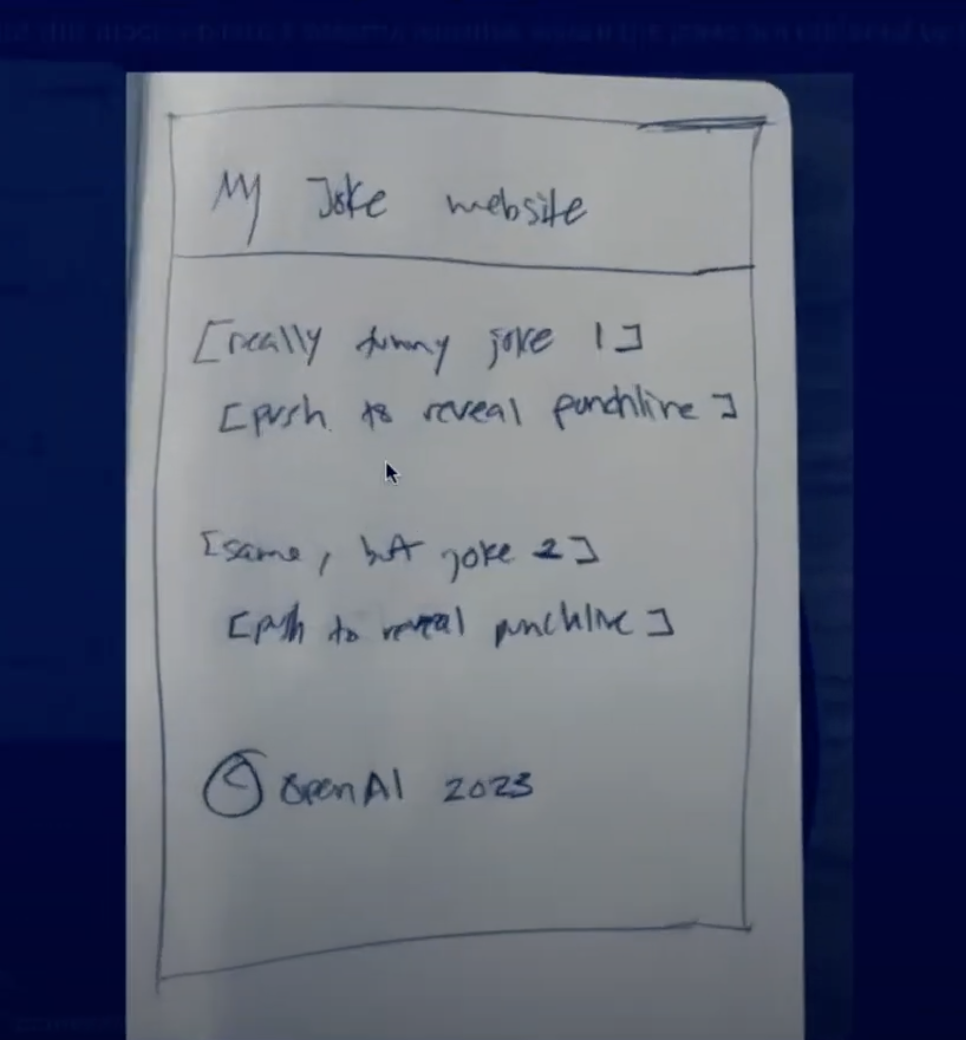
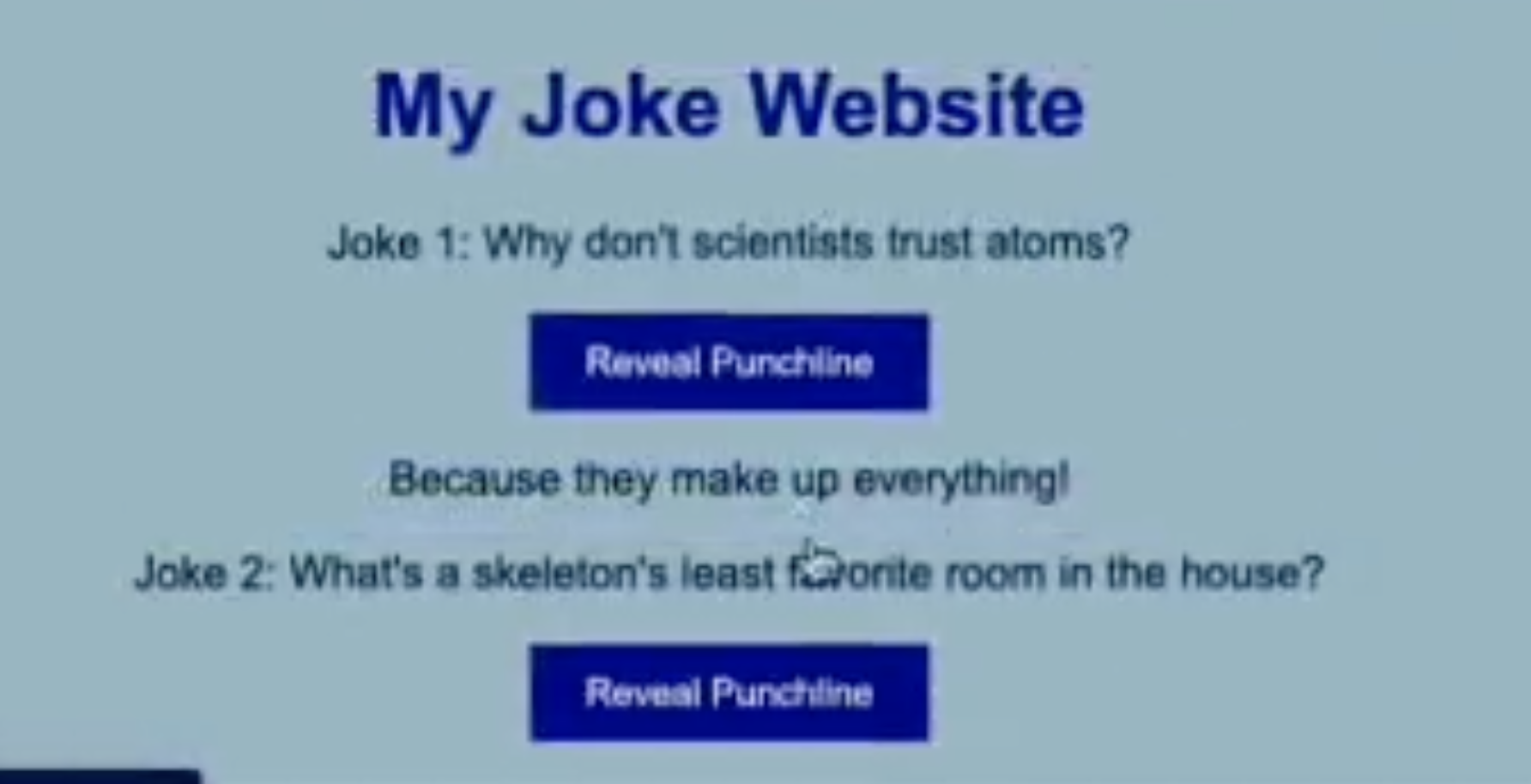
That is genuinely impressive for prototyping. But it is worth remembering that we stopped needing developers for such pages decades ago. There is a massive gap between that demo and the code in a real front-end codebase.
Why LLMs Won't Take Over the Codebase
The demos so far are small: a simple HTML page, a single function. Early days, sure — extrapolate the curve and chatbots will be building full applications soon, right?
Not so fast. Large language models are text predictors. Given a prompt, they estimate the most probable sequence of characters that follows. OpenAI spends enormous effort grading and tuning the output, but the model fundamentally cannot validate what it produces. It cannot run its assumptions or test its hypotheses. Sometimes the result is nonsense — the team calls this "hallucination" — and as the technology improves, accuracy will rise but never reach perfection.
That is not a problem for a programmer who can spot the broken parts. It is a problem for a non-programmer relying on the tool. You cannot catch what the model invented when you do not know what the correct answer should be.
Some demos show the AI fixing its own errors when you paste in an error message. But not all hallucinations cause explicit failures. In a recent test, GPT-4 generated a usable React <Modal> component that still had accessibility mistakes — silent defects that ship to users who will notice, even if the developer never does. Security vulnerabilities and liability questions follow the same logic.
Then there is scale. This blog's custom JavaScript amounts to roughly 65,000 lines across more than 900 files — that is only the TypeScript, not the written content. Even at a 95 percent accuracy rate, debugging a project like that would be a nightmare of untested, machine-generated code.
AI is also only as good as its training data. Code snippets are everywhere on the open web; codebases are not. Large open-source projects are comparatively rare, so the model has little to learn from when it comes to building big, real-world systems.
Rising Productivity, Not Falling Headcount
The likely outcome is that LLMs get baked into developer tooling and amplify what experienced engineers can do. Carpenters were not replaced by power tools, and photographers — despite smartphone cameras — have seen industry employment increase, with the Bureau of Labor Statistics projecting 9 percent growth over the next decade versus the 5 percent national average.
Would fewer developers be needed if each one became twice as effective? Possibly, but the industry has never had a shortage of work. At just about every company, the constraint on shipping software is headcount, not ideas. More productivity means more bugs fixed, more features shipped, more revenue — and the backlog never empties.
Cheaper development could actually pull previously excluded companies into hiring developers. Fortune 500 firms that contract work out because an in-house team of four at $150,000 each adds up might reconsider if two people with AI tooling can do the job. Economists call this the Jevons Paradox, a phenomenon first noted in 1865: demand rises as efficiency pushes costs down.
This is speculation, not prophecy. But the point stands: the worst-case scenario is not a foregone conclusion.
Every Discipline Is Having This Conversation
Anxiety about AI is not unique to software. Aaron Blaise, a veteran Disney animator on films like Beauty and the Beast and Aladdin, publishes the same take: tools that generate animation subject to his direction increase productivity and create more work. Law students worry about GPT-4 passing the bar in the top 10 percent, while legal experts discuss the same integration-vs-replacement question.
If LLMs truly can do the work of developers, they will also do the work of most knowledge professionals across every field. There is no higher ground to retreat to, no different discipline that is safe. So chasing predictions is a losing game; building skill and passion in whatever you do is not.
What AI Can Teach You
Many early-career developers find ChatGPT valuable for learning. Ask it to clarify a section of a tutorial, and it acts like a pair programmer who can answer specific questions.
But use it the wrong way and you lose the benefit. Treating the chatbot like a GPS — follow directions with zero mental effort — trains you to rely on it. A better model: treat the AI as a witness under cross-examination. Listen to what it has to say, stay skeptical, and verify anything suspicious against authoritative sources like the official documentation.
The real value comes from reading generated code line by line, asking for explanations where confused, and not accepting output simply because it is delivered with absolute confidence. LLMs are not always right — but you can be.
A Reality Check for Anyone Learning to Code
If you are currently learning web development and feeling anxious that AI will soon make your efforts pointless, this is for you. The fear is understandable, but it is worth examining whether it is actually grounded in evidence.
What we can say with confidence is that the tools of the trade have always changed, and dramatically. Writing HTML, CSS, and JavaScript since the late 2000s means having lived through a series of major shifts—from jQuery to modern frameworks, from static sites to full-stack applications. Developers have never had a static job description; adaptability has always been a core requirement.
The question is whether AI represents a fundamental break from that pattern. The key claim to scrutinize is that non-developers might soon build entire web applications without any understanding of the underlying technologies. Even setting aside the issue of hallucinations in current models, that scenario runs into practical obstacles. Building real web apps involves more than generating code—it involves debugging, integrating with existing systems, designing for constraints, and understanding performance and security. Removing the human who understands the stack does not make those problems disappear; it just moves them.
The Stakes of Giving Up Too Early
There is no crystal ball here, and it is possible that the future looks different from today. But nothing observed so far suggests that developers are facing obsolescence. The more pressing risk might be the opposite: that aspiring developers will slow down or stop their learning journey prematurely, based on a prediction that has not materialized and shows no clear signs of materializing.
Software development has remained a high-demand field for years. If that trend holds, the regret of abandoning a goal out of fear would be far more damaging than the effort spent learning a skill that continues to evolve. The uncertainty of the future is not a reason to stop building skills that are still needed today.
This article was last updated on July 24th, 2025.


