

One year of Copilot: what the data says about AI-assisted development
Twelve months after GitHub Copilot's general release, the tool has been activated by more than one million developers and adopted by over 20,000 organizations. Those users have generated more than three billion accepted lines of code, making Copilot the most widely adopted AI developer tool on the market. Along the way, GitHub has been collecting data on productivity, developer satisfaction, and economic impact—including research released alongside the anniversary that attempts to quantify the macroeconomic effects of AI-assisted development.
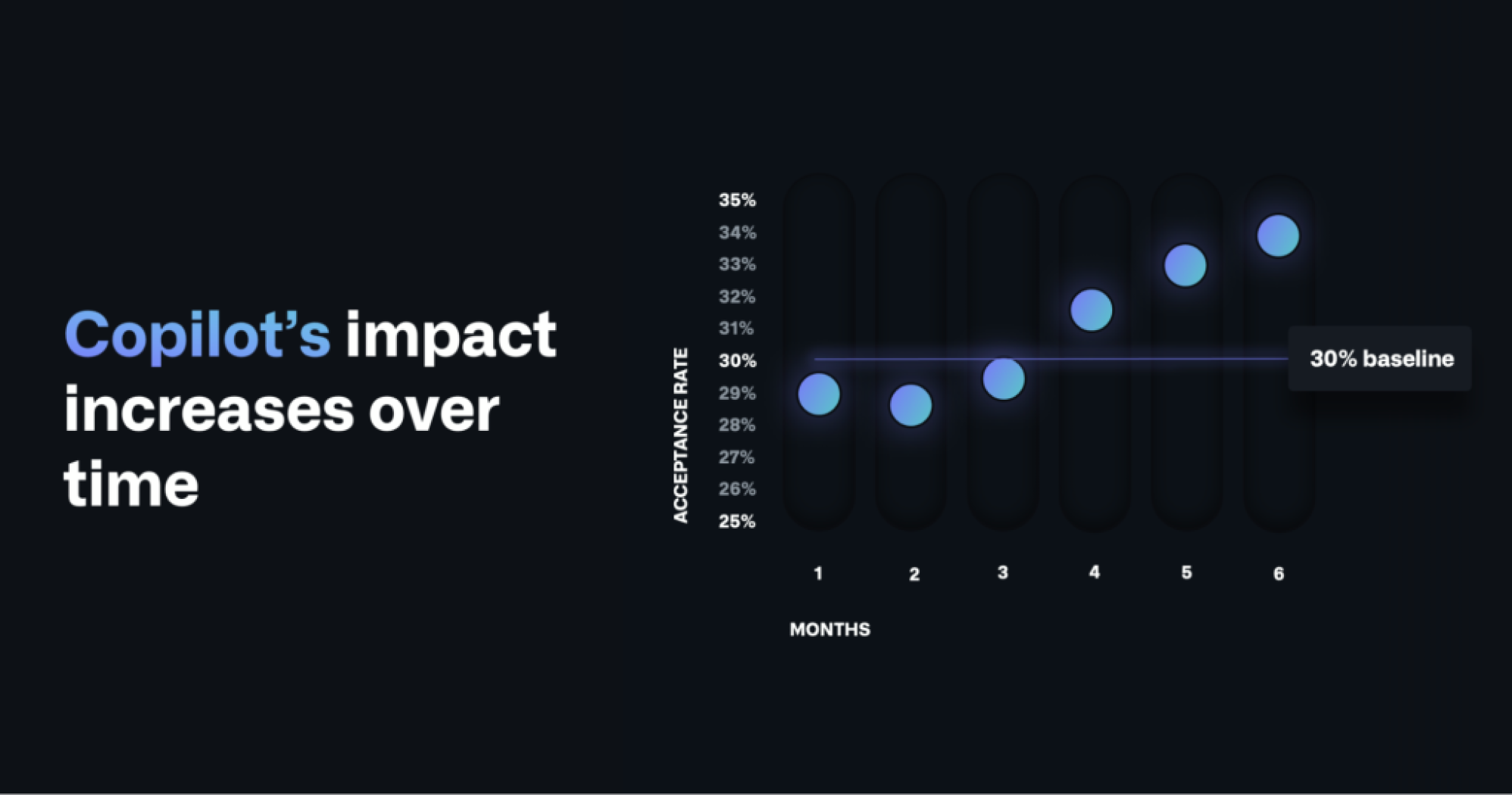
The headline numbers: analysis of a large sample of Copilot users (n = 934,533) shows that developers accept nearly 30% of code suggestions on average within their first year of use, and report increased productivity from those acceptances. Crucially, acceptance rates rose steadily over time as developers became more familiar with the tool, suggesting the productivity gains have room to grow as users build fluency in working with AI suggestions.
Economic impact and skill democratization
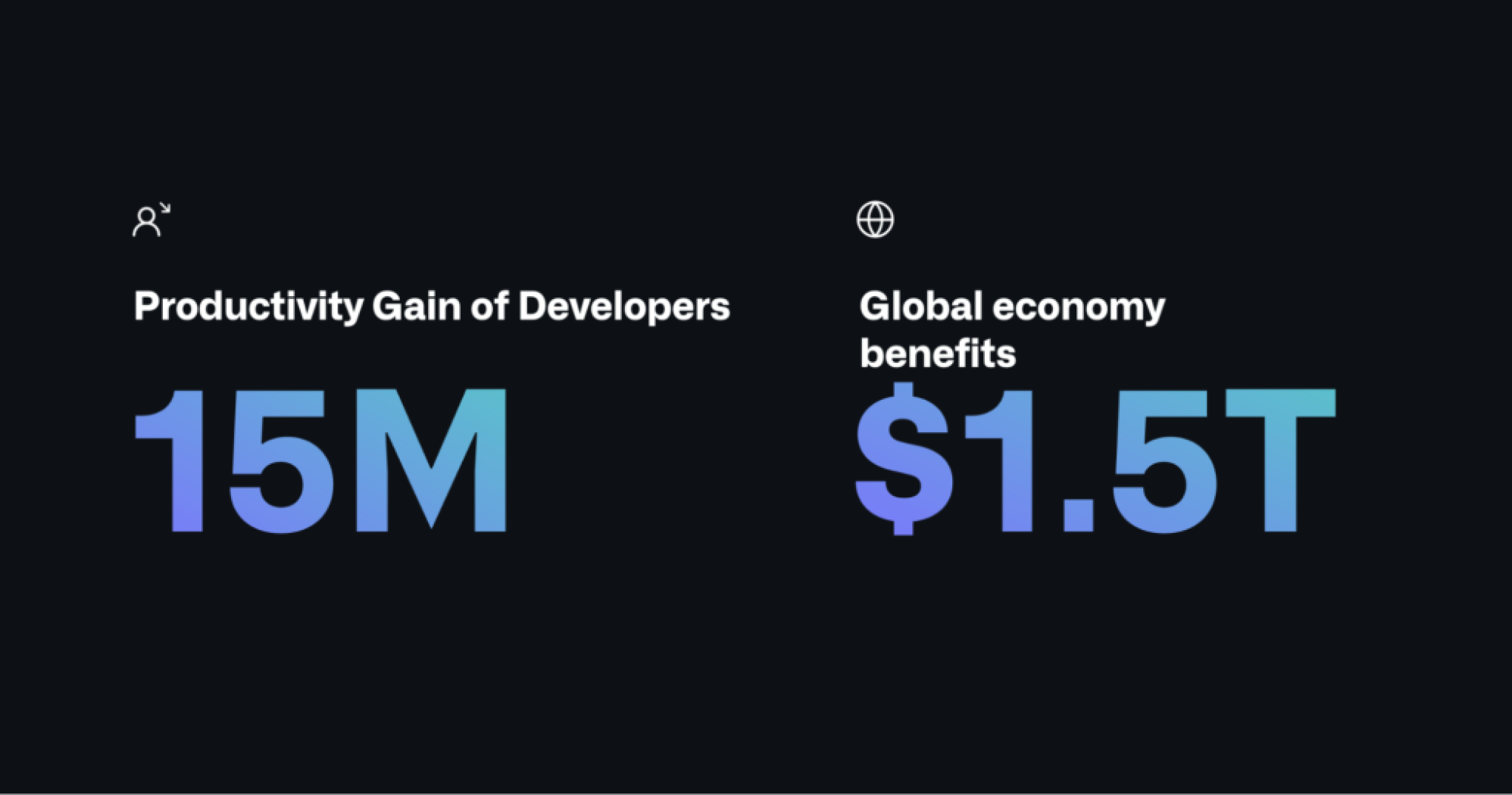
Using that 30% productivity figure as a baseline, GitHub projects that with an estimated 45 million professional developers in 2030, generative AI tools could add the equivalent of 15 million "effective developers" to worldwide capacity. That would translate to a boost of over $1.5 trillion to global GDP. The historical pattern—where improvements in developer tools have consistently increased demand for software, not reduced it—suggests these productivity gains will fuel further demand for developers rather than displacing them.
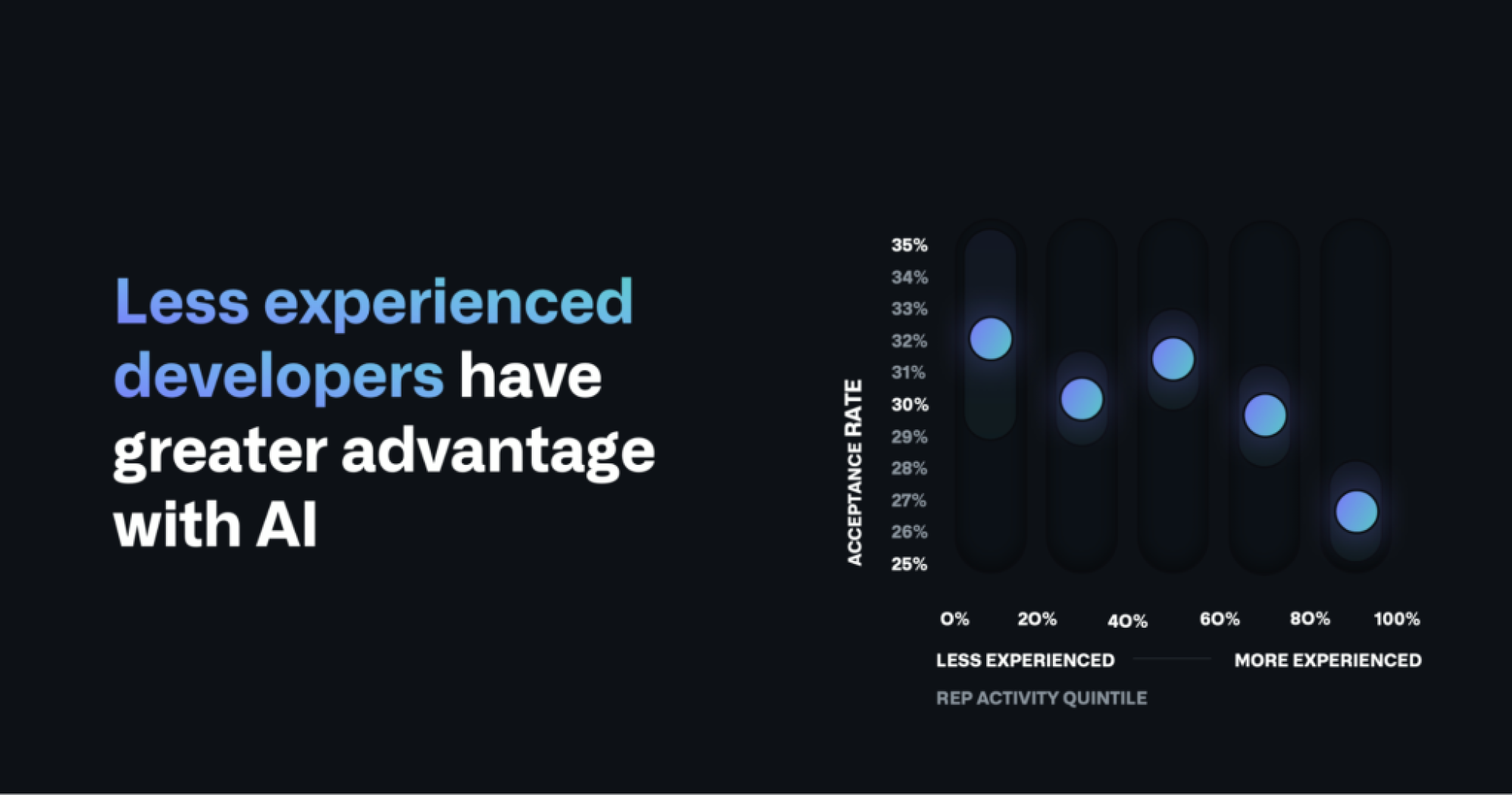
The benefits are not evenly distributed across experience levels. Less experienced developers show greater gains from Copilot, a finding consistent with earlier controlled experiments on AI's impact on developer productivity. As newer developers use these tools to upskill, they become more fluent in prompting and interacting with AI, which could help close the labor gap and make pair programming with AI a standard part of developer education.
GitHub also points to an explosion of open source activity around generative AI projects, based on its analysis of repositories and commits. The ecosystem spans individual developers and large tech companies, and activity has grown exponentially.

Speed, satisfaction, and business adoption
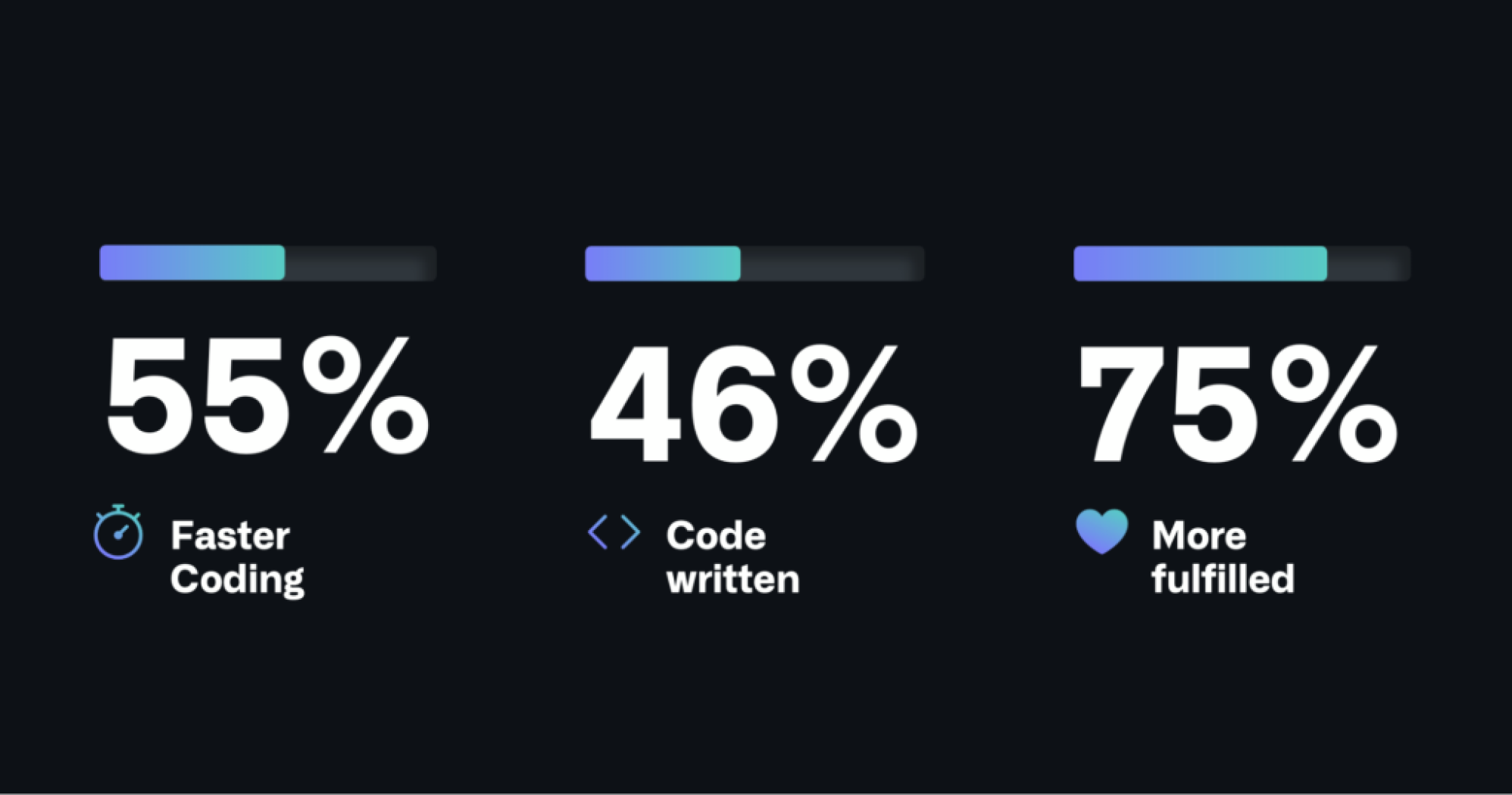
Earlier quantitative research found that developers completed tasks 55% faster with Copilot, and that in files where Copilot was enabled, the tool completed 46% of the code. But GitHub is careful to frame these metrics in terms of developer experience rather than productivity for its own sake. Survey data supports that framing: 75% of developers said they felt more fulfilled when using the tool, and developers cited improved coding language skills as the top benefit of AI coding tools.
GitHub Copilot for Business launched earlier this year and has seen rapid enterprise adoption, with more than 10,000 companies using it within three months and over 20,000 organizations today. A recent survey found that 92% of developers use AI tools both at work and outside of it. Companies are also integrating AI into their hiring processes; GitHub reports increasing numbers of organizations requiring job applicants to test with Copilot, signaling that generative AI fluency is becoming a core competency for software development roles.

Engineering teams at Duolingo, for example, used Copilot for Business to achieve a 25% increase in developer velocity. "With GitHub Copilot, our developers stay in the flow state and keep momentum instead of clawing through code libraries or documentation," says Johnathan Burket, a senior engineering manager at Duolingo.
The upshot: augmented developers, not replaced ones
GitHub's conclusion from its first year of data is that AI and software developers are now inextricably linked. The trajectory—from compilers to open source to AI pair programmers—has consistently been one of augmentation rather than replacement. As developers become more proficient at prompting and working alongside AI tools, the expectation is that these tools will become a permanent part of the software development lifecycle, extending developer potential rather than diminishing the need for it.


