Figma's annual State of the Designer report surveyed 906 digital designers across North America, APAC, Europe, LATAM and the Middle East, in partnership with independent research firm NewtonX. Questions were posed in English, Spanish, French, Italian, Portuguese, Japanese and Korean. The findings suggest designers view AI as a net positive for their work even as they work through the uncertainty that surrounds it.

AI and the quality question
Concern that AI-generated output would degrade design quality does not match what respondents report. Among surveyed designers, 91% say AI tools improve their designs. Faster work is the most common benefit: 89% report working more quickly, and 80% say collaboration has improved.

Satisfaction tracks adoption. Designers who lean into AI tools are 25% more likely to report being satisfied at work than those who do not, and are also more likely to say they drive business impact and help their company grow. The report attributes this to workflow optimization and more time spent on high-impact ideas.
Craft, and how it is defined
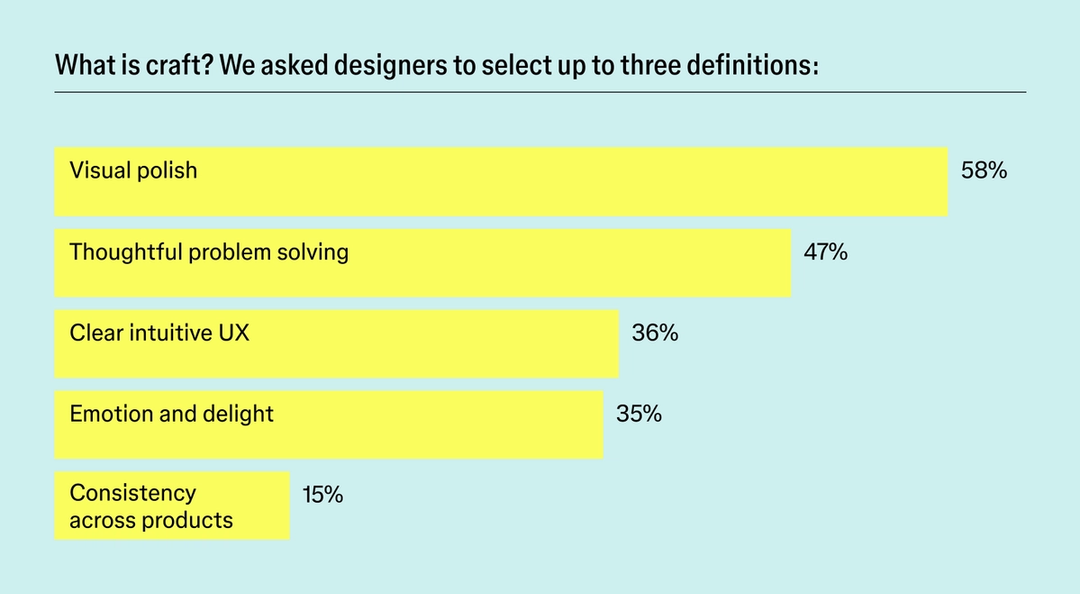
Craft is what differentiates products now that anyone can prompt their way to a prototype. The definition is not settled: designers who tie craft to human emotion and creative outcomes, such as polished, delightful experiences, tend to be happier and more successful, partly because tangible output invites recognition from leaders and users. One respondent described craft as "skill, detail, and intentional effort… not just about creating something, but doing it with care, precision, and artistry." Designers who treat craft more tactically—solving hard problems, making tough tradeoffs—may receive less external recognition.
Organization-level commitment matters. When leaders prioritize design excellence, designers are twice as likely to feel good about their work, and teams that value craft report stronger morale, faster business growth and a clearer sense of momentum.
Autonomy, with guardrails
Creative freedom ranks as the number one contributor to job satisfaction among respondents, above all other factors. Decision-making power also affects output: 87% say it boosts their performance, a link many connect to stronger business outcomes.

Independence does not remove the need for direction. Clear goals and expectations help 91% of designers do their best work, and 90% agree collaboration is key to producing good work. The report frames concrete objectives and a shared vision as an anchor as non-designers increasingly participate in the design process with new tools—a shift that expands collaboration but can unsettle teams whose boundaries are becoming fluid.
AI tools make things much faster, but the precise designer’s vision is what makes the difference.“AI tools make things much faster, but the precise designer’s vision is what makes the difference.”
Design excellence and creative agency emerge as the differentiators for designer happiness as AI continues to shift expectations. The report's closing argument is that designers who adopt new tools while leaning into the core capabilities of their craft will be the most satisfied and successful.