

Search Results as a Data Source
Real-time search results power everything from competitive SEO research and price monitoring to AI model training and local data parsing. SerpApi wraps search engines like Google, DuckDuckGo, and Baidu into a single API, letting developers pull structured result data directly into applications without building and maintaining their own scrapers. The service handles the underlying request routing, parsing, and formatting so you get clean data rather than raw HTML.
Typical use cases include:
- Brand and business research for SEO purposes;
- Gathering input data to train AI models, such as large language models for customer service chatbots;
- Curating top news sources for subscriber newsletters;
- Collecting flight information via the Google Flights API;
- Comparing product prices across platforms;
- Supplementing language learning apps with word definitions and usage examples.
A Minimal API Surface
The quickest path to results is a single GET request. Search parameters go directly in the URL. For example, to query “Stonehenge” with a location of “Westminster, England, United Kingdom,” language “en-GB,” country “uk,” and domain “google.co.uk,” the request looks like this:
https://serpapi.com/search.json?q=Stone+Henge&location=Westminster,+England,+United+Kingdom&hl=en-GB≷=uk&google_domain=google.co.uk&api_key=your_api_key
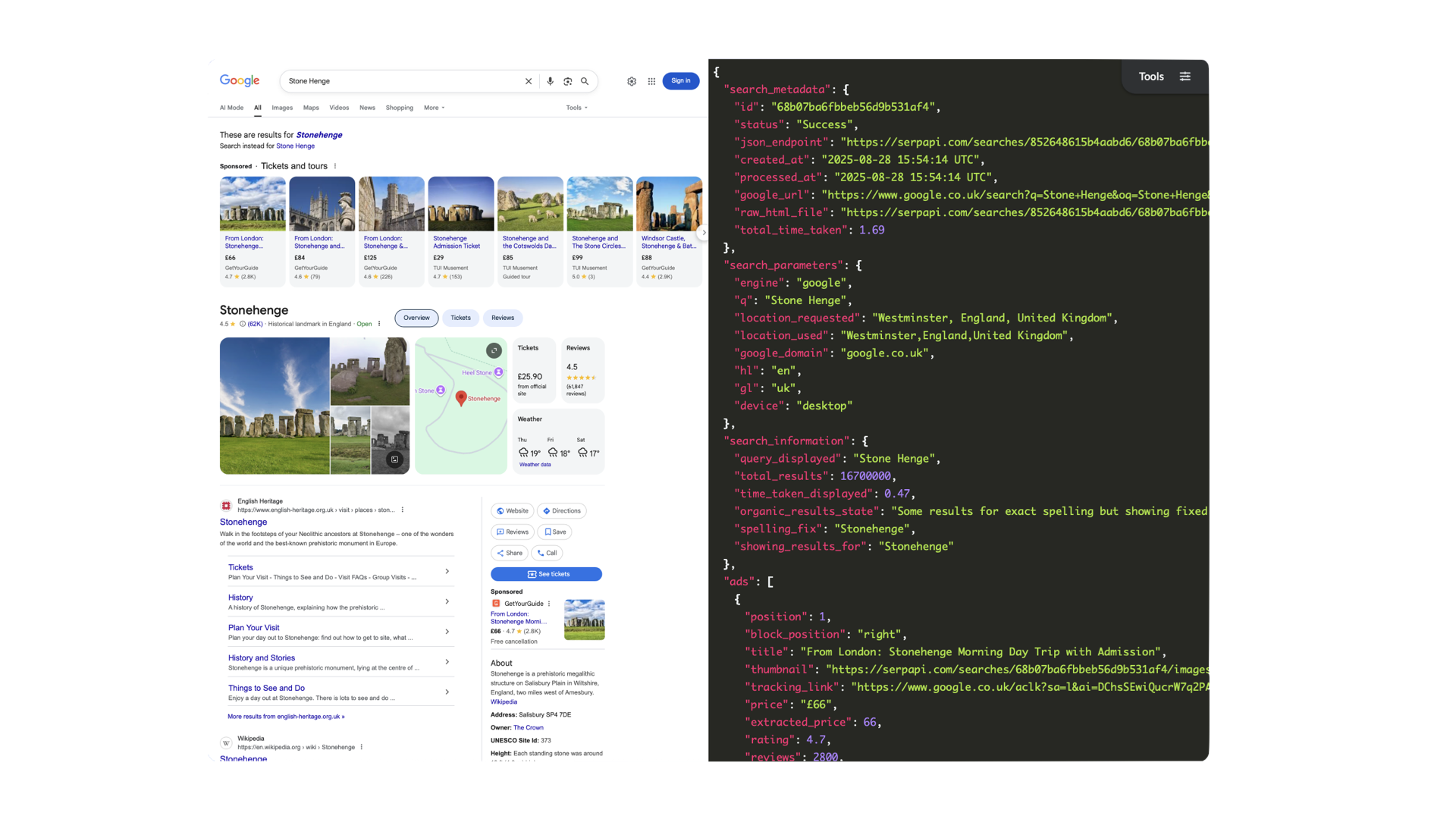
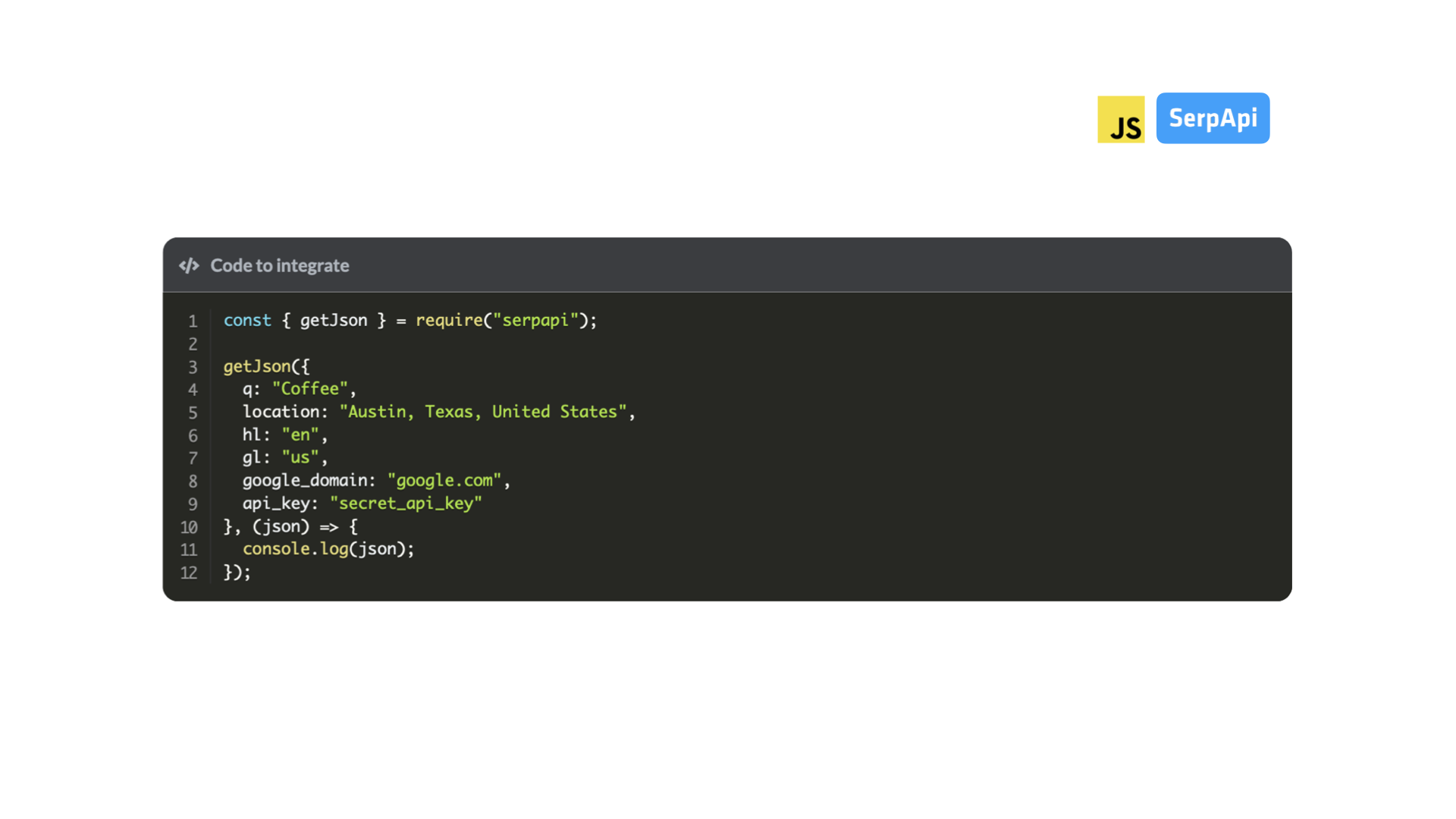
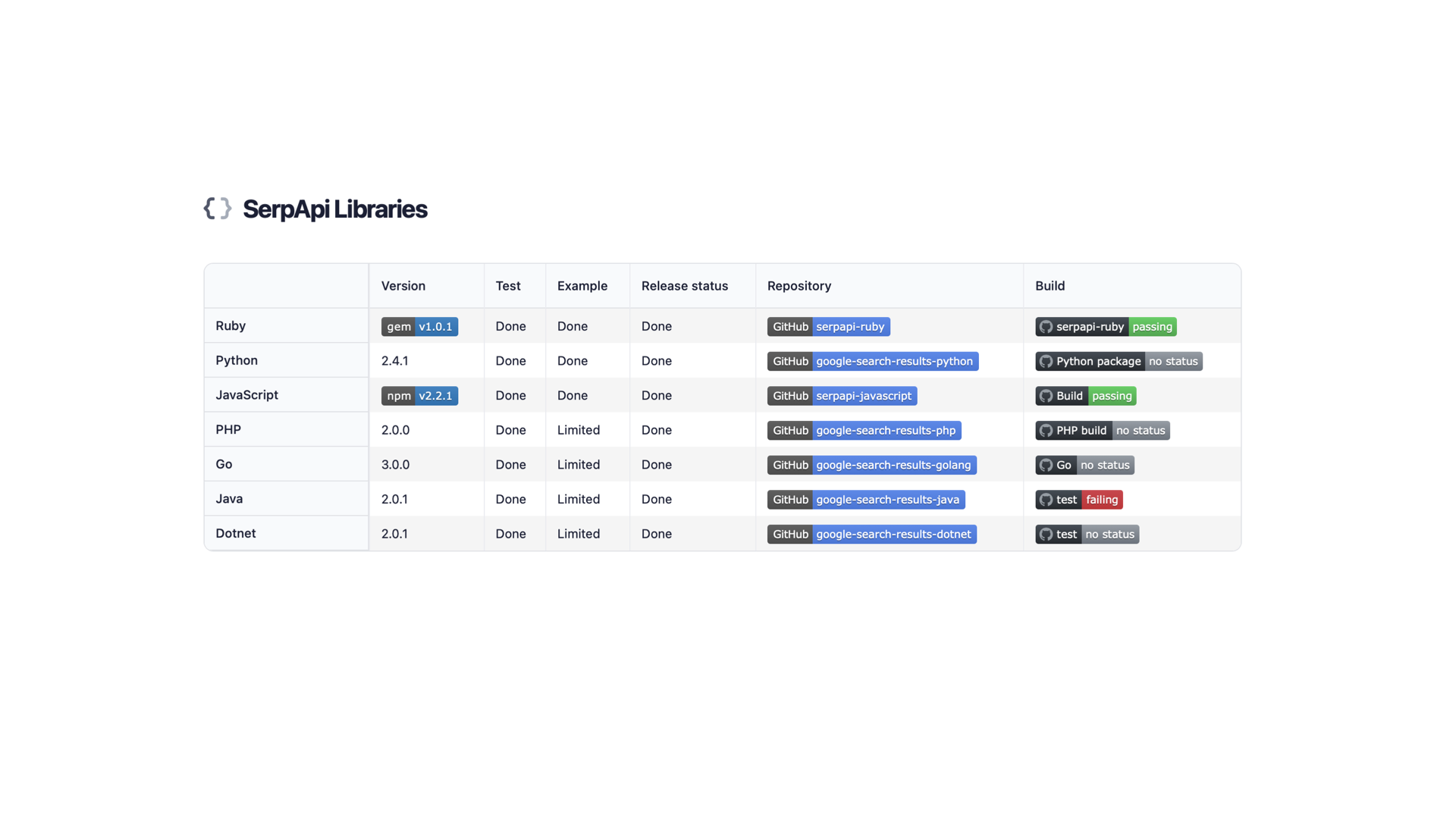
Beyond raw HTTP, SerpApi ships client libraries for mainstream languages and frameworks, including JavaScript, Ruby, and .NET.
There’s no need to commit before testing. SerpApi’s live playground works without an account: pick a search engine, set the parameters, and view both the rendered results page and the corresponding JSON output instantly. When you’re ready to go further, the free signup includes a starter plan.
Data Quality and Delivery
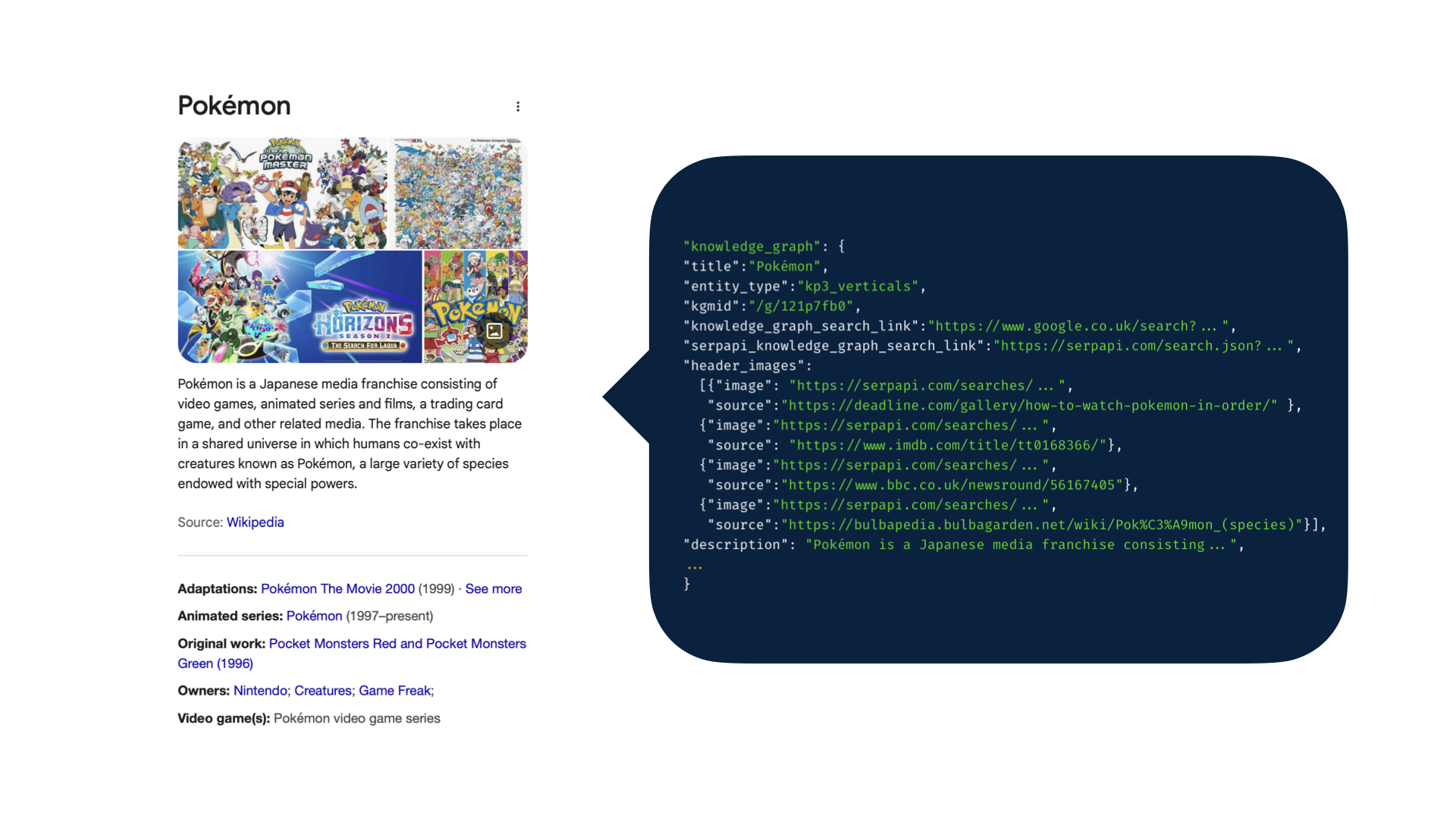
Raw search result pages are designed for humans, not machines. SerpApi converts them into structured JSON, including enriched result types like knowledge graphs, review snippets, sports league stats, ratings, product listings, and AI overviews. That means you get fields aligned with the semantic content of the results, not a jumble of markup to parse yourself.
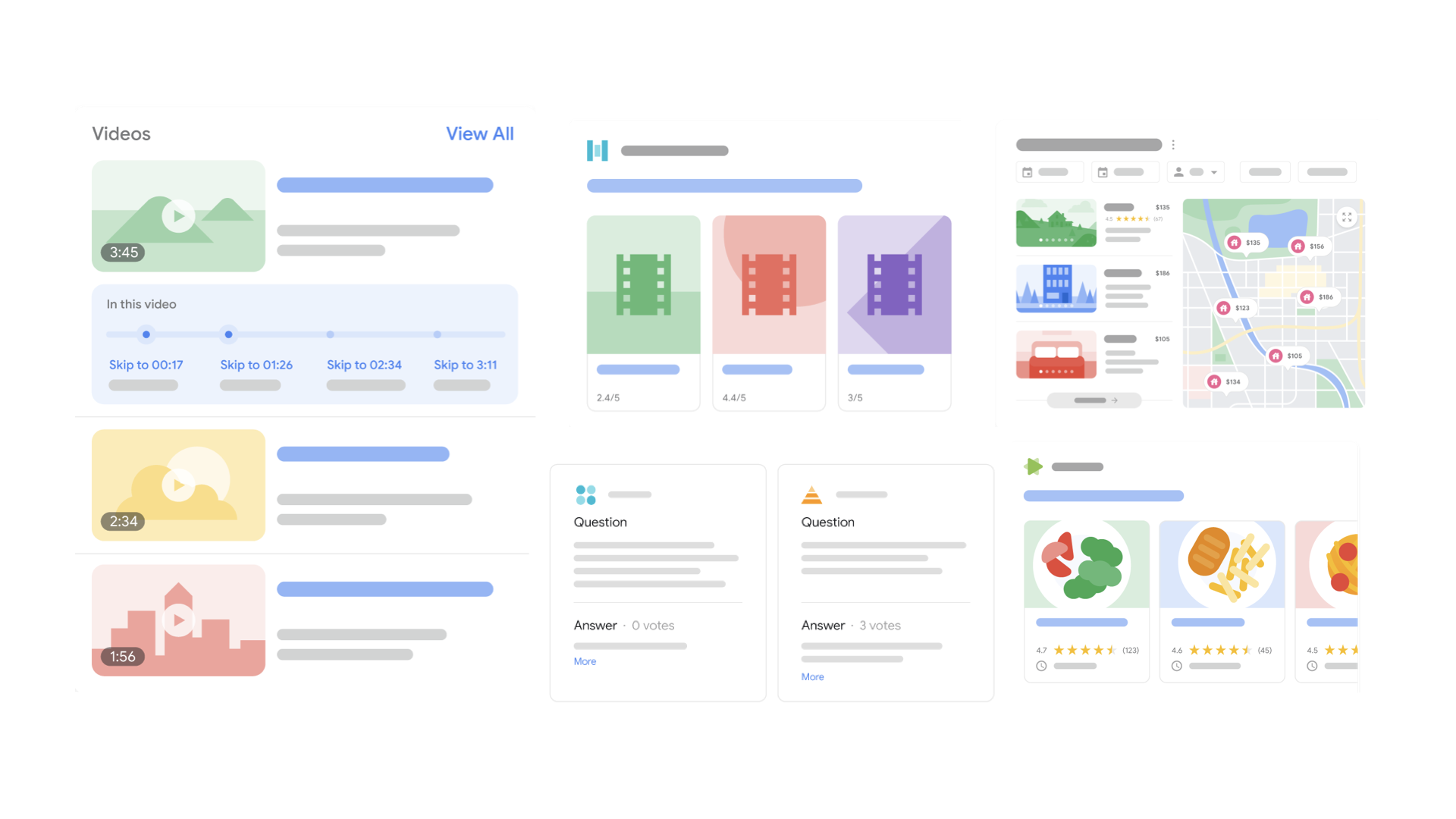
Results come from optimized request routing that delivers accurate location-specific data. You can target regions by name or by Google’s place identifiers. For geo-focused queries — a cycling trail in a fitness app, for instance — the Google Maps API extracts location data formatted for display on maps.

Speed Tiers
For time-sensitive monitoring, baseline performance may not be enough. SerpApi’s Ludicrous Speed option doubles the server resources assigned to your requests, more than halving response times. Ludicrous Speed Max goes further with four times the server resources — suitable for enterprise-scale data hauls where delayed sports scores or price fluctuations lose value fast.

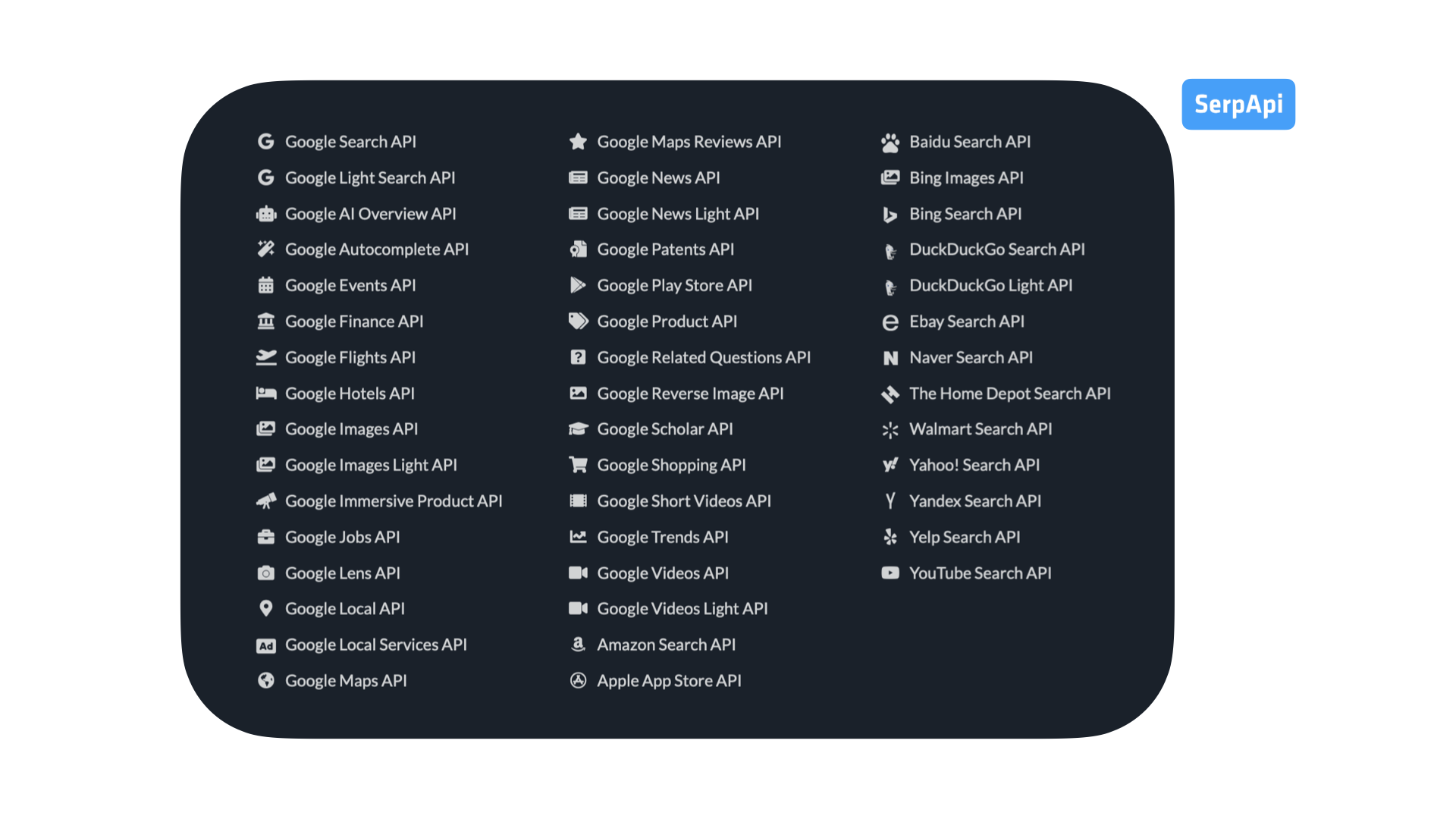
When you don’t need the full search API, a Light version exists for Google Search, Google Images, Google Videos, Google News, and DuckDuckGo Search APIs.
Configuration and Control
The API supports fine-grained controls: asynchronous result retrieval, advanced search parameters, a JSON restrictor to trim output, device targeting, and opting out of query auto-correction. For privacy-sensitive deployments, ZeroTrace mode (available on selected plans) keeps your search metadata off SerpApi’s servers.
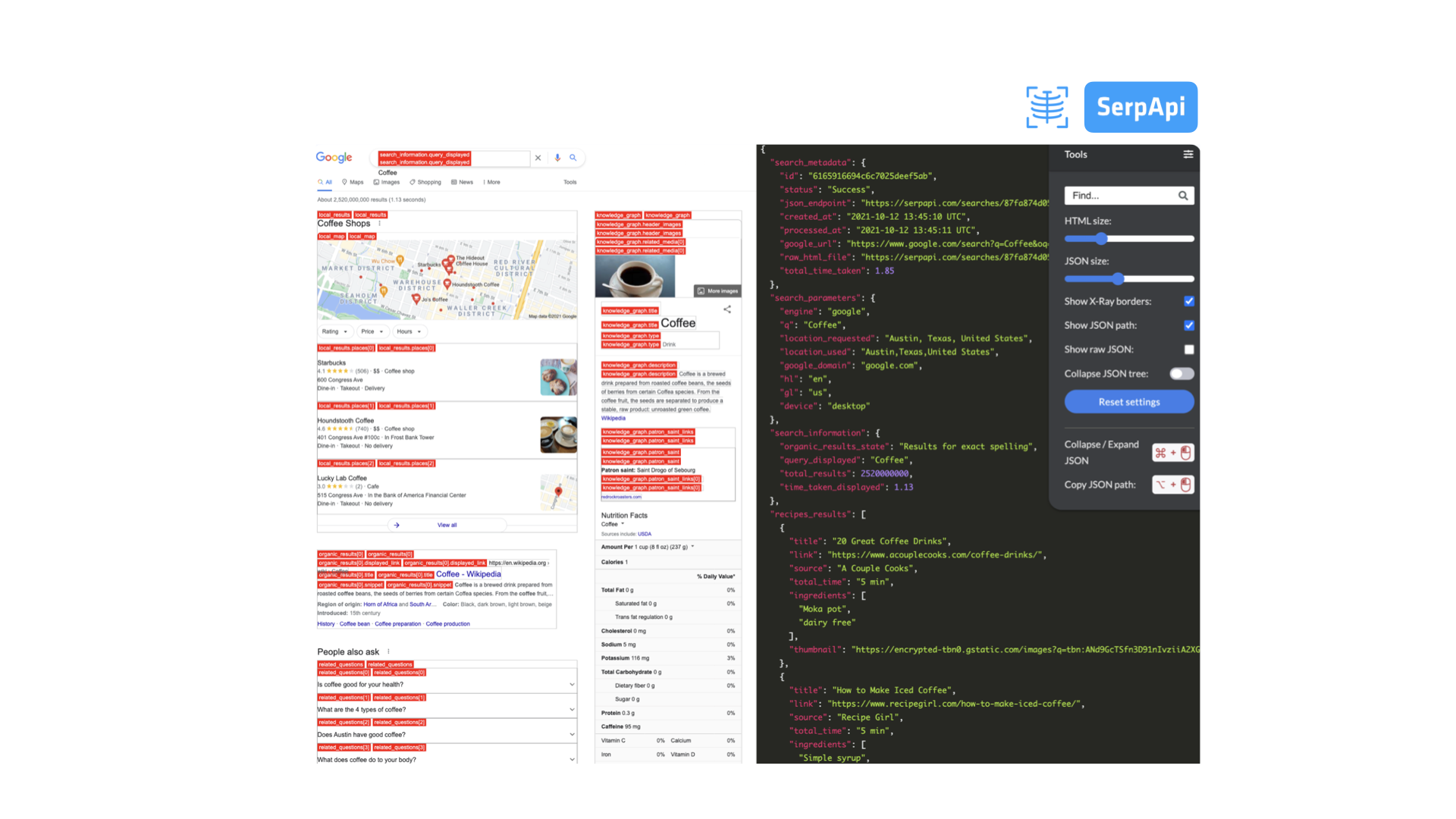
Debugging extracted JSON against a search results page can be painful. SerpApi’s X-Ray tool shows exactly which element on the page corresponds to which JSON field. It’s included free in all plans.
Support and Getting Started
Scraping search results raises legal questions you may not have resources to answer internally. SerpApi states its position clearly:
“SerpApi, LLC assumes scraping and parsing liabilities for both domestic and foreign companies unless your usage is otherwise illegal.”
For questions on legal protections, pricing, performance expectations, on-demand options, or technical support, the contact page is the starting point.
You can evaluate SerpApi without cost: the free starter plan includes up to 250 search queries, after which paid monthly plans offer higher search limits and additional features like the speed options and ZeroTrace mode.



