
Widespread reports this week of "huge fines" and "sweeping new AI rules" from the European Union miss the point. The actual guidance, published under Article 50 of the EU AI Act, is narrower and more practical than the headlines suggest. The core requirement: when AI content could be mistaken for human output, the creator must say so clearly.
Starting Aug 2, 2026, AI labelling becomes a legal obligation for any organization serving EU citizens. As with the European Accessibility Act, the rules apply globally — any company with EU users must comply, regardless of where it is based.

What Falls Under The Rules
The transparency obligations of Article 50(4) target four specific categories:
- Deepfakes. Image, audio, or video that resembles a real person, object, place, or event and would falsely appear authentic. Content that isn't deceptively realistic generally sits outside the requirement.
- Chatbots and AI agents. Users must be told when they are not speaking with a human.
- Fully AI-written text on matters of public interest, where no human review or editorial control has occurred.
- Emotion recognition and biometric categorization tools.
Both providers who build AI systems and deployers who use them carry legal responsibility. Licensing an external AI tool does not exempt a company, in the same way that GDPR and EAA obligations cannot be outsourced.
What Does Not Require A Label
The vast majority of AI-assisted work falls outside the mandate. Disclosure is not required when AI-generated text has undergone human review and editing, with a named person or entity taking editorial responsibility.
The term "public interest" refers to health, safety, environment, economy, finances, politics, science, or culture. AI-generated content touching on these subjects triggers disclosure.
For advertising and marketing, some legal teams recommend labelling realistic AI-generated imagery as a precaution. AI-produced product illustrations, photos, or posters that resemble a real person, place, object, or event require a disclosure.
Where "Edited" Ends And "AI-Generated" Begins
The Commission's guidance is intentionally fuzzy at the edges. Minor assistive edits — spellcheck, grammar, formatting, cropping, colour correction, and AI-generated translation — do not count as AI generation.
AI-generated summaries, composite imagery, substantive rewrites, and adding or removing elements from a photo do count. A quick skim before publishing does not qualify as editorial review. The Commission requires substantive editorial control under a named responsible person. Automated generation always needs a label, with one exception: closed B2B environments.
Why Sparkle Icons Are Probably Not Enough
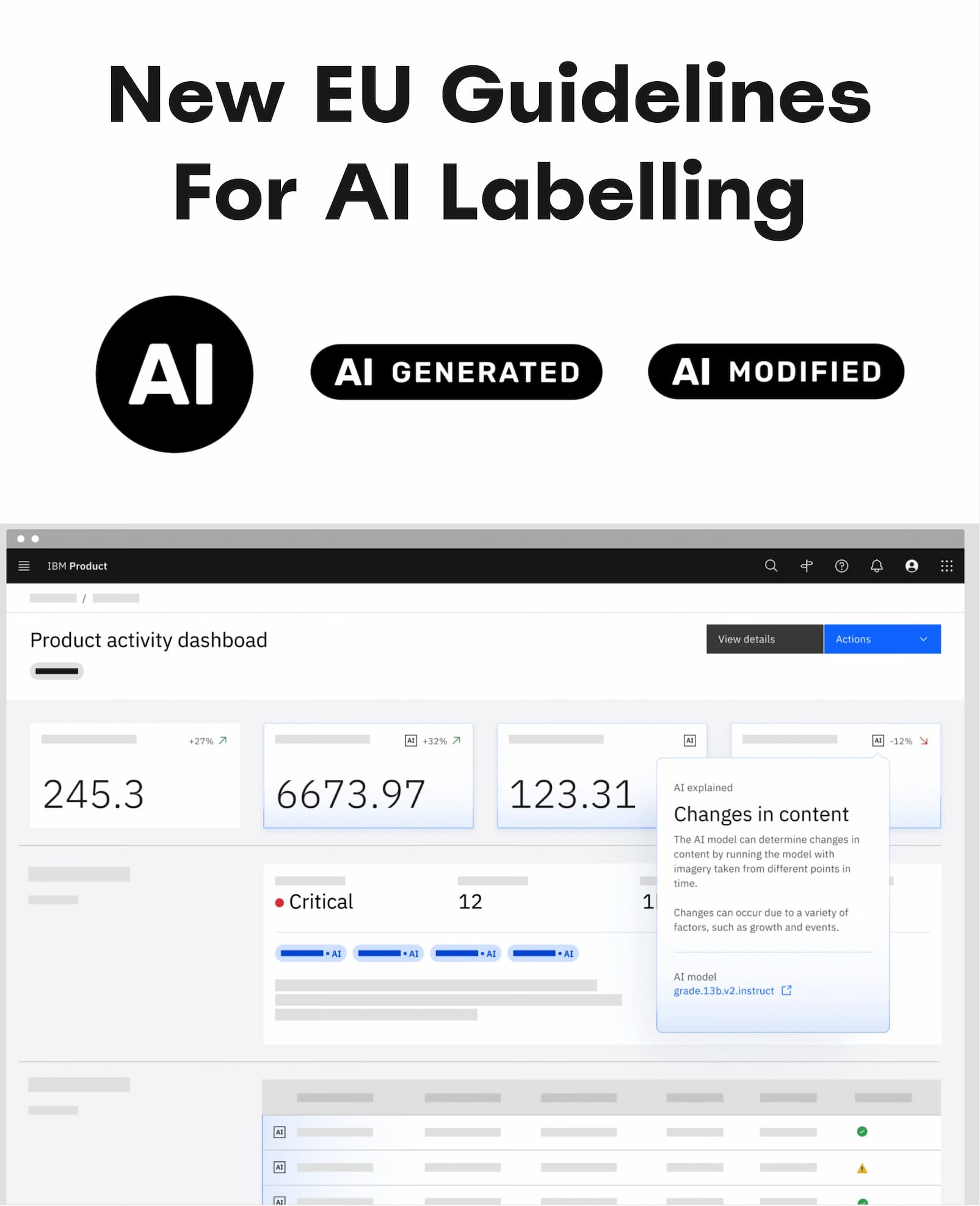
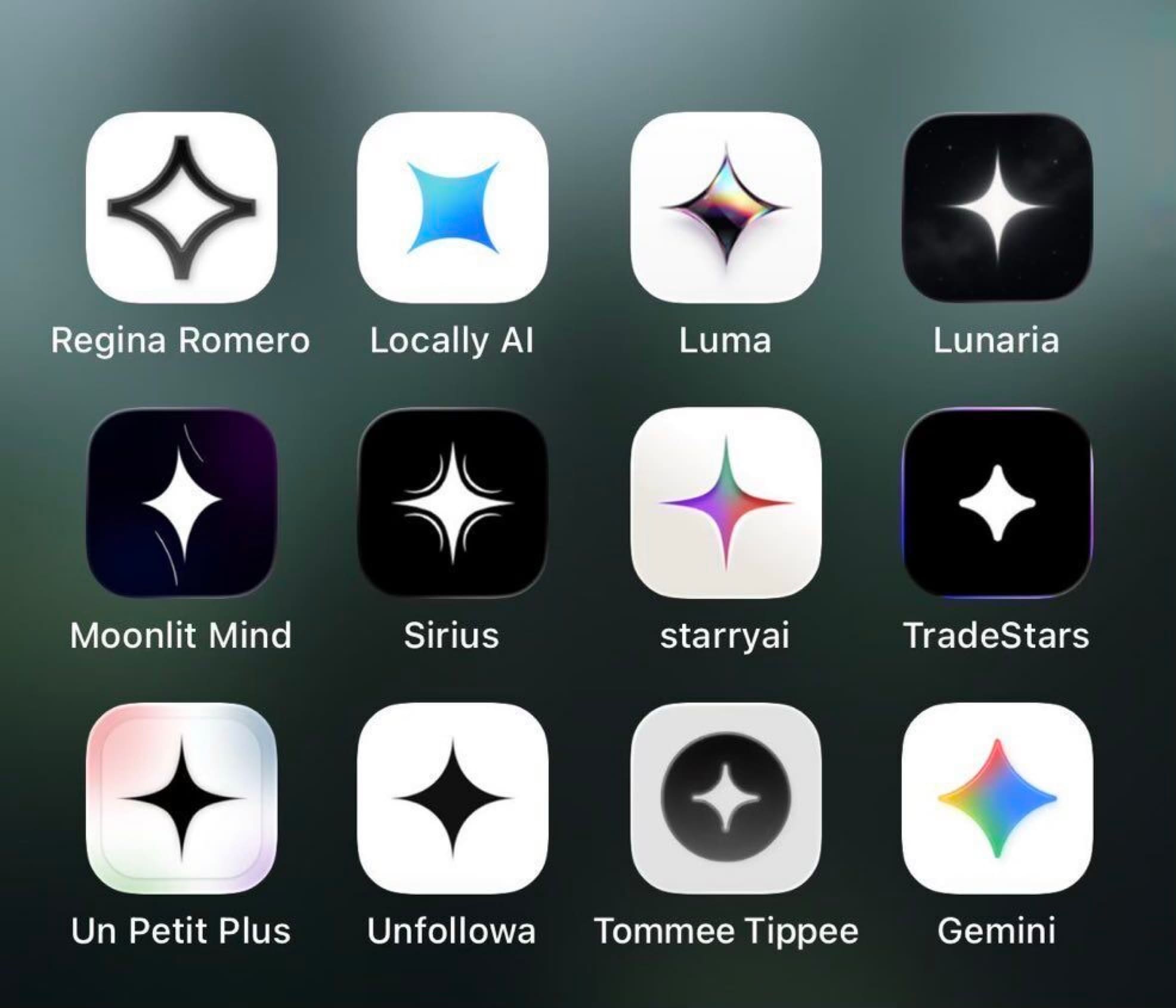
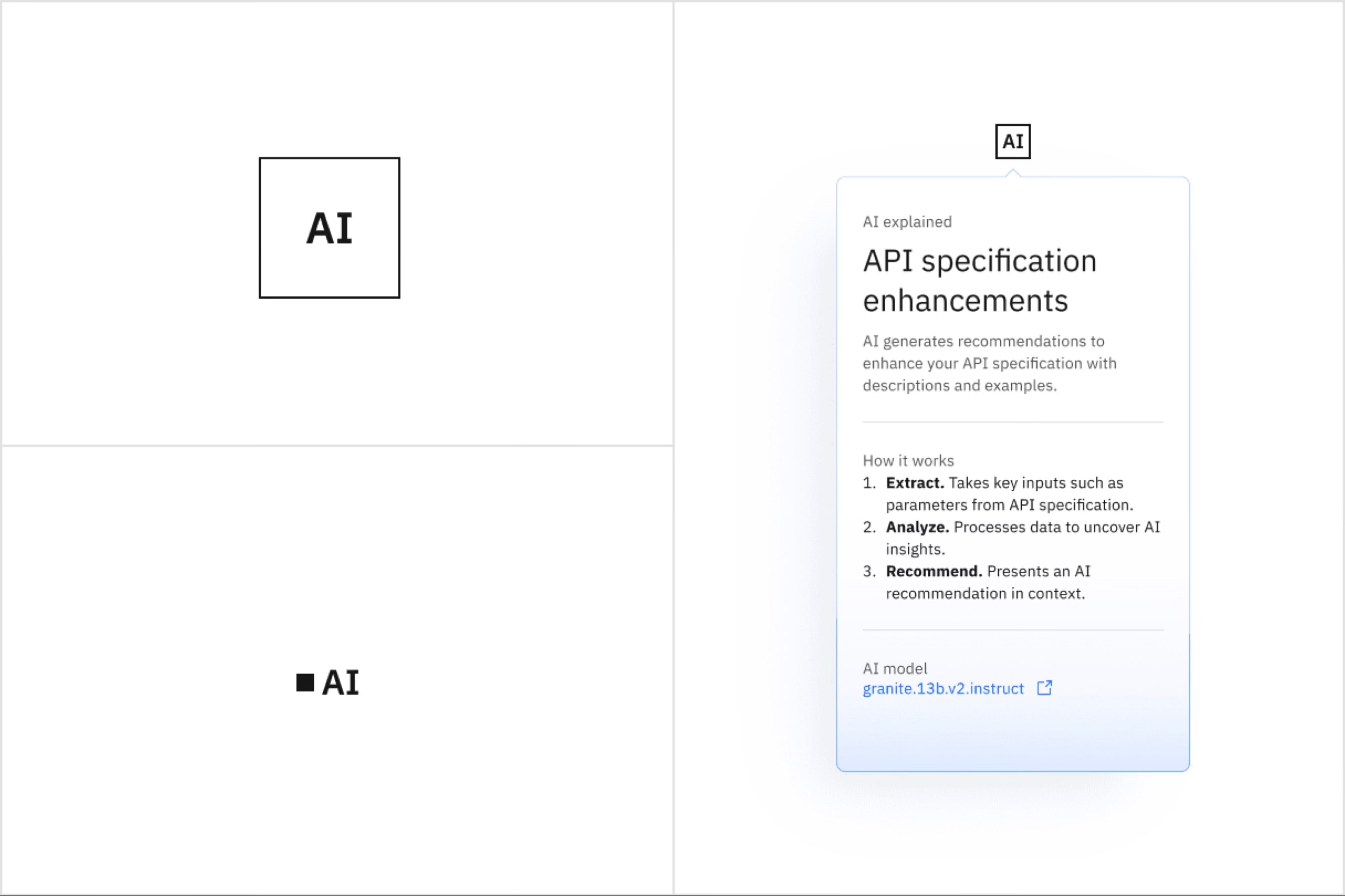
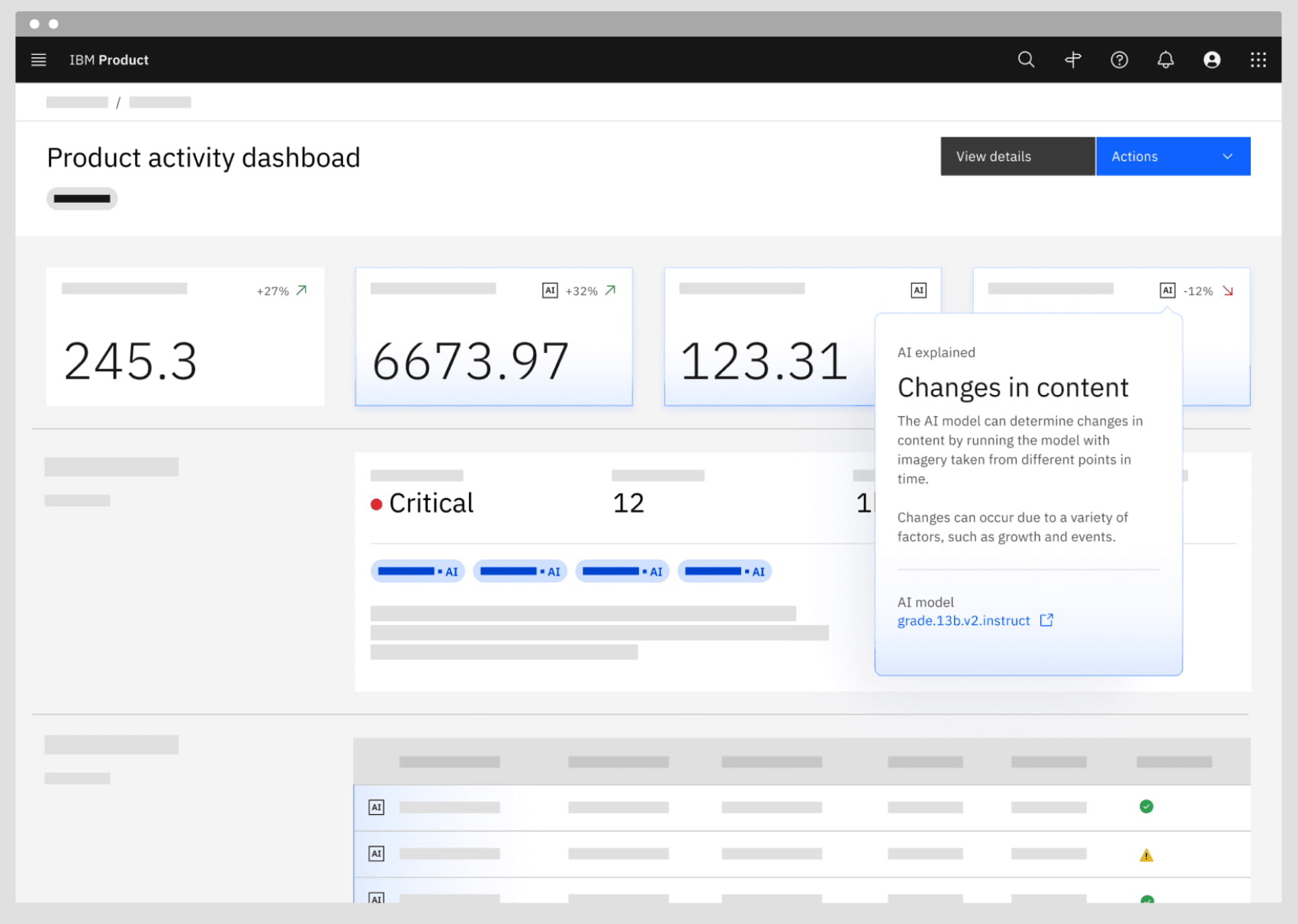
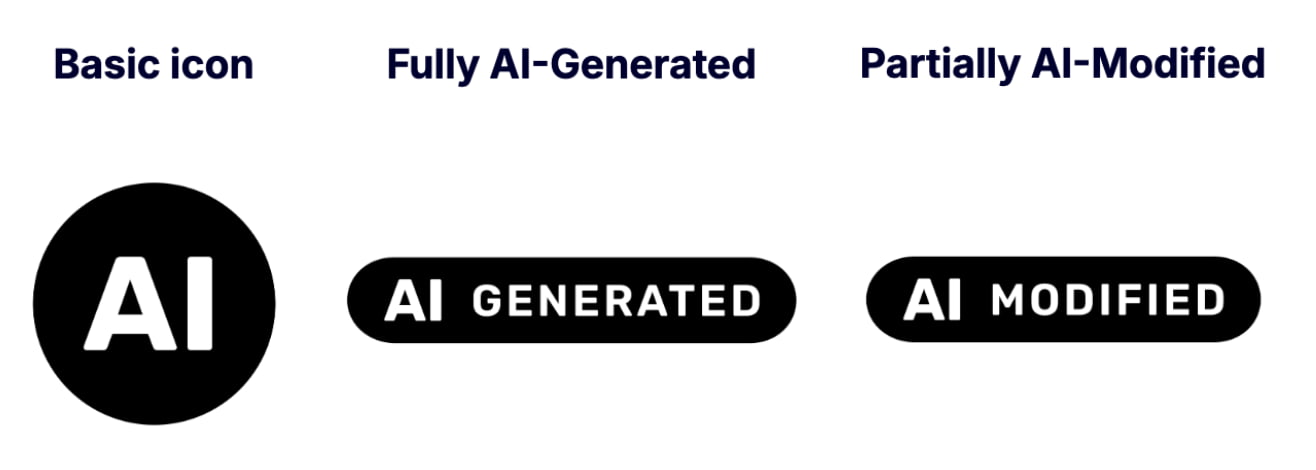
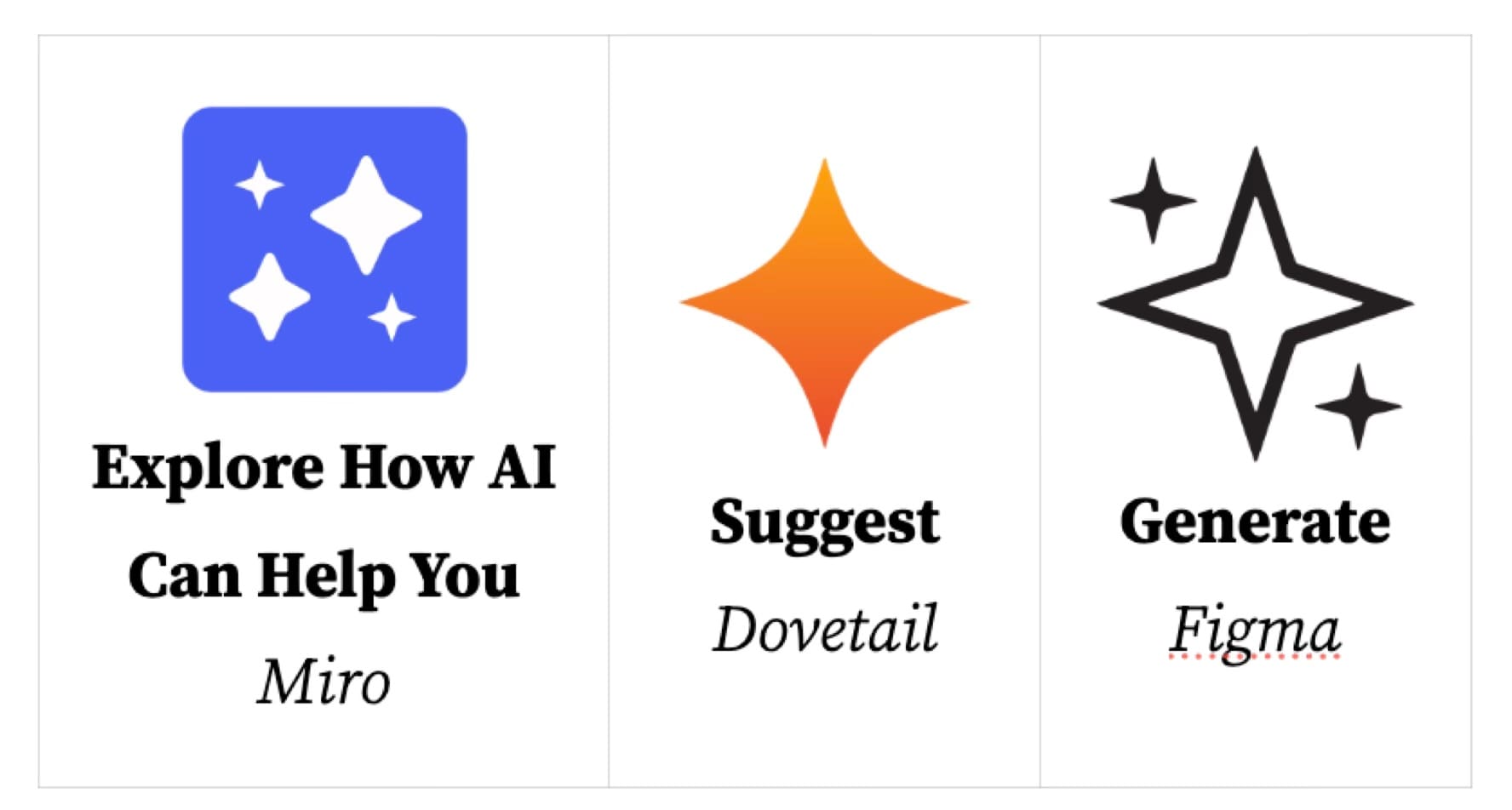
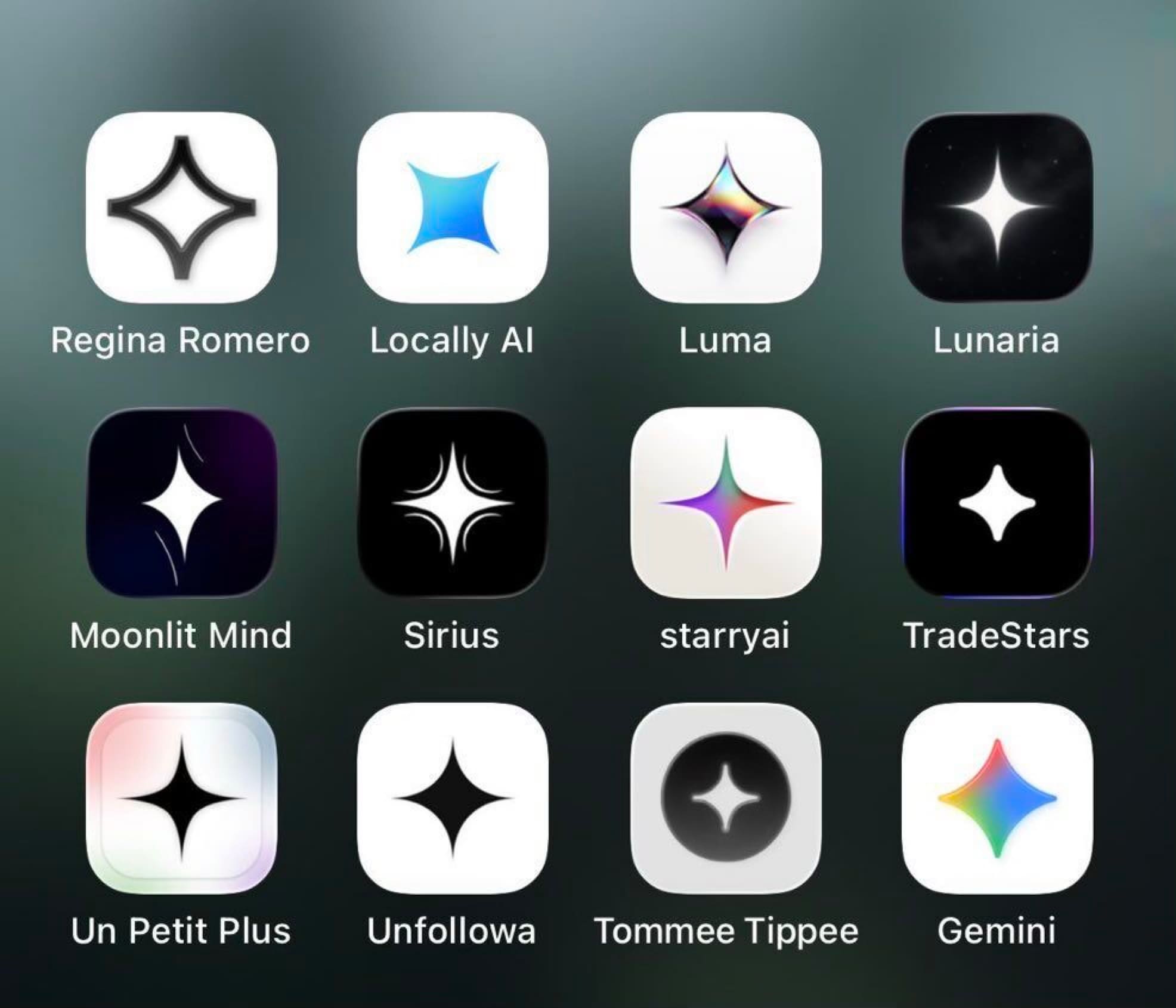
The European Commission has published an official EU AI icon set as part of its Code of Practice. The recommended mark is a specific "AI" icon, similar to the AI label in the Carbon Design System, not the generic ✨ sparkle used across many products.
The sparkle is too ambiguous as a disclosure signal. It is frequently used to indicate "AI-powered feature" rather than "this specific content was generated by AI" — the very conflation the EU guidance seeks to eliminate.
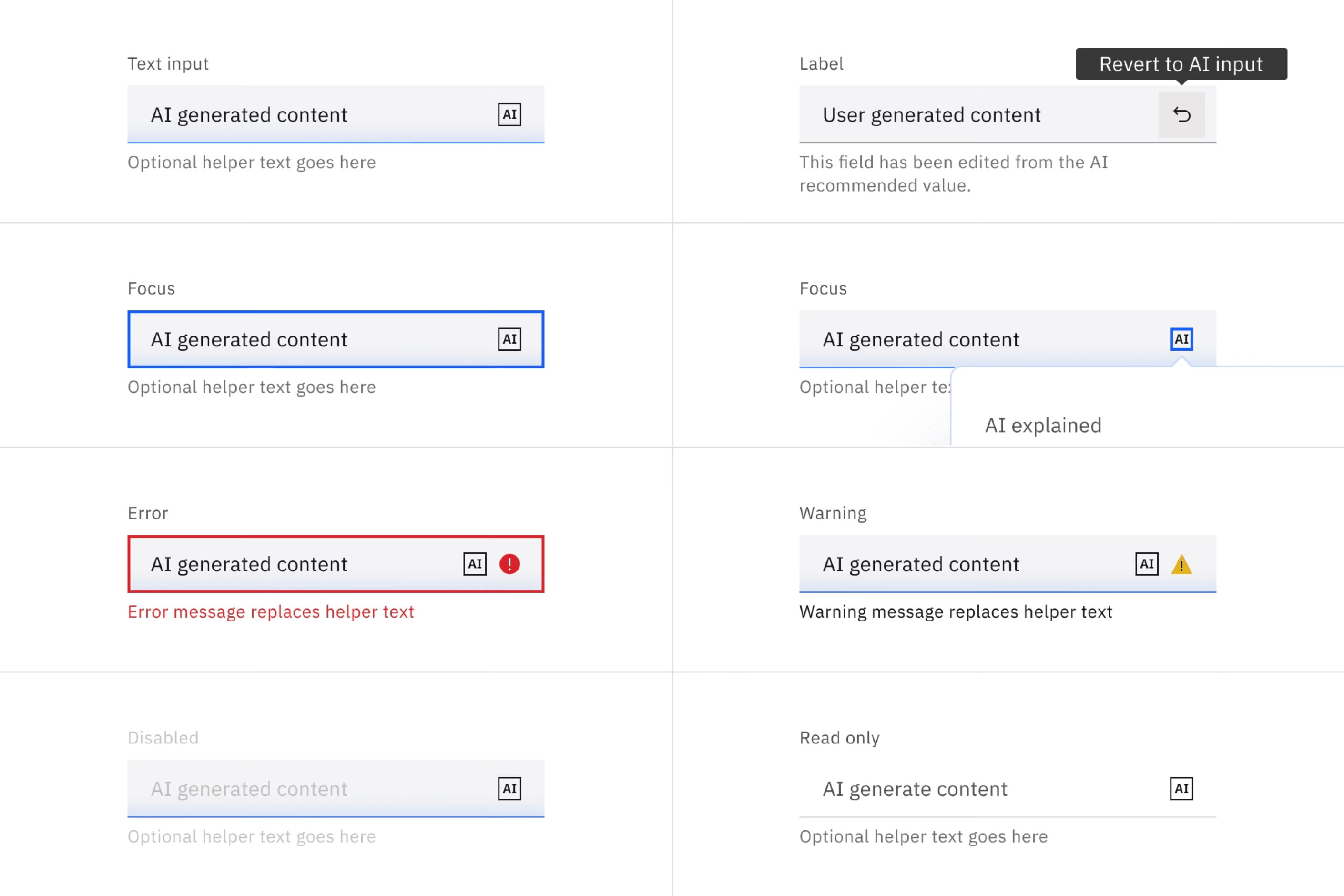
The Commission is explicit that an icon alone does not constitute legal compliance. A barely visible icon, a buried footer note, or a transient label are all non-compliant. The label must be clearly visible, pair with plain language text such as "AI-generated", and be accessible to assistive technologies. Labels must also persist when content is reshared or downloaded.
A Global Pattern, Not An EU Quirk
The EU is far from alone. Several jurisdictions have enacted similar rules in quick succession:
- China has required mandatory AI labelling since 1 September 2025, with visible tags and watermarked metadata.
- California implemented SB 942, as amended by AB 853, on the same date as the EU rules — 2 August 2026 — deliberately aligned.
- South Korea's AI Basic Act took effect on 22 January 2026, mandating deepfake labels with modest fines and a one-year grace period.
- India amended its IT Rules effective 20 February 2026, requiring platforms to label "synthetically generated information" and cutting takedown time for the most harmful deepfakes to 3 hours.
These are not isolated events. They add up to a consistent regulatory direction. Teams shipping AI-powered features this year should start deciding now which outputs will carry labels and which will not.
A Simple Principle Beneath The Headlines
Organizations familiar with the EU's approach will recognize the shape of these rules. They are broader than US state laws, which typically focus on synthetic human performers, political advertising, or specific AI applications.
The underlying idea is straightforward and has emerged worldwide almost simultaneously:
When AI content could easily be mistaken for human content, creators must say so — in a way that is clear, obvious, and unambiguous. Parts of the UI that are AI-generated must be disclosed as such.
- Safer and more transparent AI, European Commission's official announcement
- EU icons for labelling AI-generated content, the icon set and placement rules
- Guidelines on transparency obligations (Article 50), the detailed compliance guidance
- Code of Practice on marking and labelling of AI-generated content
- FAQ: Transparency obligations under Article 50, plain-language Q&A
- The Problem With AI Sparkle Icons, why ✨ is too ambiguous as a disclosure signal (Nielsen Norman Group)
- Carbon Design System: AI Label, a production-ready pattern for clear, accessible AI disclosure