Meta Open Source by the Numbers: A Year in Review
Open source continues to be a cornerstone of technological progress, and Meta’s 2024 portfolio demonstrates the scale of that impact. From AI and machine learning to web and mobile development, the company’s projects saw significant growth in both adoption and community contributions. The year’s data highlights a vibrant ecosystem of developers building on a foundation of shared tools.
Meta publishes and maintains its open source projects across several GitHub organizations, which house a range of tools, frameworks, and platforms for industries including web, mobile, AI/ML, and hardware. Notably, this collection also includes projects that have been archived or moved to foundations.

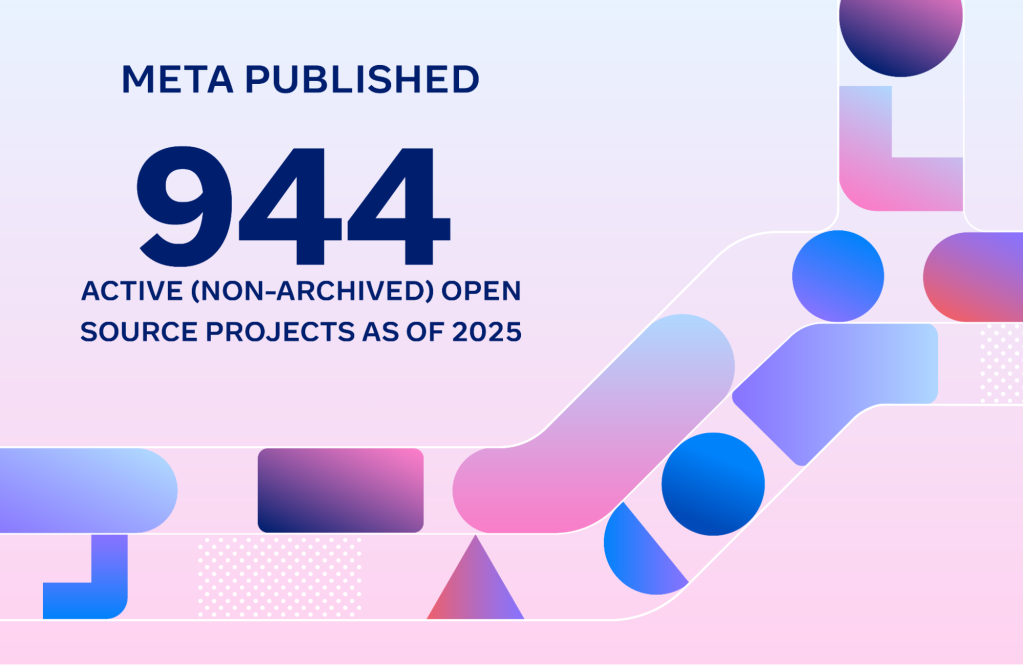
By the end of 2024, the roster of active public repositories had grown to 944. This number reflects the addition of 256 newly launched repositories during the year, while excluding archived projects and those transferred to external foundations.

The pace of development was rapid, with codebases reaching a total of 189,719 commits in the span of one year. While Meta employees contributed 118,701 of these commits, the open source community played a substantial role, accounting for 71,018 commits from external developers.
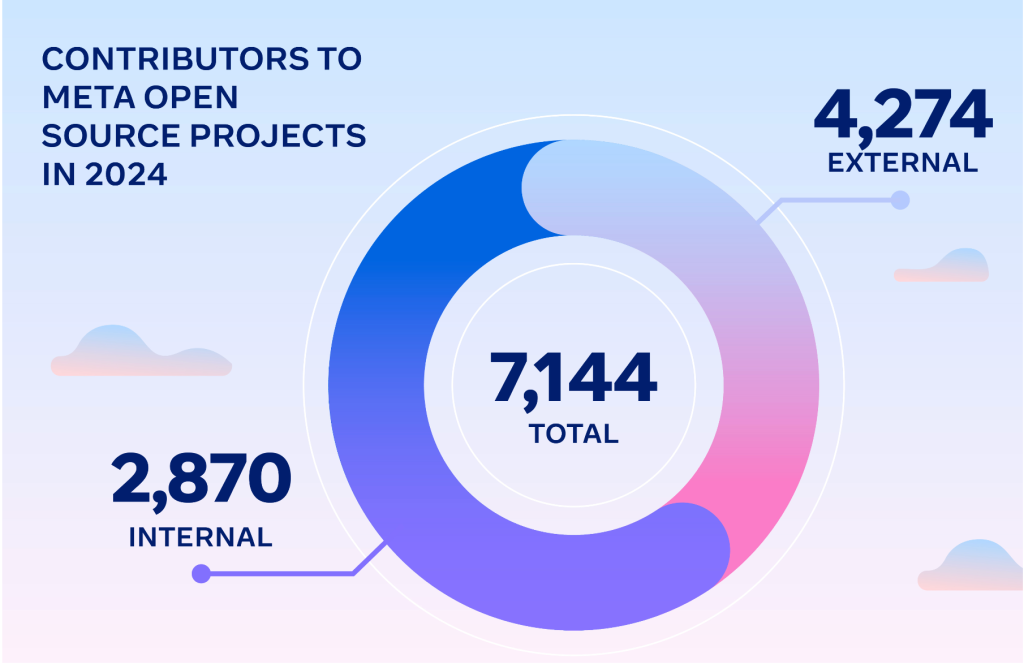
Collaboration sits at the heart of these efforts. The community saw contributions from 4,274 new external developers, bringing the total pool of contributors to 7,144. This active participation is the primary driver behind the ongoing evolution of Meta’s open source projects.
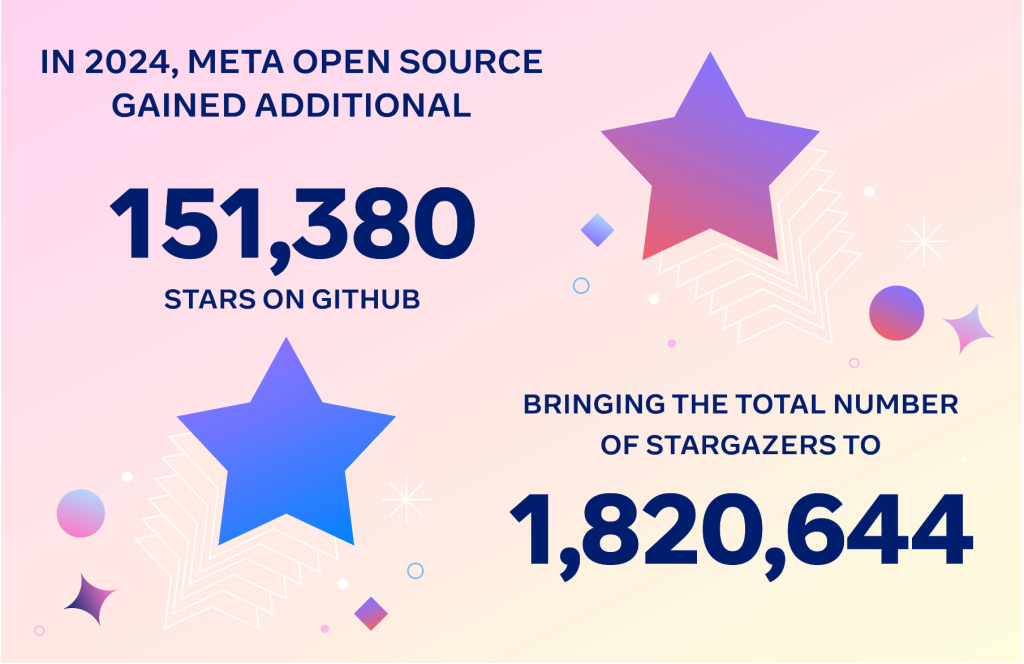
Interest in these initiatives continued to climb, with projects accumulating an additional 151,380 GitHub stars over the year. This brings the collective total to 1.8 million stars, reflecting sustained enthusiasm from the broader developer ecosystem.
Community and Impact
Meta’s open source strategy is rooted in the belief that sharing technology accelerates innovation across the industry. By making these solutions available, other companies and independent developers can scale their own operations and build products more quickly.
This progress is not achieved in a vacuum. The maintenance of these projects relies on a broad spectrum of contributions, from code pull requests to documentation updates and community engagement. The growth seen in 2024 underscores the value of this collaborative effort.


