Most AI rollouts look less like a strategy than a farce — and the frustrating part is that the same script was performed during the digital transformation era. In 2014 Paul Boag published Digital Adaptation for Smashing Magazine, examining how organizations were botching digital transformation and what they should have done instead. The parallels with AI adoption today are close enough that the book reads as a warning.
The recurring error, then and now, is treating the shift as a technological problem. Both digital transformation and AI are genuine technological advances requiring some level of technical implementation, but that work is only the tip of a very large iceberg.
The Human Side Comes First
During digital transformation, IT departments delivered CMSs, CRM systems and intranets while customer-facing teams shipped websites, apps and personalization. Almost no emphasis went on how people would use these systems. Internal tools were hard to use; customers either did not care about what was built or wanted something else entirely.
AI is repeating the pattern. Management buys into the hype, IT rolls out Copilot Studio licenses company-wide and considers the job finished. A bit of generic organization-wide training happens and little else. Staff are left unsure what to do with the new systems, under pressure to use them and under pressure to deliver results.
Organizations need to recognize that AI is a cultural shift as much as a technology, and that shift has enormous implications for their staff.
The situation today is arguably worse, because staff now fear for their jobs. They have read the same headlines as their executives, and reassurances from senior management do not undo that.
The Motivation Problem
From an employee's point of view, AI offers very little personally — even before considering that management may intend to use it to replace them. The main reason executives are excited is productivity: more output in less time. That does not benefit the staff who must still work 9 to 5, now expected to accomplish more within the same hours, with no time returned and no extra pay. Before asking staff to embrace AI, organizations need to ask themselves how they intend to motivate them to do so.
One place to start is helping staff identify the parts of their job they dislike and showing how AI can handle those tasks faster and with less pain. Change is far more palatable when it is framed as an opportunity to improve working lives. Beyond that, incentives may be necessary — career progression, compensation or shorter working hours.
Time, Training and Peer Support
Adopting AI is not a small task. It means challenging working practices built up over decades, and rebuilding all of that procedural knowledge. Most employees are already overworked and struggling with their to-do lists; they do not have the time to learn a new tool and work out where it fits into their workflow. That process demands not just time but consideration and experimentation. Sending someone on a training course is not enough to help them use AI to its full potential.
At minimum, staff need role-specific training, such as the AI training Boag provides to UX teams. Organizations should go further: sophisticated programs that teach different departments how to apply AI in their own roles, plus ongoing support and the time to experiment and find the best uses.
Formal training only goes so far. In Boag's experience the most effective support comes from colleagues, which is why he starts with enthusiasts rather than resisters. Every organization has a handful of people already experimenting with AI, often unprompted. Bring them together, give them time and space to share what works, and let their enthusiasm spread. The same approach worked during digital transformation: in Digital Adaptation, Boag described an internal conference where staff demonstrated what they had built to their colleagues — it did more for adoption than any memo from the top. People are far more likely to try something when a colleague in a similar role uses it successfully than when senior management orders it.
Rather than trying to win over the most resistant staff first, organizations should find the people already experimenting with AI, give them time to share what they have learned, and let social proof do the heavy lifting.
Experimentation has a downside: mistakes will be made.
Making Failure Safe
Many organizations have a culture of fear in which mistakes signal incompetence. Learning a new tool like AI inevitably involves errors, which becomes a serious barrier to adoption. The digital transformation era showed this clearly. Senior management demanded transformation and were puzzled when it did not materialize, not realizing they were sending mixed messages: they asked for change while still demanding the same KPIs be met and still flagging every mistake in annual reviews. There was no space to fail, with relentless pressure to deliver.
Today it can be worse. Boag hears stories of staff reprimanded for using too many tokens just weeks after being told to adopt AI, and of staff so thoroughly lectured about what they should and should not do with AI that they are afraid to try anything. Doing what they have always done feels safer.
If management want staff to adopt AI, then they need to make staff feel safe to experiment. They need to adjust KPIs, change how staff are reviewed, and relax some of the governance while staff are learning.
Mistakes will happen, but that is the cost of change. Organizations need to accept it and mitigate what they can through how they roll out the technology.
Governance Without Gridlock
Some governance is unavoidable. Historically, organizations either had none at all or imposed rules strict enough to stifle innovation, and the same split is emerging with AI. Staff benefit from guidance that clarifies what is expected and what they may or may not do. Too often, though, the rules are so restrictive that doing nothing is easier. Pages of instructions about what can be shared with AI feed exactly the fear described earlier.
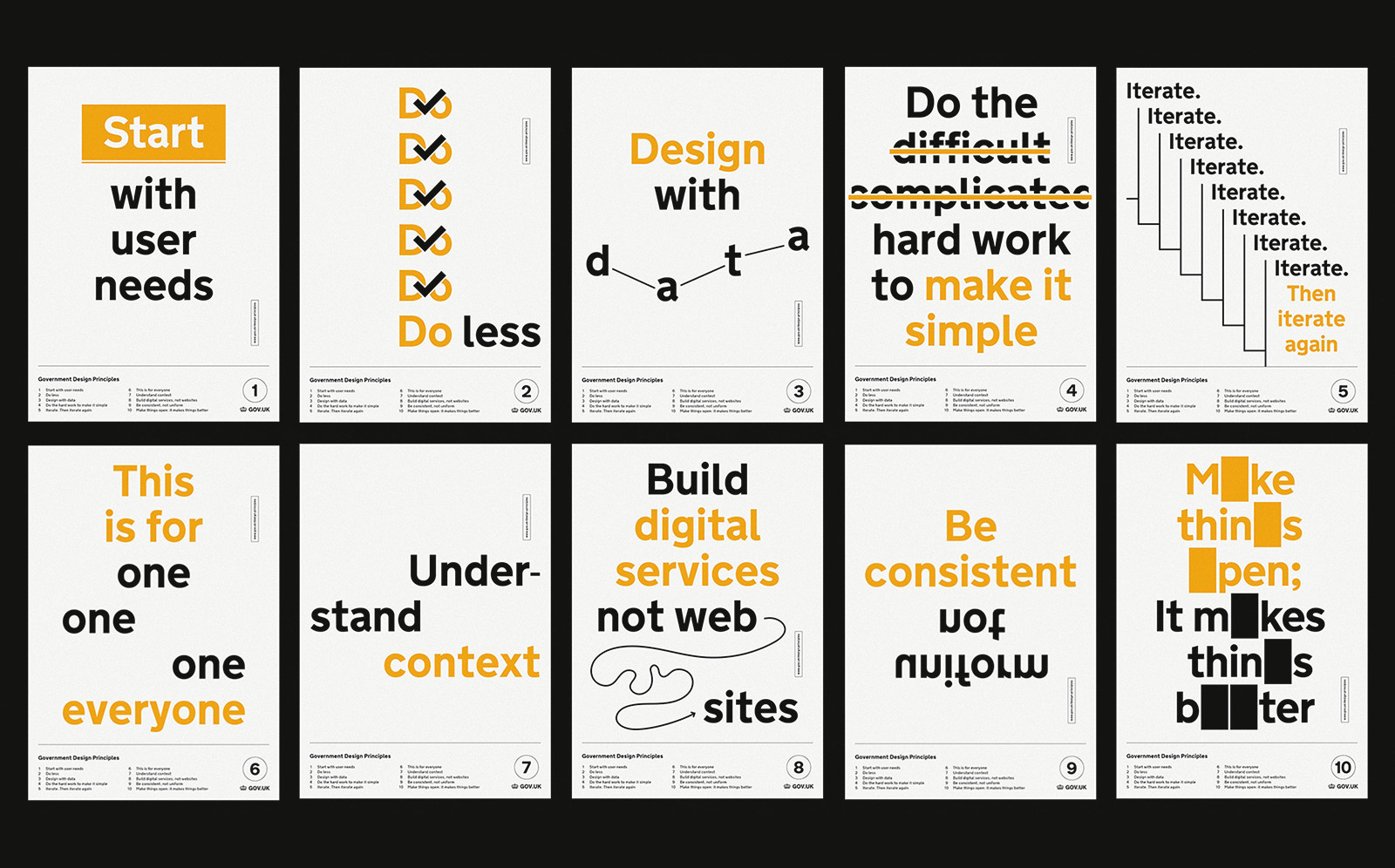
Organizations need a short set of principles that would fit on a handful of posters, similar to gov.uk's design principles. Beyond that, they need to demonstrate a degree of trust in their staff to use common sense.
Rollout, Shadow AI and Controlled Chaos
IT's approach to rollout deserves equal scrutiny. In 2014, overstretched IT teams selected a set of technologies and deployed them organization-wide with little or no consultation with the people who would use them. Anything outside that set required a complex approval process, usually via a steering committee. The result was glacial change and a major contributor to digital transformation failure rates. The same behavior is visible now, with IT teams standardizing on a tool such as Copilot and calling it done — an approach that often falls far short.
Consider a UX team Boag currently works with. Management is pushing hard for AI adoption and the team is excited about an AI-powered research repository and even AI personas. On paper it is a model case study: enthusiastic management, an excited team, innovative ideas. In practice nothing is happening, because Copilot cannot deliver the team's vision and they are bogged down in bureaucracy trying to persuade the AI steering group to allow a different toolset. Their enthusiasm is waning.
That team is among the more patient ones. Elsewhere, staff are not waiting for the steering group at all. Just as shadow IT emerged during digital transformation — people signing up for Dropbox and Google Docs because official tools could not do what they needed — shadow AI is now appearing. When the in-house AI tool will not let people do their jobs, they open a personal ChatGPT or Claude account on a phone or home laptop and get on with it.
That is more dangerous than the problem the restrictions were meant to prevent. Company data ends up in tools the organization does not control, with no oversight and no record of what has been shared. The instinctive response — stricter policies, blocked websites, warnings about disciplinary action — rarely works and drives the behavior further underground. Shadow AI is a symptom, and a useful one: it shows exactly where official tools fall short.
Instead of trying to stamp out shadow AI, organizations should learn from it. Talk to staff about what they are using personal accounts for and what they feel they cannot do with the AI they have been given, then use that to shape what gets rolled out next.
A messy, out-of-control tech stack is not ideal, but in the early days of adoption some chaos may be tolerable while people explore what is possible and establish common use cases. Staff should be free to experiment with different uses and different AI apps to find what suits their roles. Locking things down can come later, once real organizational needs are clearer.
The Greater Risk
Central control feels safer, and the desire to make sure nothing goes wrong is understandable. But change carries risk, and moving too slowly is riskier than moving too fast. The bigger danger is treating AI adoption as a technological challenge and overlooking the human side. Like digital transformation, it is about people, culture and change management. The sooner organizations grasp the scope of what they are dealing with, the better.