Dropbox's adoption playbook: buy-in first, tooling second
Dropbox treats AI tooling as a means to faster delivery of high-quality features rather than an end in itself, and it used its own adoption experience to frame the discussion. Uma Namasivayam, Senior Director of Engineering Productivity, walked attendees through the company's experimentation, adoption and enablement cycle.
The first step was securing Dropbox leadership's backing and making AI adoption a company-level priority, which moved the effort from grassroots experimentation to an organizational imperative and aligned teams around it. Dropbox also cut the contract-approval overhead that had slowed pilots of new tooling, leaving teams free to experiment.
Impact showed up across the software development life cycle, from code review and documentation to debugging and testing. Off-the-shelf tools do not always fit an organization of Dropbox's scale, given its large, multi-language monorepo, so the company decides deliberately where to adopt, where to extend and where to build. One example of the last category is a Dropbox-built tool that watches for failed builds on pull requests and uses the company's AI platform to propose fixes.
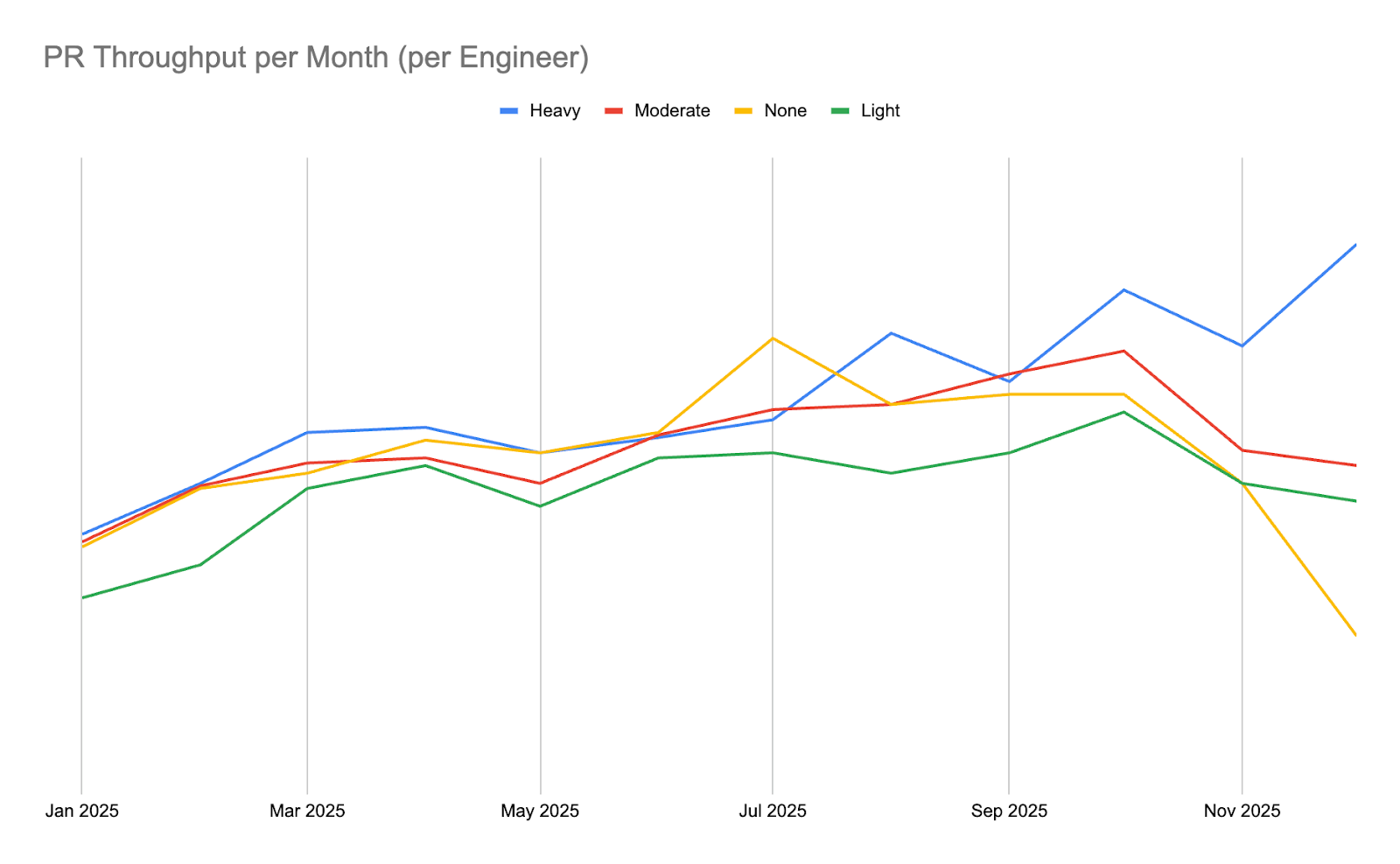
Most Dropbox developers now use at least one AI tool in their workflows. Dropbox tracks pull request (PR) throughput per engineer per month as a core metric; engineers who engage more with AI coding tools show an outsized impact on code shipped under that measure.
Internal sentiment is monitored closely as well. As strongly positive sentiment grows, the share of negative sentiment falls.
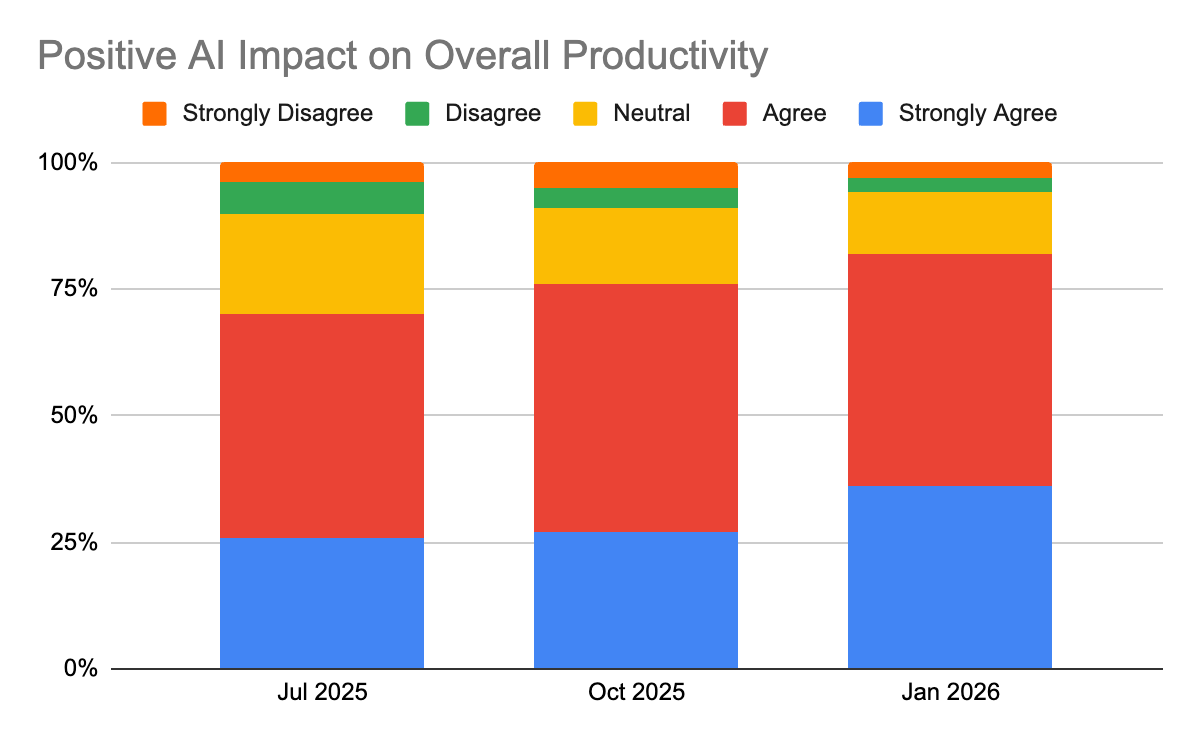
Developers report less friction, which Dropbox attributes to making adoption easier on the terms each team finds most effective.
Inside the roundtable
CTO Ali Dasdan hosted the executive roundtable on December 11, 2025, at Dropbox's San Francisco studio, gathering a small group of technology leaders for an afternoon of open discussion. To cross-pollinate ideas across industries, attendees were split into three cohorts that rotated for each question, so every leader worked with three different peer groups.
Three pillars framed the discussion:
- Measuring impact. The top three ways attendees measure AI-driven engineering productivity gains, and the top three ways they measure the resulting business impact.
- Leadership alignment. Three ways of aligning with company leadership on the progress and pace of AI deployment and use for productivity.
- The human element. The top three ways attendees recruit, evaluate and grow their workforce for AI competency and productivity, and which lessons can make non-developers more productive.
The conversation continued over a cocktail hour, where leaders discussed the commitment to craft required to lead in the age of AI.
Takeaways and open questions
Three themes emerged from the discussions:
- Balance. Productivity gains must be weighed against potential trade-offs in quality and long-term maintenance costs.
- The role of leadership. Management, technical leadership in particular, is pivotal in setting and enforcing effective AI usage norms.
- Formalization. Embedding AI competency in career frameworks signals a long-term commitment to its strategic importance.
Open questions remain, among them where the extra capacity AI provides actually goes. At Dropbox it is currently channeled into addressing tech debt, executing migrations and improving reliability.
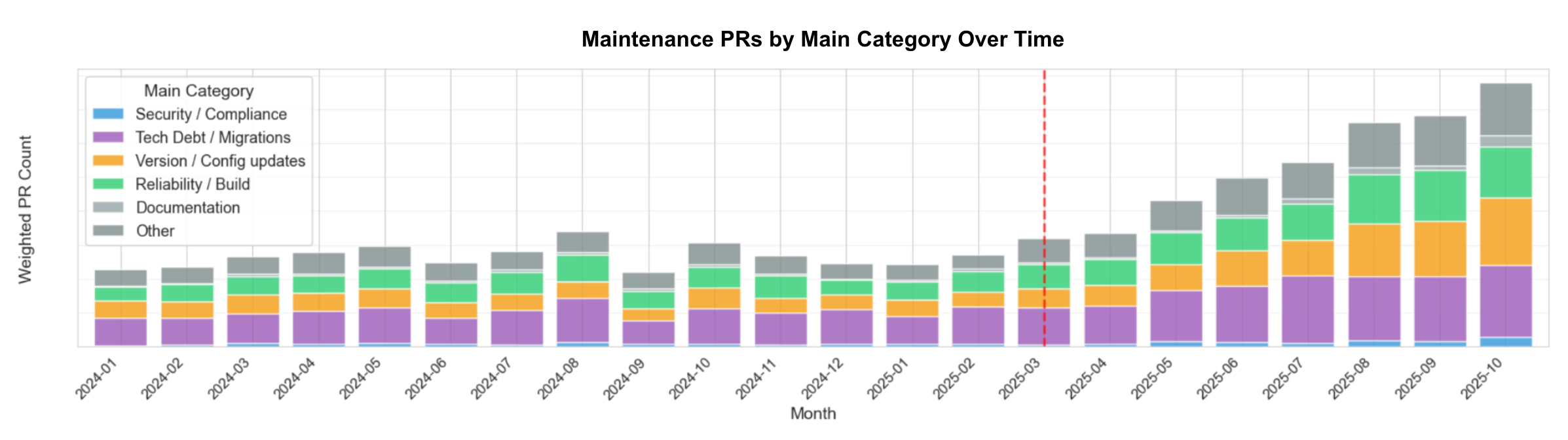
Connecting productivity gains to tangible business outcomes remains a key challenge, one echoed by many roundtable attendees. The focus for 2026 is therefore on mapping productivity directly to specific outcomes, extending operational rigor beyond engineering teams and driving end-to-end product velocity.