
Open Source Groups Push Back on California AI Transparency Bill
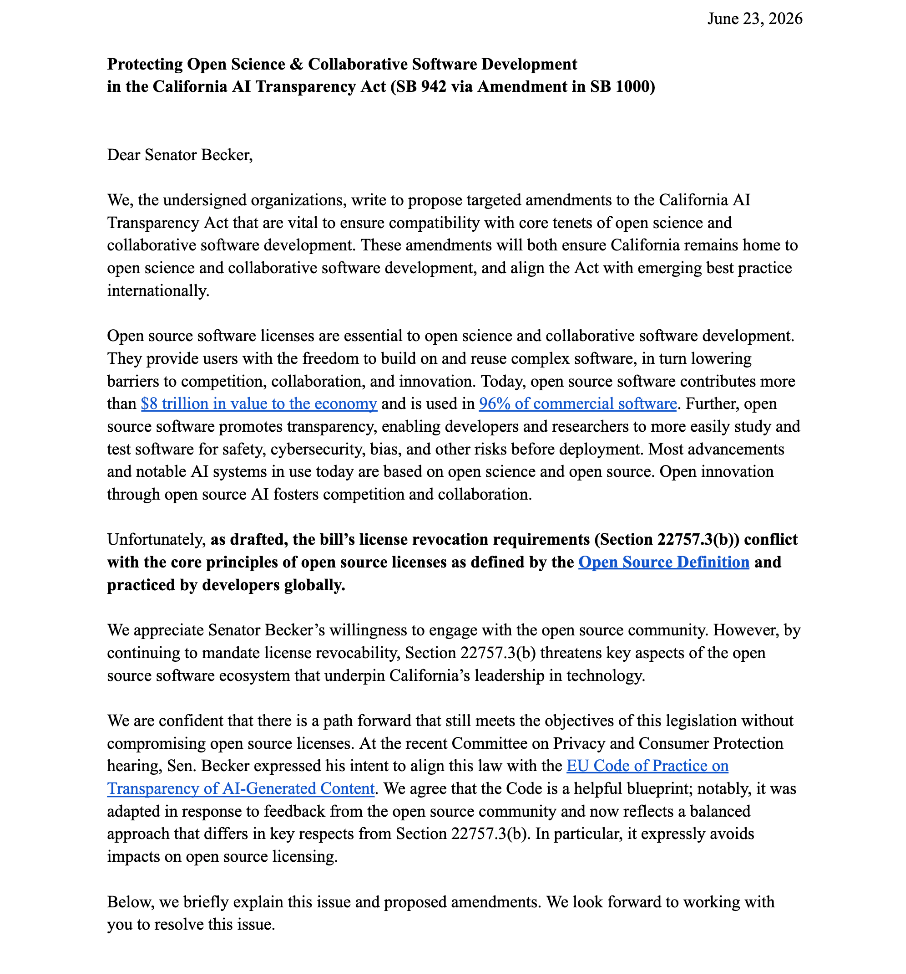
GitHub has joined forces with Black Forest Labs, Hugging Face, and the Mozilla Corporation to request specific changes to California's AI Transparency Act (SB 942, as proposed in SB 1000). The coalition has published a joint letter detailing its concerns.
The core issue centers on how the bill's current language around license revocation clashes with the foundational principles of open source licensing. These licenses are intentionally perpetual and irrevocable, a design that allows developers to depend on code stability across projects and organizations. The draft text would obligate developers to revoke licenses when downstream users fail to meet certain requirements—an approach fundamentally incompatible with common open source licenses like those used across the software supply chain. The uncertainty this would introduce is particularly acute for community-driven and collaborative projects.
A Workable Alternative Exists
According to the coalition's letter, the revocation requirement overshoots the bill's objectives. Developers who modify and deploy AI systems are already subject to the law's direct obligations, so enforcement mechanisms are not lost without this provision. The group points to the EU's AI Act Transparency Code of Practice as a more fitting model: it acknowledges the unique characteristics of open source and determines that informing downstream users about best practices through documentation is sufficient.
GitHub argues that these proposed amendments would preserve the bill's transparency goals without breaking open source development workflows. The outcome matters beyond California, as the state's legislative choices can shape how AI accountability and open innovation coexist.
Next Steps for Developers
The coalition encourages the developer community to review the letter and contact policymakers directly. The goal is to ensure that technically sound, clearly articulated feedback from open source developers and civil society influences how the final legislation balances transparency requirements with the realities of open source software.