The Feelings Era of AI
Config 2025 was heavy on emotion—but not in the way you might expect from a design conference dominated by AI talk. The recurring themes were care, craft, and intentionality. The most-shared moments captured this sentiment: Smith & Diction’s talk declared that “Efficiency kills love,” while Figma CEO Dylan Field’s keynote asserted that “Design is chasing a feeling.”
That sentiment echoed through the community. Yang You, Head of Design at Paradigm, wrote on X: “While our industry and process is so rapidly changing, one thing is clear—craft is king, and care is the conduit.” Designers are positioning new tools not just for speed, but for creating meaningful, purposeful work. As Madeline Gannon, founder of Atonaton, said in a session called “How to be a robot whisperer”: “Automation is not inevitable. It is intentional. It reflects our values and is a result of our collective choices.”
From Speedy to Special
AI tools are being recognized less for their ability to finish tasks faster and more for how they let people push ideas forward regardless of role. Christian Marc Schmidt of Schema Design pointed out on X how modern tools enable the “designer-builder,” allowing anyone to go from mockup to implementation without the usual handoffs. “We’re not just creating blueprints; we’re building solutions and evolving them with direct user feedback,” he said.
In the session “Pixels and prompts: Building products in the AI era,” Figma VP of Product Paige Costello stressed that tools like Figma Make function best not as final-answer generators, but as a way to start conversations through prototyping and ideation. “The product development process used to be: ideate, align, define, design, develop, ship—I’m so excited that now you can start in the middle, but the thinking still has to be full circle,” she said.
Ningfei Ou, Content Designer at Google, pushed back against an overemphasis on speed, urging designers to consider the emotional impact (“affect”) of user experiences. Tangelo Senior Product Designer Taylor Barker summarized the general mood on LinkedIn: "From rewiring robots to finding beauty in discarded materials to designing a pigeon sneaker, every talk pointed back to craft—not as polish, but as care. As intention. As the quiet decision to take the long way because it’s the right way."
Requires a Different Kind of Play
Understanding AI’s full potential often starts with creating space for play rather than productivity—what Kelin Carolyn Zhang and Ryan Mather call “minimum viable play.” The co-founders of Poetry Camera built a cardboard prototype that uses AI to generate poems from what it sees, highlighting the value of small, playful experiments.
Lane Shackleton of Coda made a similar case for building for just one person instead of a total addressable market. “When the cost of building software has absolutely plummeted, you have the ability to be much more childlike and build for yourself.” This idea resonated with Stripe’s Nick Jones and Devin Jacoviello, which they shared during their presentation: “Sometimes our best work starts off as a joke. Why would we expect someone to spend time on a website if we didn’t have fun making it?”
Play also introduces an element of surprise. Joel Lewenstein, Anthropic’s Head of Product Design, invoked the notion of serendipity in his “Beyond agents: AI as a creative partner” talk: “The AI doesn’t just execute exactly on your instructions; it goes a little beyond what it’s asked. There’s an element of surprise and serendipity.”
Partner, Not Just Tool
But as humans get more involved in play, there is nuance to being aware of. Etsy’s Director of Design Program Management Steven Sommer warned of what he described on LinkedIn as a “craft for me, AI for thee” attitude—an unspoken belief that others’ work is safe to outsource while one’s own isn’t. “[W]e owe our teammates the same respect we demand for our own work,” he wrote.
On the opposite end of the spectrum, some designers are leaning fully into AI’s persona. Baratunde Thurston, host of the podcast Life With Machines, posited a shift: “Because that’s the transition that we’re on: from tools to teammates.” Fellow speaker Joel, of Anthropic, echoed this statement: “I think AI can and should be a creative partner. They’re central to the core creative act, and they evolve with you,” thinking about “what AI might do with us, and not just for us.”
Gary Hustwit’s documentary Eno is a real-world manifestation of this type of emerging collaboration. It uses generative software to sequence scenes uniquely, meaning no two viewers ever see the same film twice.
Shared Toys Are Better Than Solo Sandboxes
Gary said, “Just because something has always been done one way doesn’t mean it’s the only way.” That sentiment extends to collaboration—both among teams and with AI. Mihika Kapoor from Figma sees human cooperation as building a successful AI landscape: “We’re thinking long and hard about how we might be able to introduce collaboration to AI-native tools. Just as the sandbox becomes so much more fun when someone joins you to play, we would encourage you to think about how you can share the toys.”
It was a teamwork-minded thought long before the machines got involved. “We’ve only been able to get here because of each other,” said Poetry Camera’s Kelin of her partnership with Ryan, “and it wouldn’t have been nearly as meaningful without everyone we’ve met along the way.”
The Human Element in the AI Loop
As AI accelerates product development, the question of what role humans should play becomes more pressing. The consensus emerging from practitioners is clear: keeping a person in the loop isn't just a safety measure—it's what gives the work meaning. Faster cycles are a benefit, but the real value lies in using the time saved to foster genuine connection and craft experiences that resonate emotionally.

This shift in focus suggests a broader cultural change in how we approach AI-powered work. We are moving beyond a singular obsession with speed and efficiency toward a desire to create things that provoke feeling and build authentic relationships with users. The technology is the enabler; the human perspective is what turns output into something worthwhile.
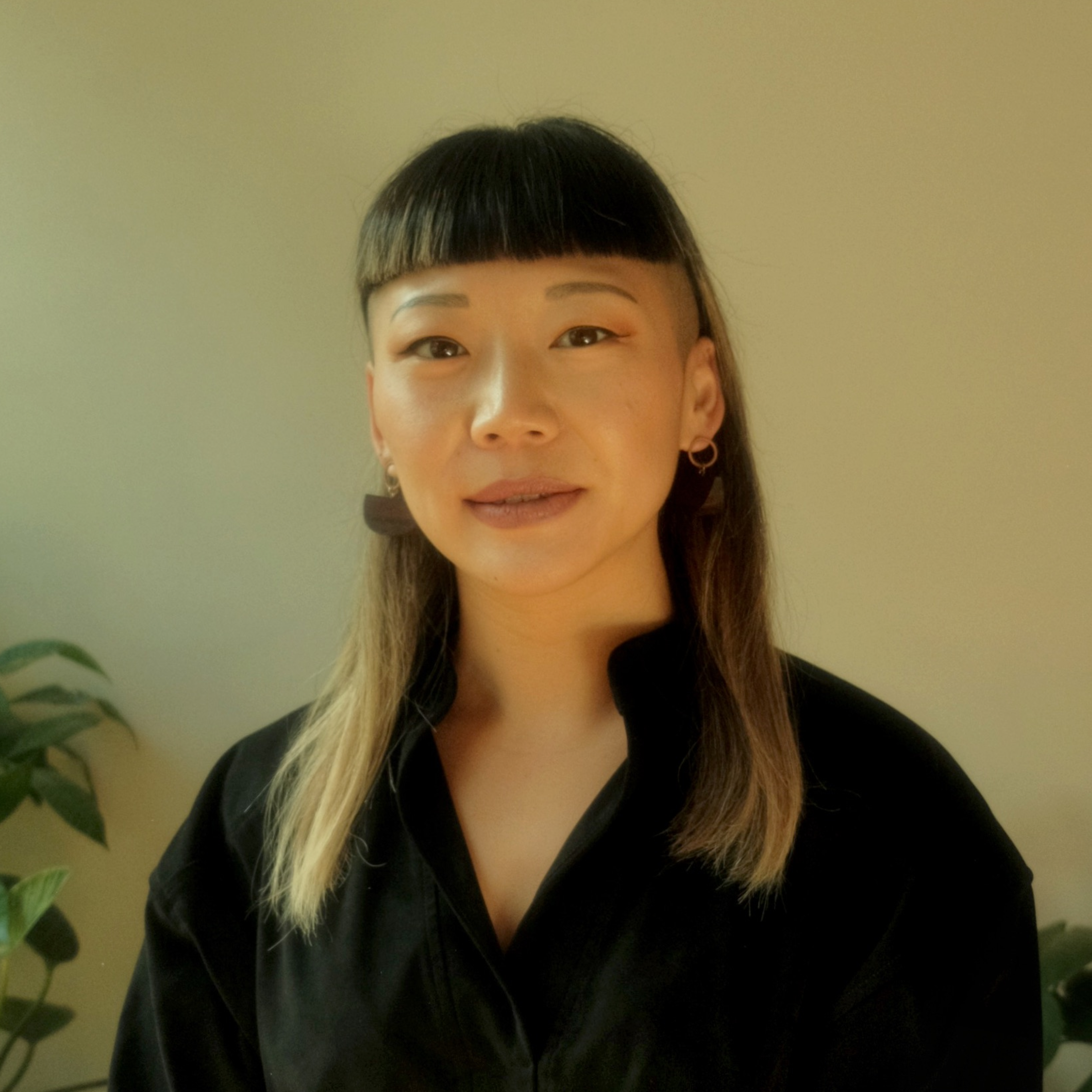
The author, Jenny Xie, is a writer and editor at Figma and the author of the novel "Holding Pattern." Her work has appeared in publications including The Atlantic, Esquire, and Dwell, where she previously served as Executive Editor.