What the CBA covers
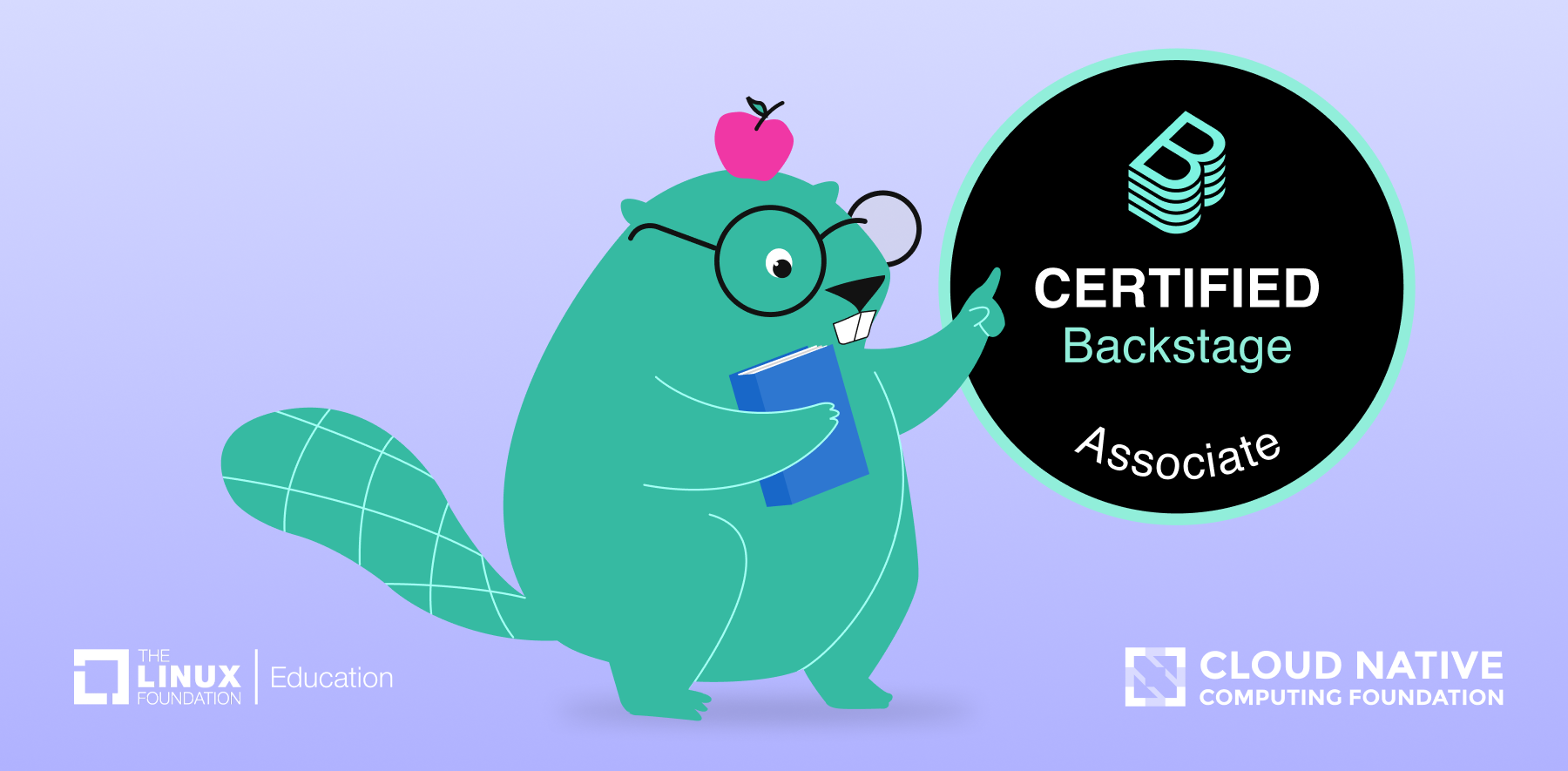
Backstage is the internal developer portal (IDP) framework that Spotify built for its own engineering org, open sourced in 2020, and later donated to the Cloud Native Computing Foundation (CNCF). Since then, it has spread well beyond music streaming: adopters now include Adobe, American Airlines, Expedia Group, H&M, Toyota, and countless startups and scale-ups. That wide adoption is the driving force behind the new certification. The Linux Foundation’s Certified Backstage Associate (CBA) credential, launched last November, is aimed at engineers with three to six months of hands-on Backstage experience.
The certification targets site reliability engineers, DevOps engineers, platform engineers, and other software developers who want formal proof that they can set up, deploy, and manage a Backstage project — either on their own or as a team lead. Passing the exam signals to employers that you understand the framework at a level beyond casual experimentation.
The exam itself is a 90-minute, proctored, multiple-choice test. There is no project component or hands-on lab; everything is knowledge-based. You will be remotely monitored via webcam, and the proctor can and will intervene if they see anything suspicious.
Who should consider taking it
The credential makes the most sense for engineers already working day-to-day with Backstage who want to validate their skills for career advancement or job hunting. Given Backstage’s trajectory from a single company’s homegrown tool to a CNCF-graduated project used by thousands of organizations, demand for people who can stand up and maintain an IDP is only increasing. If you have been working with Backstage for at least a few months, the CBA is a reasonable next step to demonstrate that experience in a formal way.
What I wish I knew before the proctored exam
If you have never taken a remote proctored exam, the experience takes some getting used to. The most important lesson I learned the hard way: do not read questions out loud to yourself. When I did that during the exam, the proctor interpreted it as potentially asking someone offscreen for help and gave me a stern warning. Keep your thoughts internal from start to finish.
Beyond that, a few practical tips made the experience smoother, even if they sound obvious:
- Start setup early. Give yourself ample time before the exam window to handle any technical surprises. Rushing through the system checks is a preventable source of stress.
- Set up a clean, quiet workspace. You need an empty desk in a distraction-free room. The proctor will ask you to pan your webcam around the room beforehand to confirm there are no disallowed materials within reach. Let housemates or family know not to interrupt, and consider putting a sign on the door.
- Test your tools in advance. The exam organizers send detailed system requirements and instructions ahead of time. Take the day before the exam to run through their tooling and confirm everything works on your machine.
- Keep water handy. Clear liquids in a clear container are permitted. You will be glad you have it.
Preparing for the exam content
The proctoring logistics are the easy part. The harder work is making sure your Backstage knowledge is broad enough to pass. Expect questions that span configuration, deployment, architecture, and usage — not just the happy-path interactions you might encounter day-to-day. It is worth reviewing the official documentation across several core areas: from instance configuration and authentication/authorization, to Backstage YAML format, and more.
If you work with Backstage regularly, you already have a head start. But the exam rewards reviewing material you might not touch in your daily work, so plan to spend time studying the areas of the framework you use least.
Summary of exam logistics
The CBA exam from The Linux Foundation is a two-fold challenge: you need to know Backstage well, and you need to navigate the remote proctored format effectively. The format is a single 90-minute multiple choice session, so no portfolio or demo is required. The credential is meant for engineers at early-intermediate level with Backstage — around three to six months of real usage. Knowing the breadth of Backstage’s features, not just the ones you use daily, is the surest preparation strategy.
The blog post’s author, experiencing issues with his video call background settings
Mapping Out the CBA Exam: What to Prioritize
The Certified Backstage Associate (CBA) exam covers the fundamentals of Backstage, a code-first framework for building internal developer portals (IDPs). Since the platform is designed for extensibility through plugins, the range of potential exam topics is broad. However, the scope is narrower than many candidates might expect. In particular, several newer or advanced features have been excluded from the exam's subject matter.
Topics You Can Skip
- The New Backend System and other recent additions. The CBA was authored prior to the New Backend System becoming the default method. You also don't need to study alpha-stage features like the New Frontend System or Canon, the design library.
- Building custom plugins. Exam candidates need to know how to install or customize existing plugins with TypeScript, but developing entirely new plugins is outside the scope.
- Deep Yarn and Node.js specifics. Questions won't cover feature-level differences between Yarn versions or Node.js release details. However, you should know that Yarn is Backstage's default package manager and understand Backstage's Node Version Policy.
The Four Core Exam Areas
The exam focuses on the technical features and implementation of Backstage, with an emphasis on how these support a scalable, centralized software development platform.
Backstage Development Workflow
A candidate must demonstrate fluency with the day-to-day local development process, according to the official study advice. This begins with a focus on local development workflow:
- Building and running Backstage locally
- Understanding the various Backstage CLI commands and what they do
- Handling TypeScript within Backstage and generating typed code
- Installing plugins via Yarn
- Creating a Docker container image of a Backstage instance
Backstage Infrastructure
Next, a CBA should understand how the framework fits together and how it's deployed. Key study areas here are:
- Knowing that Backstage is a framework, including what its various components consist of
- Understanding the configuration system, including how to manage secrets and includes
- Identifying the available deployment options
- Familiarity with the client-server architecture overview
Backstage Catalog
The Catalog is the central component and carries the heaviest weight on the exam. It would be wise to cover several aspects of its operation and data model, specifically:
- The reasons for using the Catalog, particularly from the perspective of software catalog features
- Methods for populating the Catalog, including various ingestion approaches
- Writing the YAML descriptor format for Kinds
- Defining the Catalog System Model and its various Kinds
- Differentiating between entity providers (for custom integrations) and entity processors
- Understanding the "Life of an Entity" processing flow
Customizing Backstage
Harnessing the platform's customization options is a significant skill area for a CBA. To tailor the portal to an organization's needs, candidates should know:
- How frontend and backend plugins differ
- The general per-plugin and core-feature customization options
- Where and how to make modifications within React code
- How to source and apply Material UI components
Grounding Yourself in the Basics
Before tackling the four advanced subject areas, it's wise to revisit the fundamentals. Reviewing the Getting Started guide and creating a fresh Backstage instance is considered excellent preparation, especially for the early questions on the exam. Likewise, a refresher of the foundational prerequisites, such as Yarn and Node.js, will solidify the rest of your study. As a final note, the exam is designed to be graspable—and you have a second attempt available if needed. So relax, study smart, and approach it with confidence. Good luck.