
GenAI Raises the Privacy Bar
Generative AI introduces a distinct set of privacy challenges that push traditional infrastructure to its limits. Meta has identified three primary pressure points:
- Explosive data growth: GenAI creates novel data types and dramatically increases data volumes, complicating data observability and management.
- Shifting requirements: New AI capabilities continually generate fresh privacy and compliance mandates; competitive agility depends on how quickly infrastructure can adapt.
- Faster innovation cycles: GenAI-driven features demand infrastructure that scales quickly and enforces privacy controls automatically, without sacrificing product velocity.
Meta's AI glasses illustrate these demands concretely. They combine cameras, sensors, and GenAI to deliver real-time scene understanding, contextual overlays, and natural interactions via devices like the Meta Neural Band and the Meta Ray-Ban Display. These experiences depend on continuous sensor input, on-device and cloud processing, and a dynamic feedback loop to the wearer. Every one of those interactions generates data that must be tracked and protected across a sprawling infrastructure.
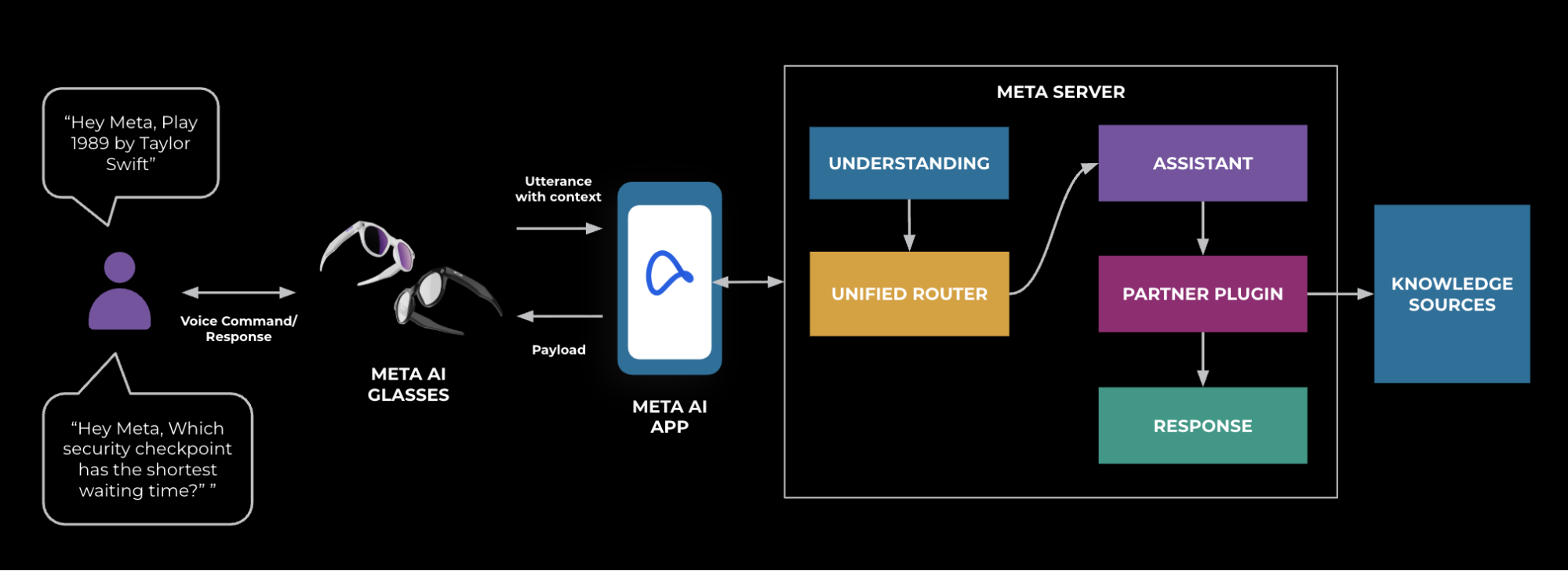
Privacy as Infrastructure, Not Policy
Meta addresses these challenges through Privacy Aware Infrastructure (PAI)—a suite of services, APIs, and monitoring systems designed to bake privacy into development from the ground up. PAI focuses on three core capabilities:
- Enhanced observability: Automated scanning and tagging detect data at ingestion, while data-lineage tracking maintains a real-time map of data origins, propagation, and usage.
- Efficient controls: Policy-enforcement APIs programmatically apply privacy constraints across storage, processing, and access layers; automation embeds regional and global requirements into workflow checks.
- Scalability: The infrastructure supports thousands of microservices and product teams across Meta's ecosystem.
This lifecycle is best understood as a cycle: understanding data, discovering its flows, enforcing policies, and demonstrating compliance. The critical piece for GenAI is the discovery stage, powered by lineage at scale.
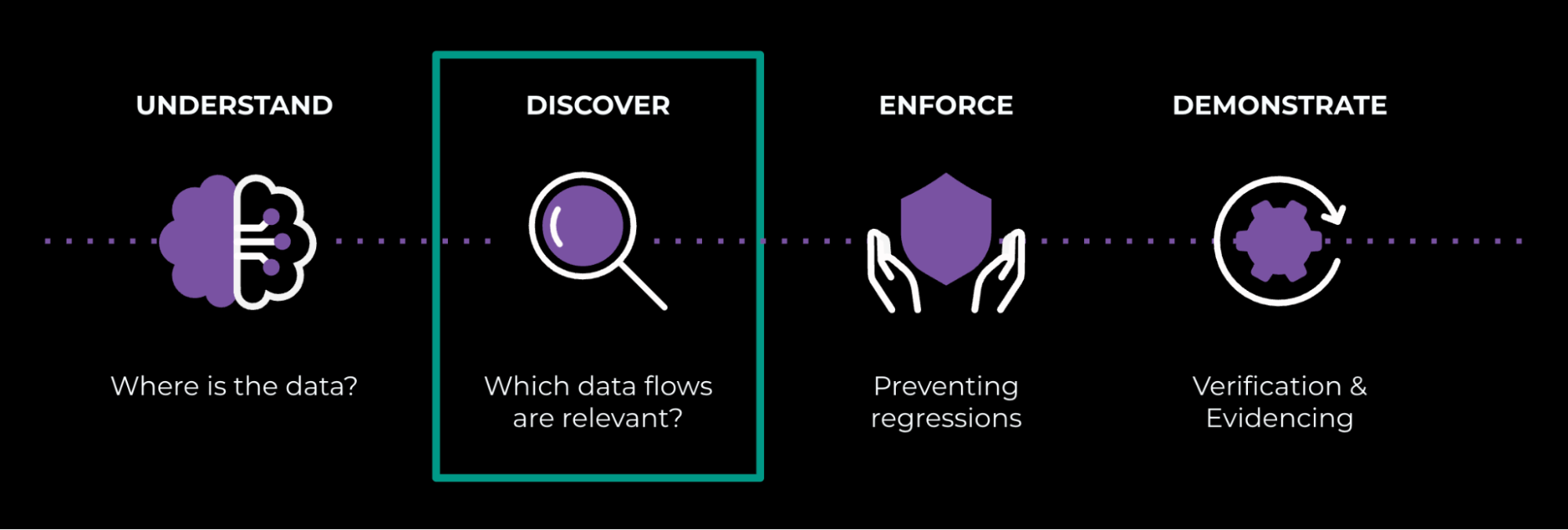
Mapping GenAI Data Flows with Lineage
To enforce privacy on AI-glasses interaction data, Meta must have a complete, auditable map of where the data travels. That's the job of cross-stack lineage, which captures data flows across every layer of the stack:
- Within the web tier: Privacy probes track interaction data as it enters Meta's servers and flows between web components, recording what is collected and how it is processed.
- Web to logger to warehouse: When data is persisted, lineage traces the logger that writes to warehouse tables. Downstream, batch-processing lineage is extracted by parsing logger configs, SQL queries, and processing logs.
- Web and inference: For large language model (LLM) calls, lineage signals are collected at service/RPC boundaries: which model checkpoints were invoked, what inputs were supplied, and what responses returned.
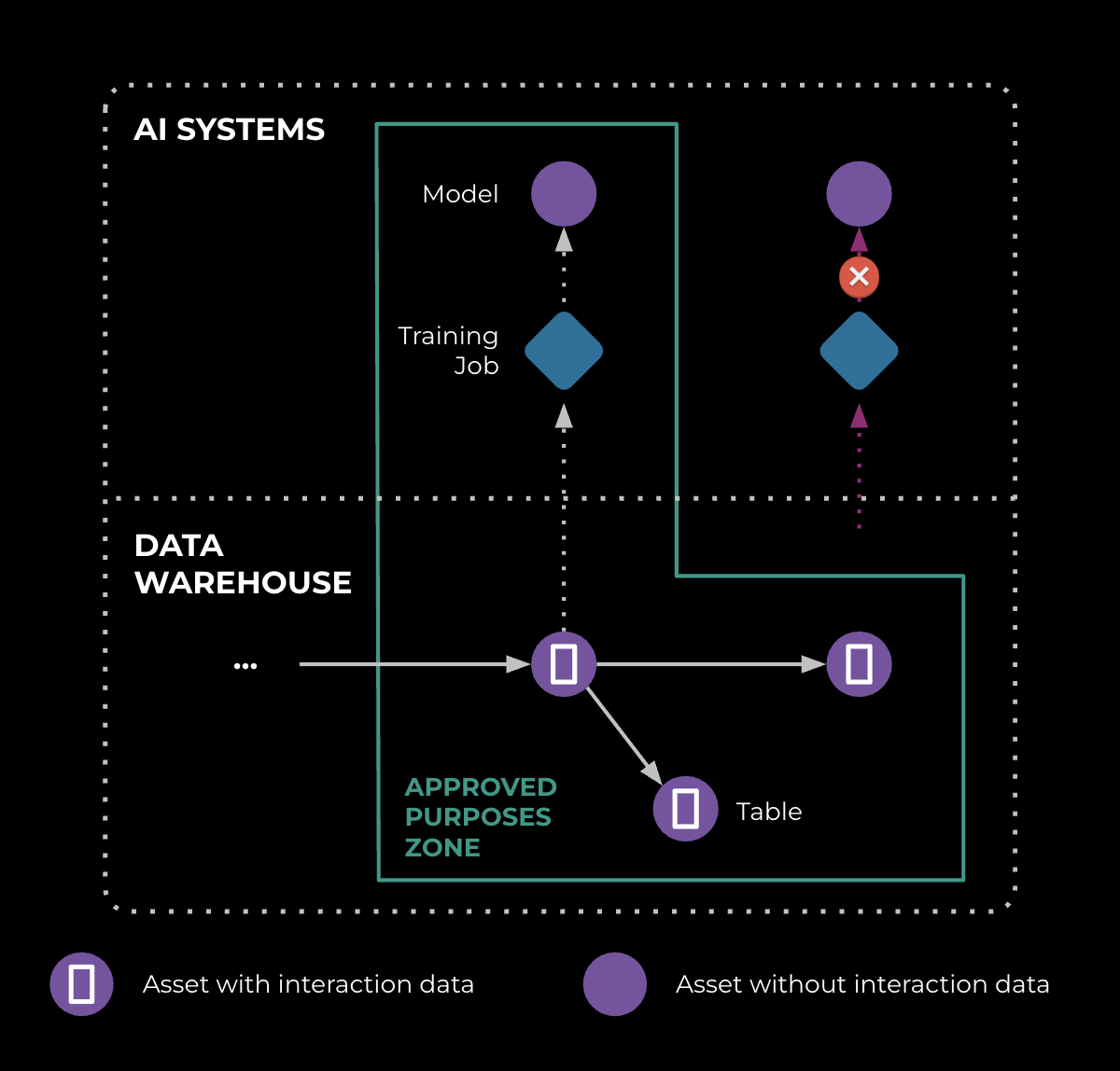
- Warehouse to training: Lineage links warehouse tables to training jobs and the checkpoints they produce—precisely the boundary where purpose-limitation requirements can be enforced and demonstrated.
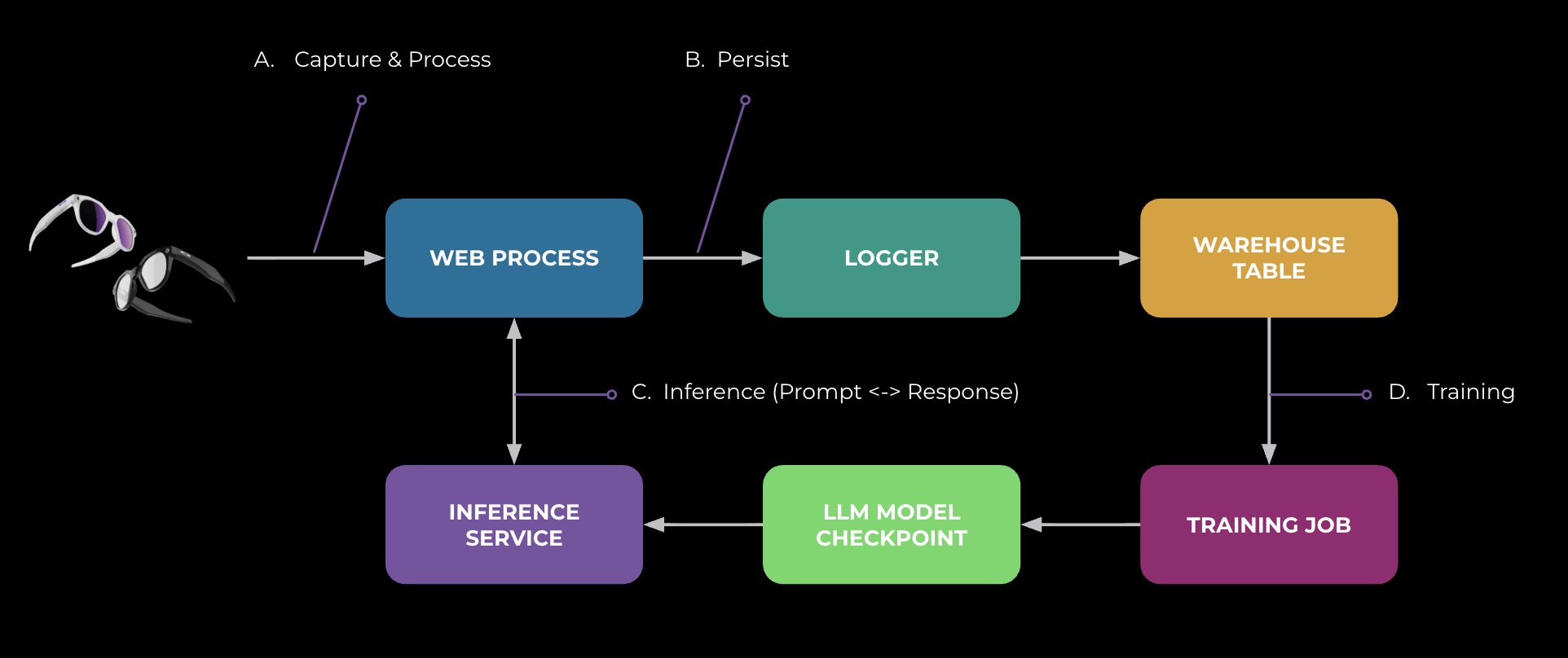
These signals, gathered from web probes, loggers, batch processes, RPC calls, and training manifests, combine into an end-to-end graph of data movement. That visibility allows Meta to reason about privacy in concrete terms: exactly which systems touch the data, and which never should.
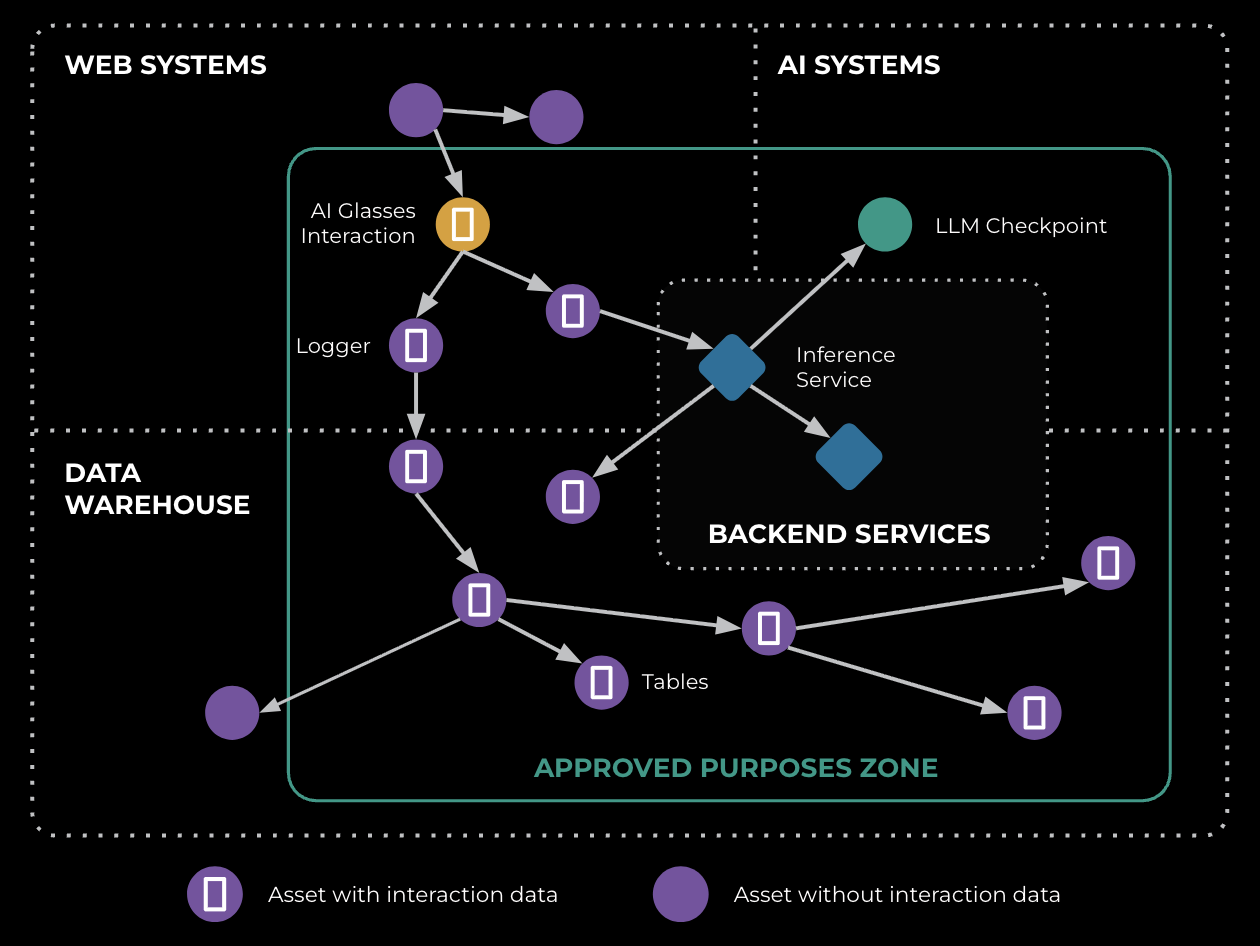
Building Comprehensive Lineage Observability
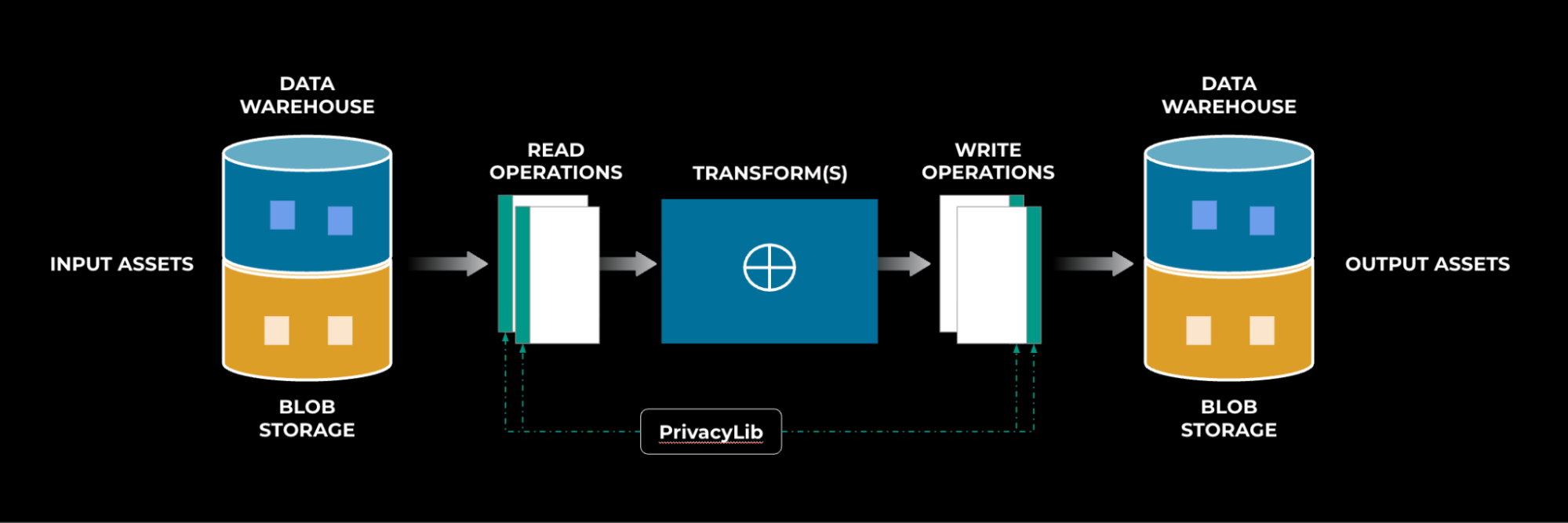
A lineage system is only as good as its coverage. Meta ensures comprehensive observability by tying every read to its corresponding write. When a data asset is written, all relevant write operations are logged with the same correlation key used for reads—whether the operation is SQL, non-SQL, or distributed I/O. This logging is standardized through a common privacy library that initializes privacy policies, offers a generic abstraction for reads, writes, and remote calls, and standardizes extensions. The library is integrated into all relevant data systems, across multiple programming languages, to ensure every I/O operation is captured.
From Lineage to Enforcement
Knowing the data flow graph enables Meta to protect AI-glasses data at specific boundaries. Lineage guides the placement of Policy Zones that protect interaction data. A training job can only start if all its data assets are permitted for the intended purpose; otherwise the job is remediated. Verifiers continuously watch these edges so that any new or changed data-processing jobs surface early in feature development.
Scaling Privacy with Product Velocity
The overarching strategy is to scale infrastructure rather than relying on a growing list of rules. PAI's data understanding, data-flow lineage, and policy enforcement create reusable workflows—understand, discover, enforce, demonstrate—that apply equally to GenAI products as they do to more traditional data pipelines. By embedding guardrails and giving developers instant feedback, the system reduces friction while maintaining verifiable privacy guarantees.
GenAI will continue to evolve, and so will privacy requirements. Meta's trajectory is toward smarter lineage analysis and more developer-friendly enforcement tools, ensuring that privacy infrastructure grows as an enabler of responsible AI product innovation, not a constraint on it.
Built for Growth, Not for Compliance
Meta's privacy infrastructure has matured alongside the platform itself. What started as a small set of internal tools has grown into a systemic, layered capability that now supports both regulatory commitments and the company's generative AI ambitions. The architecture is not a single product; it is an evolving mix of governance, security tooling, and data workflows designed to scale alongside product velocity.
At the center of this effort is the notion that privacy infrastructure cannot be bolted on after the fact. It has to be part of the development lifecycle, from design through deployment. The team treats privacy as an engineering discipline applied to data flows, access control, and feature development, not just as a legal review checkpoint.
From Legacy Tools to a Unified Privacy Stack
Early on, privacy engineering was largely a matter of custom scripts and point solutions. Each team handled compliance in its own way, which led to duplication and gaps. The shift began with a push to standardize on a common foundation: consistent data classification, central policy management, and reusable access controls.
That foundation now includes a set of shared services that any product team can call on. For example, data discovery and inventory systems map where personal information lives across the estate, while purpose-based access controls ensure that only the individuals and systems with a legitimate need can touch it. Over time, the company has replaced custom connectors with governed pipelines, bringing anomaly detection and audit logging closer to the source data.
The latest layer in this stack is a privacy-aware feature store, built to serve machine learning models with privacy constraints baked into the serving path. This design lets engineers iterate on GenAI products without manually re-checking entitlements at each step.
Key Systems Supporting the Current Architecture
The current system is built around several production technologies that are actively managed by the privacy engineering group:
- Data inventory and lineage
Automated scanners tag personal data at ingestion time across data lakes and warehouses. This allows downstream consumers to see privacy-relevant attributes, retention windows, and access policies in one catalog.
- Policy-based access control
Decisions about data use are evaluated against centrally managed policies, so that new features inherit the same rules without custom code at each product boundary.
- Purpose-aware delivery
To keep AI models from mixing unrelated data purposes, the infrastructure attaches purpose metadata to retrieval and inference traffic. This means the automation layer is constantly re-evaluating whether the current product behavior matches entitlements of the underlying datasets.
Respecting User Choice in a Data-Driven Cycle
Beyond compliance, product teams need explicit ways to honor user choices without slowing innovation. That means making user permissions checkable by default before any new AI or ML interaction runs. In practice, user signals that are stored lightly are integrated into the generative AI building blocks. The underlying logic is a continuous reconciliation between user preferences and the data used in any given experience.
This has especially mattered as the company explores AI companions, memory-related features, and agents that might revisit prior interactions. In each of those cases, underlying data needs to carry forward not only its content, but also the consent settings with which it was provided.
Automated Governance: The Required Next Step
Manual reviews simply no longer scale. Privacy engineering has therefore automated several review paths, including the assessment of new feature requests based on the data they call and the purposes attached to those calls.
Early on in a team's design phase, developers can submit an intent-to-use form. The request passes through an internal automation layer that checks for policy alignment based on catalog metadata. If the result is ambiguous or involves an unreviewed purpose, it escalates to a privacy reviewer. Approved intents are then linked to software builds so that any subsequent changes to purpose or data usage trigger new prompts.
This lowers a stubborn cost: the time spent waiting for a privacy clearance, which was a real friction point during past product cycles. The automated pipeline is a direct output of having the same governance data that feeds compliance also feed development velocity.
Managing Regulatory and Product Signals
One measurable outcome of these systems is that monitoring for privacy issues is now integrated with internal ML development tooling. Relevant telemetry flows into dashboards that track privacy incidents by volume, source, and type. That allows early product experiments, which tend to produce edge cases, to be checked against the exact incidents they may create.
With AI-based products, there is an added layer: automated evaluation tooling which fuzzes for problematic outputs — including toxic content or PII leakage — before testing those outputs against user expectations. The same infrastructure that governs datasets therefore also governs not just the model behavior but how the model sees the data.
Looking ahead, investments in this system focus on a few tightly defined areas: a vendor-agnostic feature store within AI workflows, faster detection of unintended data joins, and policy logic evaluation within the product build loop. Each one is designed to keep the operational overhead of privacy from becoming the bottleneck for GenAI teams across the company.



