

The hidden risk in your dependency tree
Most security problems don't start with a malicious attack—they start with an accidental mistake buried deep in your project's dependency tree. A few years ago, GitHub's Octoverse report found that the median JavaScript project uses just 10 direct open source dependencies. The real number that matters, however, is the 683 transitive dependencies that those 10 packages pull in along the way.
That scale makes manual tracking impractical. If your project relies on anything beyond a trivial number of packages, automation isn't optional—it's the only reliable way to stay aware of the vulnerabilities hiding in indirect dependencies.
Know what you're actually running
GitHub's built-in dependency management features are designed to make your dependency tree transparent. The dependency graph gives you a per-repository view of every dependency, dependent, ecosystem, and package in play.
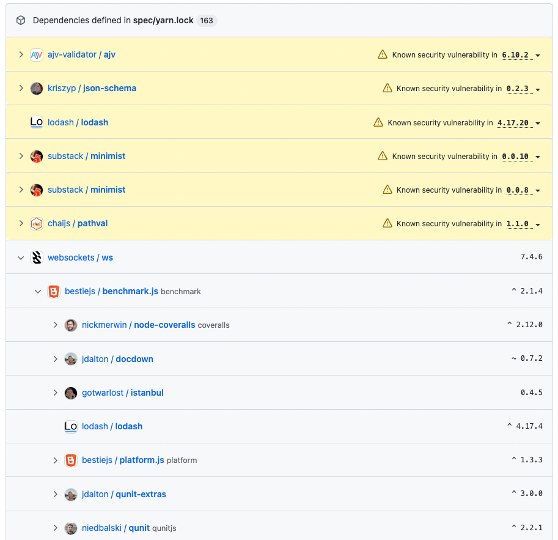
Before you merge anything new, dependency review shows exactly what a pull request introduces, changes, or removes—along with vulnerability data, package age, license, and usage details. That pre-merge context is where most teams catch problems before they ever reach production.
Automating the fix cycle
Knowing about a vulnerability is only half the equation; fixing it is the other. Dependabot closes that loop by watching your dependency files for outdated or vulnerable packages and opening individual pull requests to update them. It flags the issue, notifies you, and suggests the fix so your project stays on current, secure releases.
Dependabot alerts work on both public and private repositories. You can tune notification settings to avoid alert fatigue, and all alerts affecting a project appear in either the security tab or the dependency graph.
Further reading
- Keep up with product updates on the GitHub Security blog.
- Review the latest advisories in the GitHub Advisory Database.
- Configure Dependabot version updates in the official docs.



