
Security Can’t Be an Afterthought in Fast-Paced Development
The pressure to ship software quickly has never been higher, and the threat landscape has only made that harder. Between 2020 and 2021 alone, reported vulnerabilities jumped by 33 percent. For organizations trying to innovate, this creates a constant drag on their ability to deliver. The solution isn’t a separate security phase at the end of development—it’s embedding security directly into the workflows developers already use.
Put Security Tooling Where Developers Work
Developers are most productive when the tools they need live alongside their code. Yet many teams still rely on third-party security applications that test software only after it has been built. That disconnect creates friction and delays. GitHub Advanced Security (GHAS) addresses this by integrating security checks directly into the development environment. Code scanning results, for example, appear inline in VS Code or Codespaces, allowing developers to identify and address vulnerabilities while they are still writing code.
Shift From Reactive Response to Prevention
Reactive security—trying to fix issues after they happen—is both costly and slow. Security problems often take more than six months to remediate, making it clear that prevention is the more effective strategy. GHAS secret scanning supports this shift by detecting secrets that have been accidentally committed, using partner patterns across both public and private repositories. With push protection, it goes a step further: secrets are checked before a Git push is accepted, blocking the push entirely if a high-confidence secret is detected.
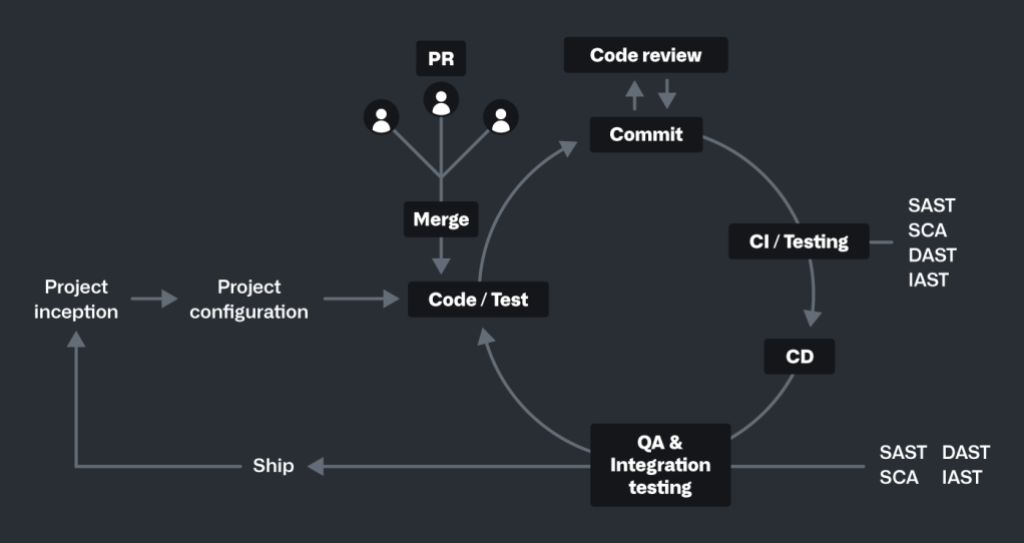
For vulnerability hunting, CodeQL code scanning lets teams search their proprietary code for weaknesses proactively. Rather than waiting for a breach or a report from outside, teams can view, triage, and resolve potential issues in their own codebase before they cause harm.
Cut the Noise, Keep the Signal
Security tools only work if developers keep them enabled. Too often, third-party scanners are slow, generate excessive alerts, and aren't integrated into the developer's native environment—leading developers to disable them entirely. Custom patterns in GHAS secret scanning allow teams to preview the alerts they will receive before enabling them, ensuring the notifications hitting developers are useful and relevant. Similarly, Dependabot can prioritize alerts that impact vulnerable function calls, so developers aren't drowning in low-priority warnings.
Add Security Checks to Code Review
Catching security issues before merging a teammate’s contribution is essential, especially on larger teams where many code changes are in flight. GHAS code scanning can be configured to evaluate code within a pull request, informing the team whether the proposed merge will introduce new security concerns into the target branch. Alert information appears directly in the pull request’s conversation or files changed tabs, keeping security context bundled with the collaboration that matters.
Automate Compliance and Security Tasks
Automation is the foundation of modern software delivery. More than 80 percent of top-performing engineering teams now deploy software multiple times per day, driven largely by automated processes that remove manual, repetitive work. GitHub supports automating common security and compliance functions alongside traditional CI/CD tasks. For example, teams can use automation to generate evidence of resource compliance for auditors, or employ the ghascompliance action to define code scanning alert policies around license compliance. Automated security workflows turn what can be a scattered effort into something consistent and repeatable.



