Why rural coverage remains out of reach
Around 600 million people worldwide live outside mobile broadband coverage, with sub-Saharan Africa accounting for 67 percent of that unserved population, according to the GSMA. Only about 40 percent of people in lower-middle-income countries are online today versus nearly 75 percent in higher-income nations, and GSMA projects that more than 40 percent of those in lower-middle-income countries will still be offline by 2025.
Traditional macrocell deployments are the standard way to deliver mobile connectivity, but they are not economically viable for many remote communities. Rural areas produce lower average revenue per user, are less densely populated, often have difficult terrain, and lack affordable backhaul and reliable grid power. These factors combine to make conventional infrastructure a poor fit for closing the coverage gap.
SuperCell at a glance
SuperCell is a wide-area coverage approach that pairs towers up to 250 meters tall with high-gain, narrow-sectored antennas. The goal is to increase both the range and the capacity of mobile data coverage in rural regions. Facebook Connectivity has been prototyping the system and, after trials with telecom partners, is publishing findings it hopes will serve as a playbook for operators to commercialize the technology.
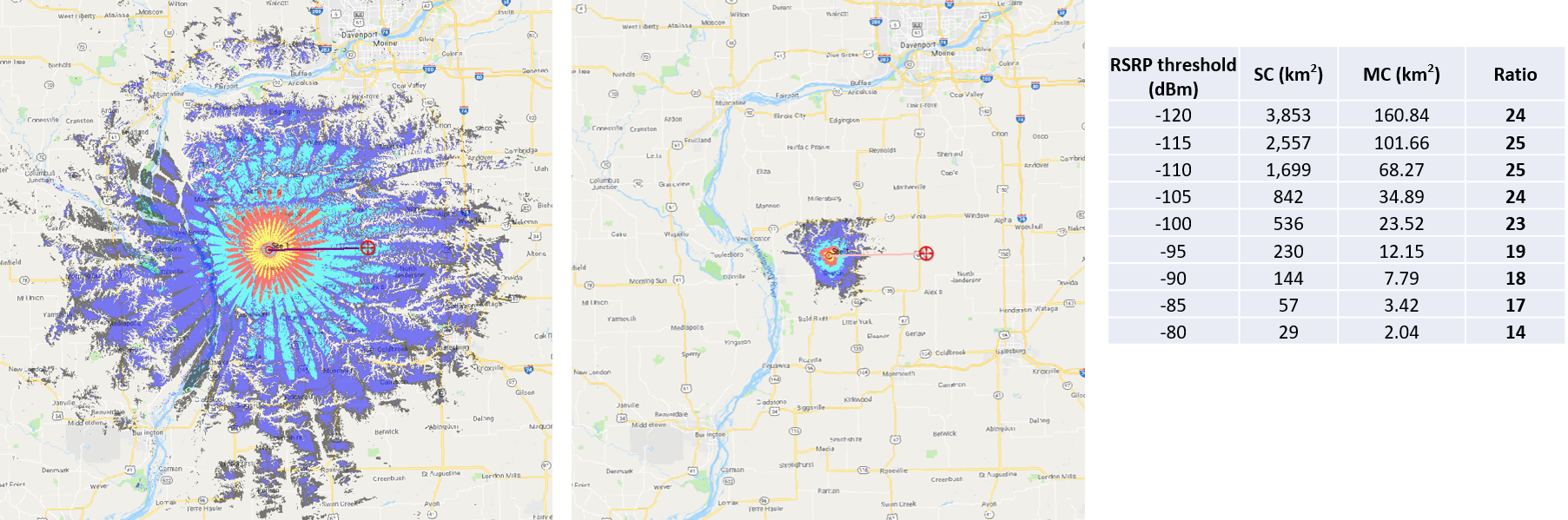
Field measurements indicate that a 36-sector SuperCell base station on a 250-meter tower can serve a coverage area up to 65 times larger than a conventional three-sector rural macro base station on a 30-meter tower in the same terrain. An analysis of uncovered areas in Nigeria, using public population density data and Facebook Connectivity's Advanced Network Planning tools, found that one SuperCell could replace 15 to 25 traditional macrocells, or hundreds of small cells, to reach the same population. A network of SuperCells could also yield more than 33 percent lower total cost of ownership than a macrocell network.
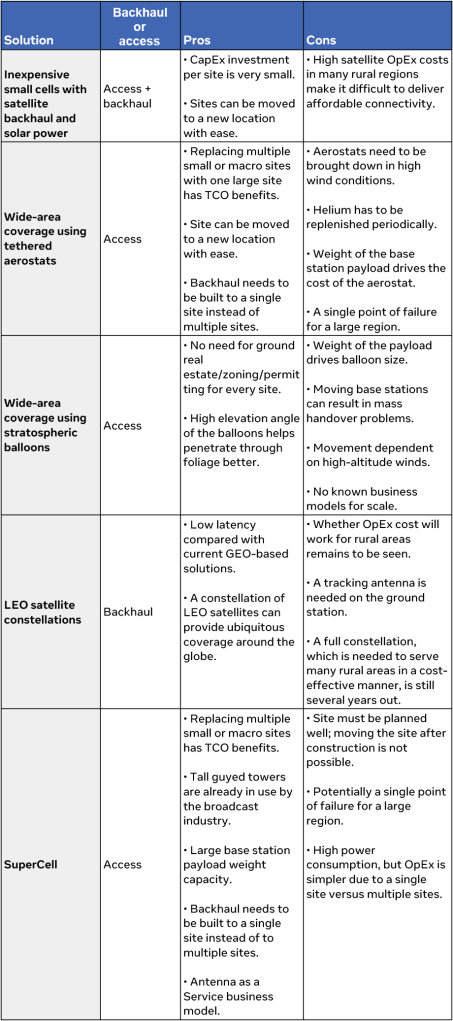
The technology is not pitched as a universal fix. Other options include small cells with satellite backhaul covering a 0.5- to 1-kilometer radius, tethered aerostats, stratospheric balloons, unlicensed-band microwave backhaul, and LEO or MEO constellations. SuperCell targets places where its height and antenna characteristics offer the most advantage.
Quantifying the range advantage
The coverage benefit of SuperCell comes from two sources: tower height and antenna gain. A rule of thumb in propagation physics is that every doubling of base station height yields about 6 dB of propagation advantage. Moving from a 30-meter to a 240-meter tower therefore provides roughly 18 dB. Typical macrocell antennas offer 18 dBi of gain in the 2,500 MHz band; SuperCell antennas achieve up to 29 dBi in the same band, adding 11 dB. Combined, the system has roughly 29 dB of propagation advantage over a standard macrocell, which at a path loss exponent of 4 translates to about 5.3 times the range.
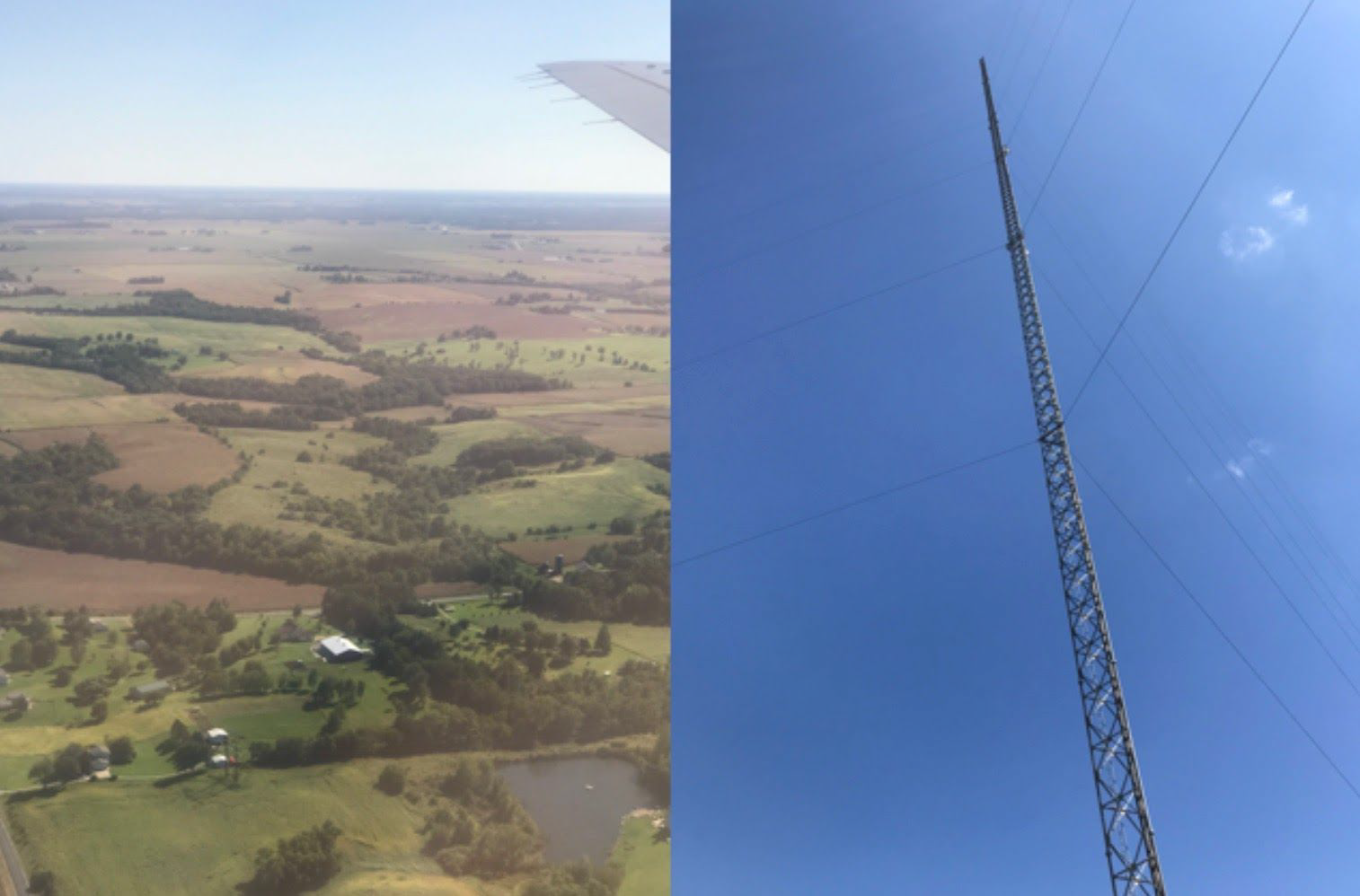
To validate this, the team ran drive tests from broadcast towers in three rural U.S. locations: Quad City, Illinois (flat cropland), Metcalf, Georgia (flat, heavily treed), and Frenchburg, Kentucky (rugged mountains with cropland). Transmitters were placed at multiple heights, and measured path loss models were combined with empirically collected multisector antenna patterns.

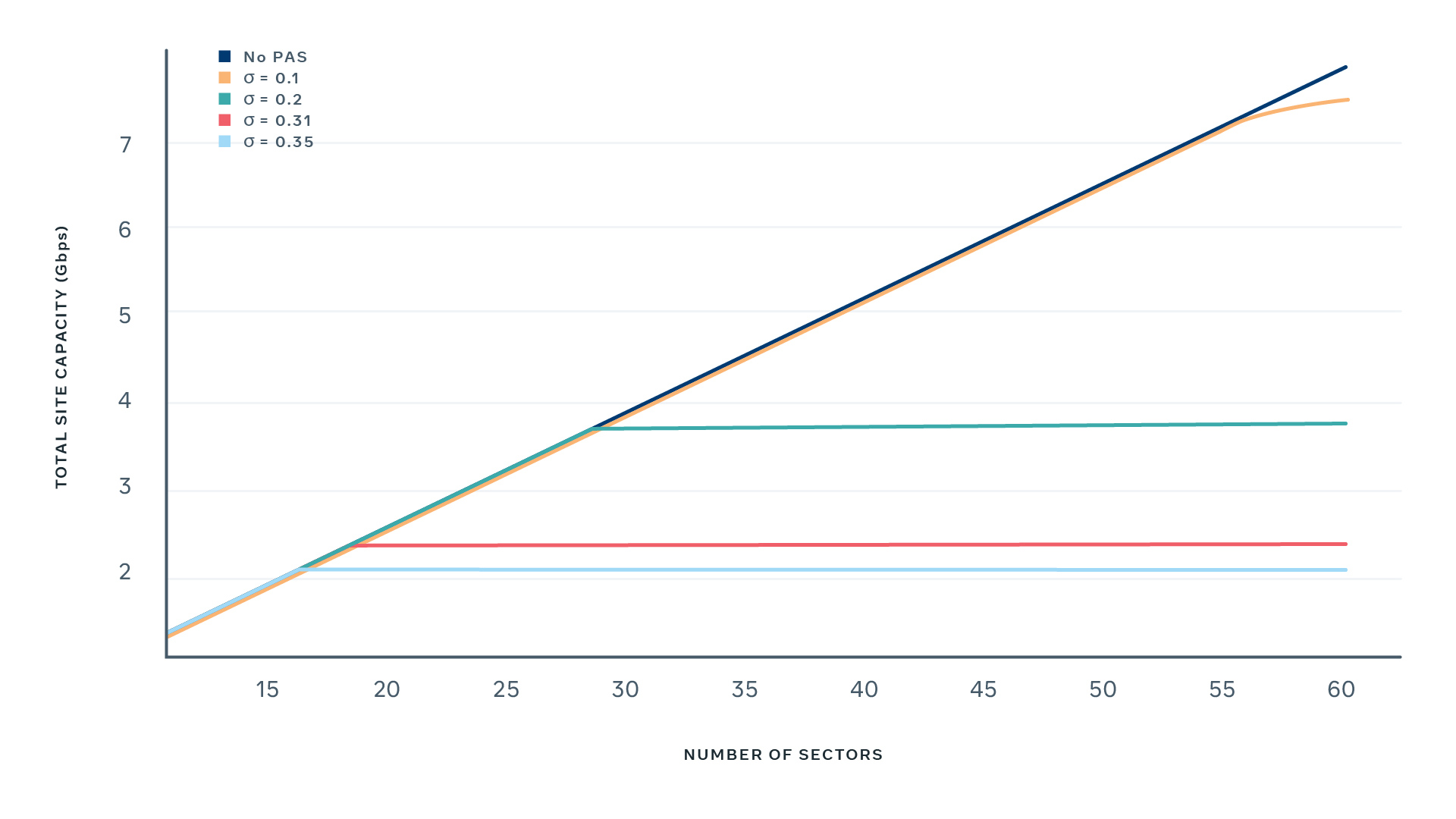
A key part of the economics is that greater range brings more users, which means capacity must scale with the larger coverage area. SuperCell uses high-order sectorization with a frequency reuse of one, but intersector interference—from antenna side lobes and from multipath scattering—can limit how well capacity scales with sector count.
In rural areas, building clutter is typically below 10 meters. Tests in Amarillo, Texas, used a directional dish receiver mounted at multiple heights on a 300-meter tower to measure angular spread up to 250 meters in height and 20 kilometers in range. Ray-tracing simulations based on local building data confirmed that the large height difference between ground clutter and a tall base station produces low angular spread, which keeps intersector interference low and allows capacity to scale more effectively with additional sectors.
LTE throughput and handover at long range
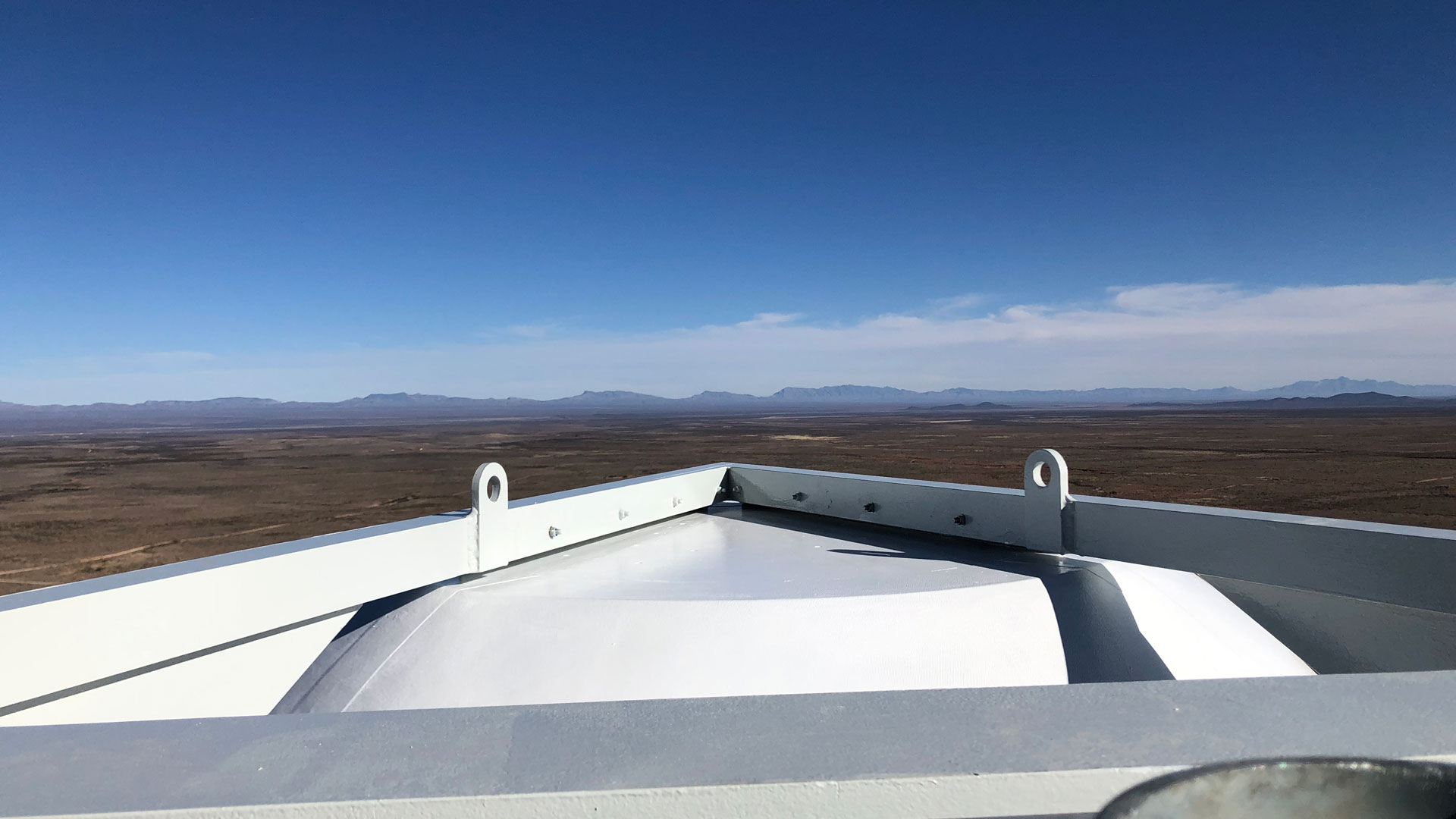
After verifying coverage and spectral efficiency, the team tested real LTE performance. A 12-sector SuperCell system covering over 120 degrees of azimuth was set up near Truth or Consequences, New Mexico, on an 11-meter tower atop a hill. Vertical separation between the base station antenna and user equipment ranged from 150 to 335 meters. The terrain was rocky desert with minimal foliage, and tests ran in LTE Band 41 at 2,500 MHz.
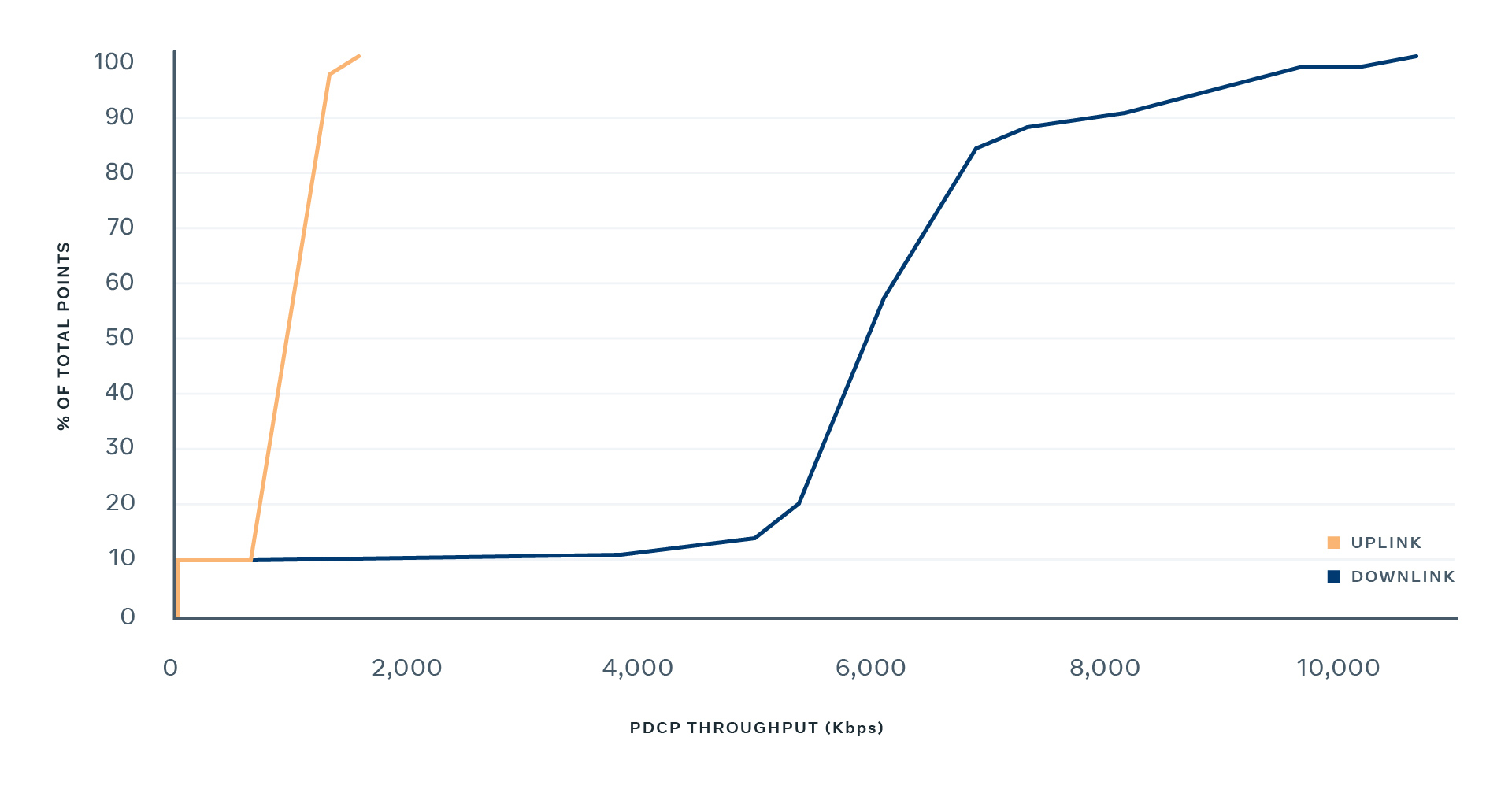
The system supported two-way voice and video chat out to 38 kilometers. At 40 kilometers, a Samsung S7 handset achieved downlink throughput of 6 Mbps at the 50th percentile and 7.8 Mbps at the 90th percentile, with uplink at 1 Mbps and 1.2 Mbps at the same percentiles. Intersector handovers were seamless during the drive test.
Coexistence with existing macrocells
The New Mexico trial used a small tower on a hill to emulate a tall tower, but it did not address the logistics of a full SuperCell installation on a very tall structure, nor the question of how SuperCell interacts with nearby macrocells. A second trial was staged in Foxworth, Mississippi, in collaboration with American Tower Corporation and C Spire, partly to study intercell interference.
Macrocell units on trucks were deployed at near-field (4 km), midfield (10 km), and far-field (16 km) distances from the SuperCell base station. In the near field, SuperCell served the area around the macrocell well, and the macrocell could potentially be decommissioned. At midfield, SuperCell and the macrocell coexisted on the same spectrum, with SuperCell adding capacity through spectrum reuse. In the far field, SuperCell caused interference for users attached to the macrocell, but its signal was not strong enough to trigger a handover, degrading performance in that area; splitting the spectrum between the interfering SuperCell sector and the far-field macrocell may be the practical remedy.
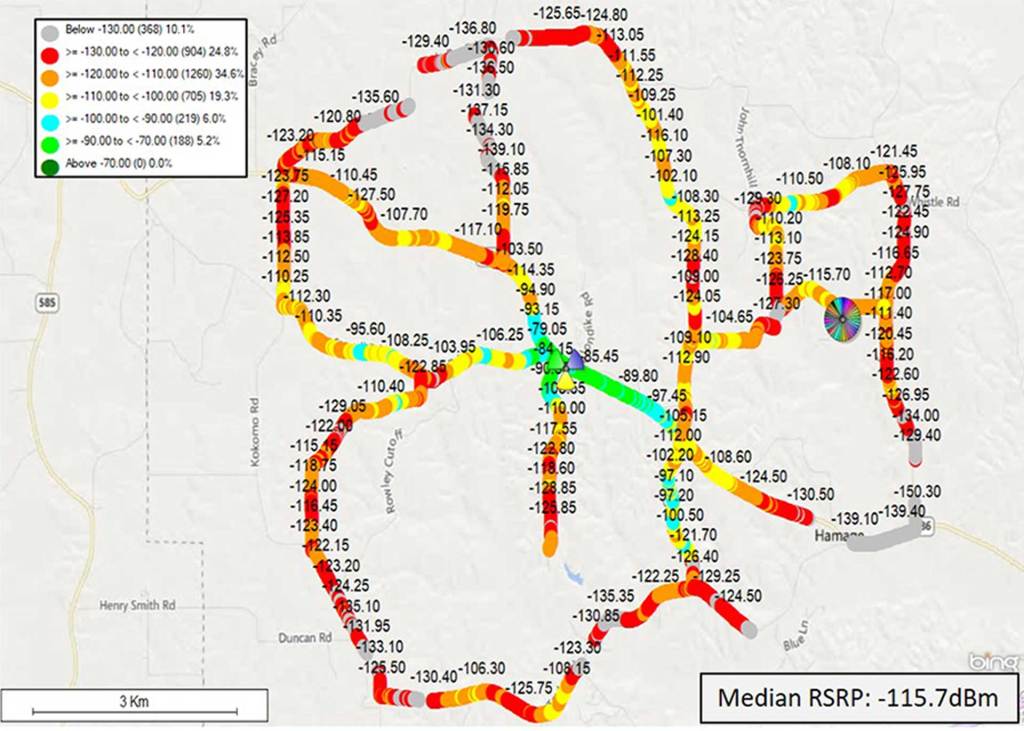
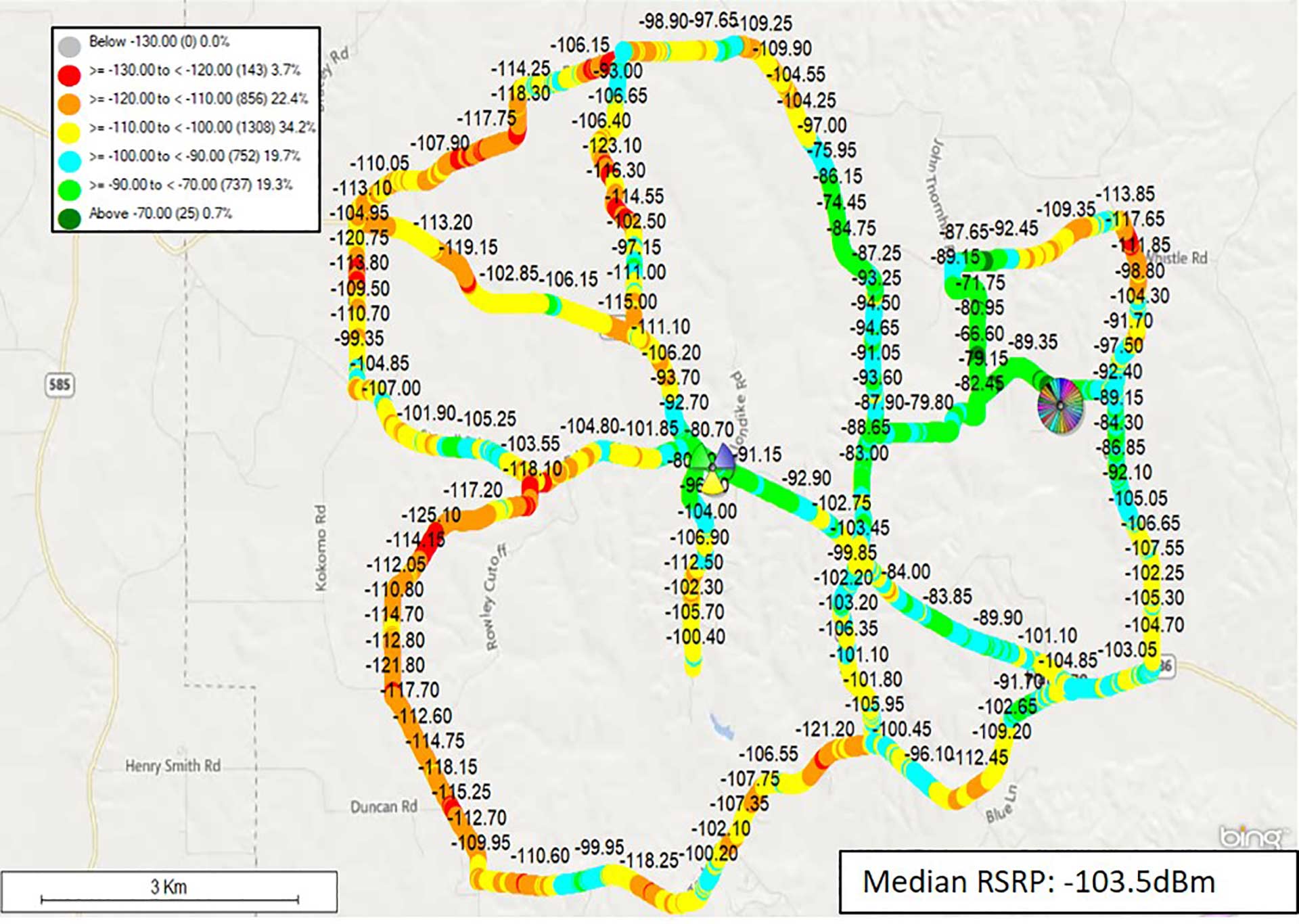
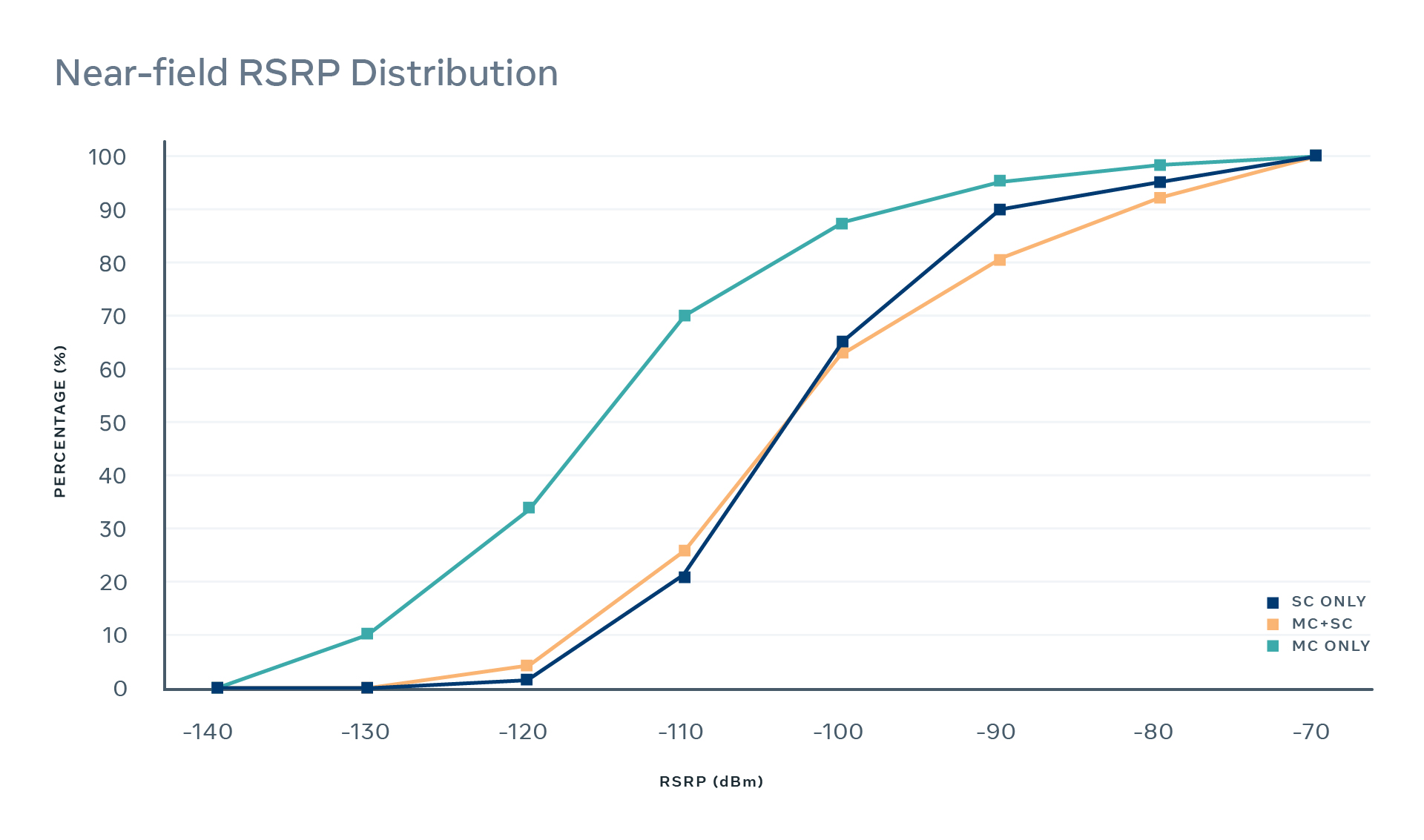
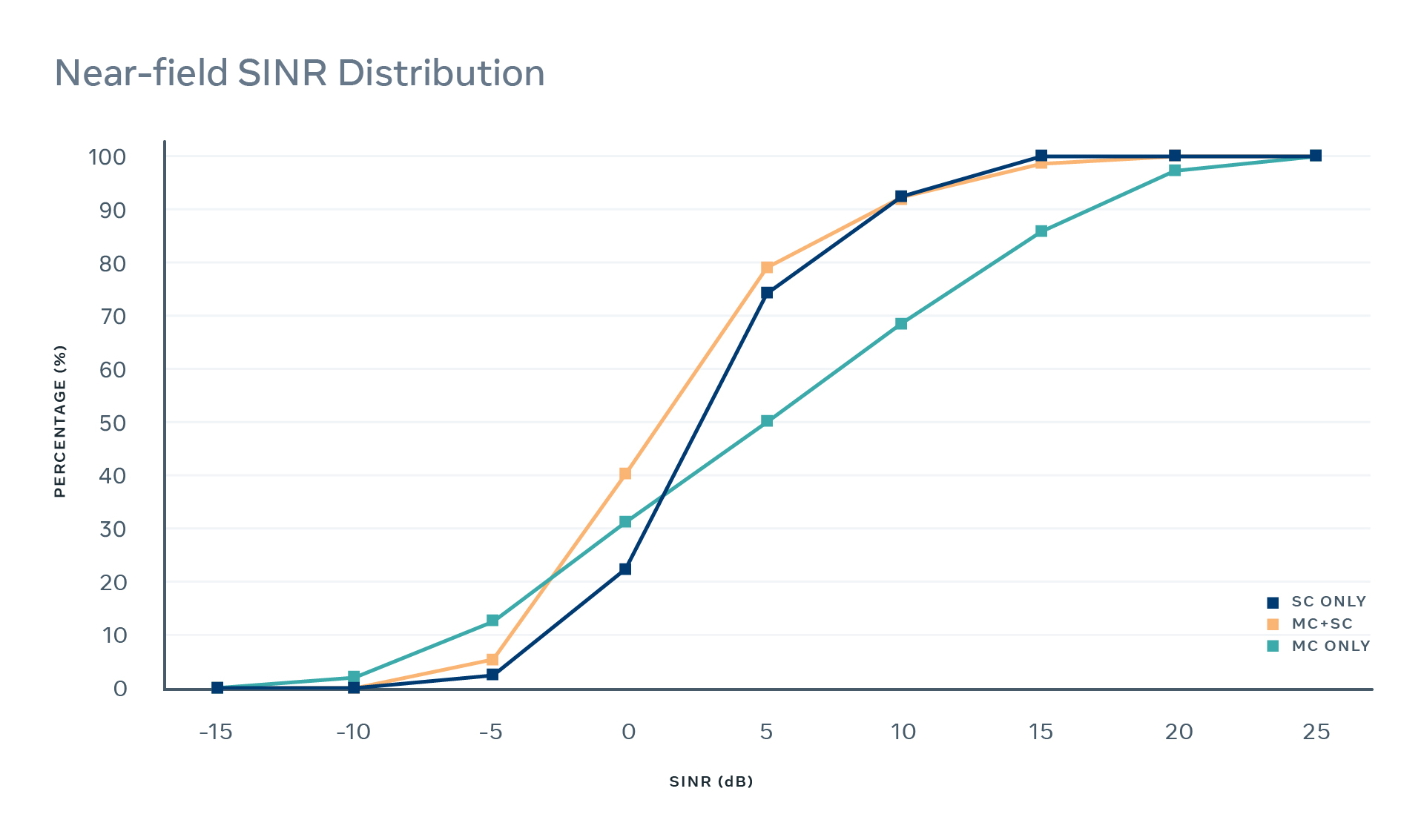
Midfield and far-field measurements are detailed further in the team's technical publication.
Making the Business Case for SuperCell
Beyond field trials, the Facebook Connectivity team ran several economic analyses to quantify SuperCell’s commercial viability. These studies modeled real-world deployments and compared returns against conventional infrastructure in two African markets.
Greenfield Analysis in Nigeria
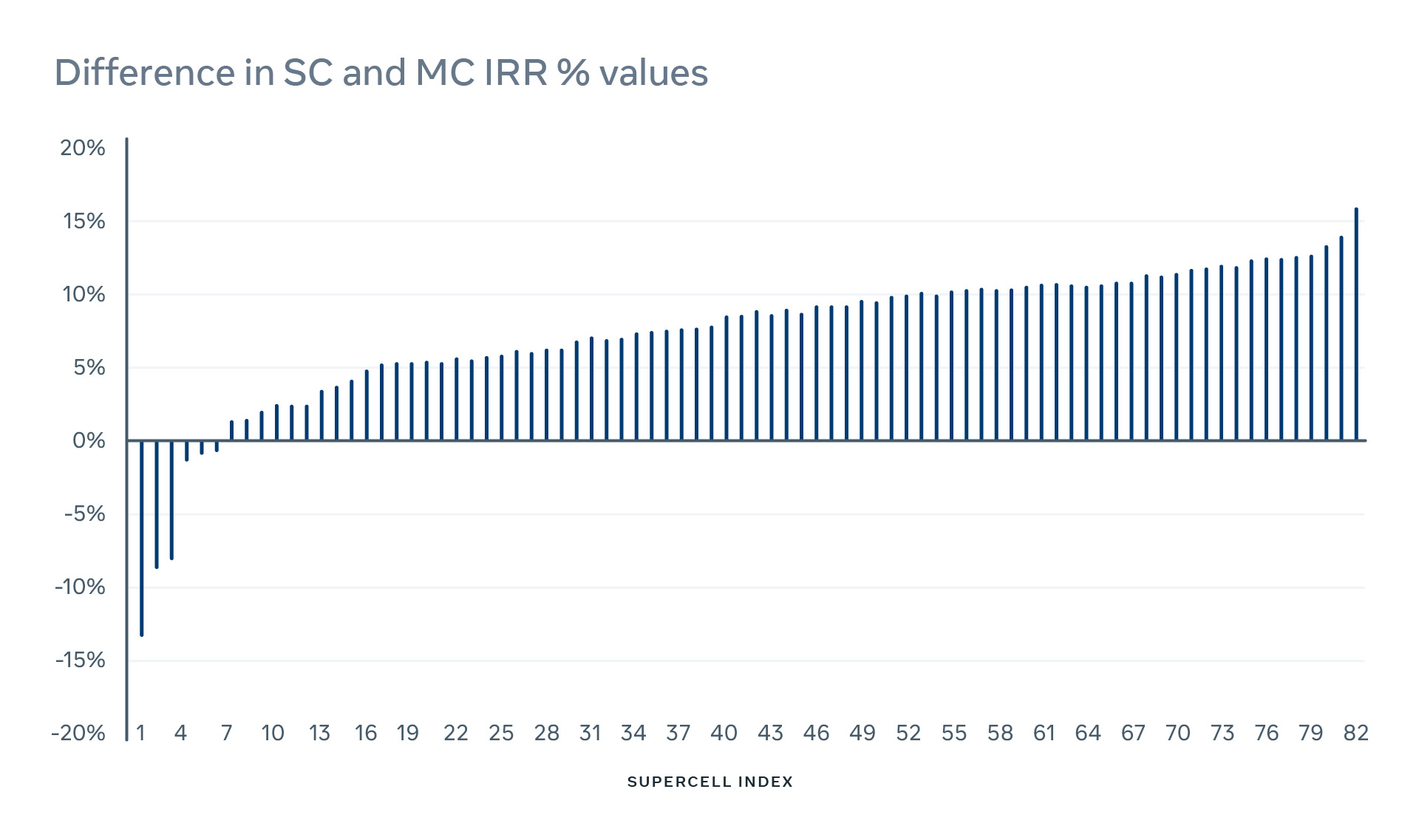
In the first scenario, the team mapped optimal deployment locations for both SuperCell sites and standard macrocells (three-sector base stations on 30-meter towers) across uncovered regions of Nigeria. Using public population data and Facebook’s Advanced Network Planning tools, they simulated how 82 SuperCells would perform relative to a macrocell network offering equivalent quality of service.
The financial comparison, based on internal rate of return (IRR), found that 76 of the 82 simulated SuperCells would generate a higher IRR than their macrocell counterparts. Furthermore, mounting SuperCells on existing tall towers in Nigeria could extend coverage to as many as 16.8 million unserved people, a model the report says is profitable for both mobile network operators (MNOs) and tower companies.
Techno-Economic Assessment in Cameroon
For a more detailed cost-benefit study, Facebook partnered with an MNO to evaluate options for four Cameroonian states: East, Adamawa, North, and Extreme North. The comparison covered four distinct cell site configurations:
- A single-sector, omni-directional small cell on a 10-meter mast
- A conventional three-sector macrocell on a 75-meter tower
SuperCell140: a six-sector, high-gain antenna on a 140-meter towerSuperCell180: a six-sector, high-gain antenna on a 180-meter tower
Both SuperCell options relied on antennas from Radio Innovations AG. To ensure accuracy, Facebook calibrated its own path loss models against the MNO’s data from live Cameroon sites. The operator supplied business inputs like CapEx, OpEx, ARPU, adoption rates, and per-user usage. Each network plan was built using only one of the four configurations, and results were validated independently with both the MNO’s planning tools and Facebook’s Advanced Network Planning tool.
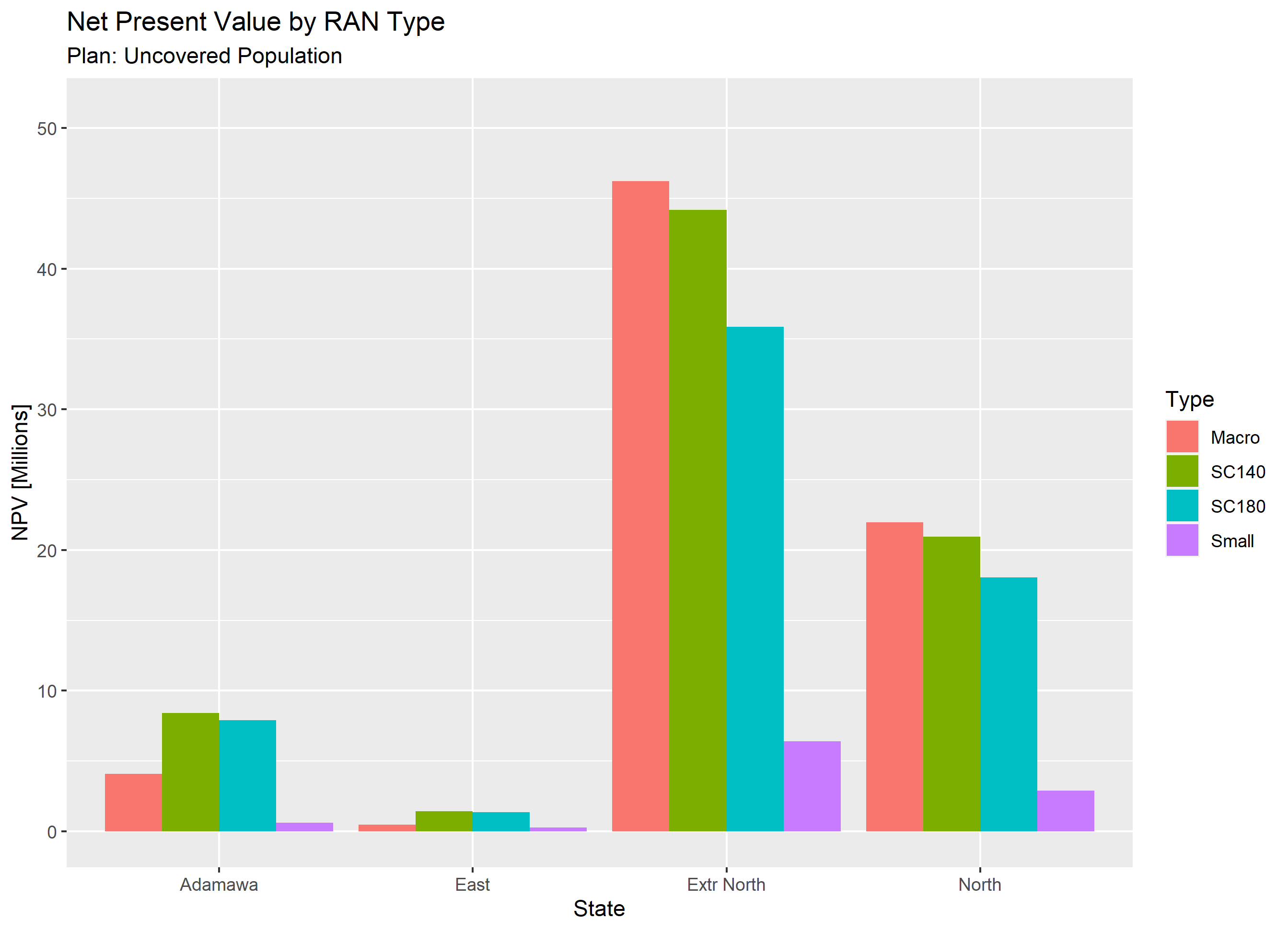
Measured by net present value (NPV), the SuperCell140 and SuperCell180 configurations outperformed the alternatives in Adamawa and East Cameroon. In North and Extreme North Cameroon, macrocells had the strongest NPV, though SuperCell140 finished a close second. The authors note that real-world deployments would likely blend these configurations for optimal results, a direction they intend to explore.
Moving Toward Commercial Deployment
With successful trials behind them, the team is handing the technology over to the broader telecom industry. Facebook Connectivity is contributing trial data and business model findings to the Telecom Infra Project (TIP), specifically its subgroup focused on Network as a Service (NaaS) solutions, which aims to address rural and peri-urban connectivity gaps.
As internet access becomes increasingly tied to jobs, education, and health care, the risk of excluding entire communities grows. SuperCell offers a viable path for MNOs and towercos to close the coverage gap cost-effectively, says the group, providing high-speed connectivity where other approaches struggle to pay for themselves. The full technical paper, “SuperCell: A wide-area coverage solution using high-gain, high-order sectorized antennas on tall towers,” is available for further reading.