
A New Monthly Show, Off By One
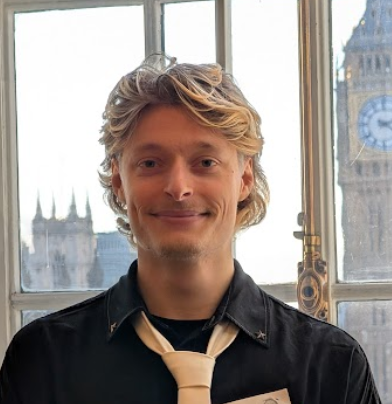
Leo Laporte and Jeff Atwood have launched a new monthly show on the TWiT network called Off By One with Jeff Atwood. The name is a nod to a classic programmer joke about the two hard things in computer science: cache invalidation, naming things, and off-by-one errors. The show is now on its second episode, and both are free to view.
The premise is straightforward: Atwood, co-founder of Stack Overflow and Discourse, joins Laporte monthly for a conversation that follows its own logic. The show's description promises prop comedy, computing history, the open web, wealth inequality, and yo-yos, with topics that are always off by one in the best possible way. The permanent homepage is at twit.tv/obo.
Why a Show Instead of a Blog
For Atwood, the show is another outlet for sharing his enthusiasm for the positive side of tech. He cites a core belief from his Coding Horror blog: happiness only becomes real when shared. A monthly video conversation adds a dimension that writing alone cannot capture—facial expressions, tone of voice, and body language let viewers see and hear how the participants feel, not just what they think.
The show traces back to Wesley Faulkner, who introduced Atwood to Laporte and suggested he appear as a guest. That original appearance, on Intelligent Machines #859 recorded February 25th, is recommended viewing in full—Atwood suggests it's funnier to watch fellow guest Paris Martineau's reactions throughout.
Highlights from Episode Two
Three segments from the second episode stand out, each with linked timestamps for direct access.
On Being a Persistent Coder
Atwood describes himself not as an elite coder, but as persistent. When Laporte pushes back, noting Atwood is seen as a chief voice in coding, Atwood clarifies his role:
I advocate for code that doesn't kill you in so many different ways. You know, survivable code. Ideally, no code at all. That's the best code, is none. So, I'm an advocate for good engineering. Good process. A process that recognizes that we're human and we should do this together, and we should actually kinda like each other, even.
Family, Capitalism, and a Father's Legacy
A personal story about his father's dark sense of humor leads to a reflection on a family business venture. Atwood describes calling it "the last season of the John Atwood show"—a risky final act that succeeded:
It was a real banger! And it was, it f***** was, it really was! Because we won capitalism, and then we went back and made it better for everyone. I don't think it gets better than that for me.
Wealth Inequality and the Math of Poverty
On the topic of billionaires and taxation, Atwood makes a specific claim based on his own research:
I've posted several times on Mastodon and other places like LinkedIn, I've done some research and if we simply collected a fair tax from Billionaires, we could literally eliminate all poverty in this country at the 100% FPL level, which is $15,000 per year. All poverty. We would have zero poverty. We have the means to do it.
Laporte calls this important, and Atwood concludes: "We lack the will."
Highlights from the Original Appearance
Atwood's first guest appearance, which sparked the show idea, also produced memorable moments worth revisiting.
Helping Others When You Have Enough
The conversation turned to the United States stepping back from global initiatives. Laporte endorsed a principle from Atwood's partner:
If you have everything you need, then help others have everything they need.
Atwood's response was more direct: "What is money even FOR? I don't even have 'that much,' what do you.. how do you spend it all? I just want a simple life, man!"
LLMs as JPEG for Words
On large language models and optimization, Atwood is skeptical of their understanding but impressed by their summarization abilities:
It's like, optimize this for 95% and it's like okay, "return true." ... It has no actual understanding. It's playing a game of global brain statistics and copy paste.
He tested LLM summarization on Discourse's internal discussions and was surprised by the quality:
I went to some very complex discussions we had on our internal discourse and read the summary and was like that is a very good summary and it captured the key points in the discussion. It could have captured more, but it got nothing wrong. And it basically was JPEG for that conversation without much loss.
He notes the limitation: "Does JPEG work on EVERY image? No. Garfield is a bad choice for JPEG."
The Second Gilded Age
Atwood draws a direct parallel between his era and the railroad barons:
The first gilded age, we're deep in the second one now. I mean, just look up the numbers. More money in the hands of fewer people than in any other period of time. In the first gilded age, that was basically the railroad barons. Guess who it is in the second gilded age? I'm in this picture and I don't like it. So like, what are we gonna do about it?
How to Watch and Join the Community
Episodes record monthly, and Club TWiT members get access to a live stream of each recording. Atwood is offering to cover a full year of Club TWiT membership for the first ten people who watched the entire second episode and fill out a form linked from his announcement post.
For discussion, Atwood points to the TWiT community Discourse rather than blog comments. He suggests that forming coherent paragraphs and narratives might improve your writing and communication skills, or even your life. There's also a rumor that Club TWiT users who post regularly on the Discourse forum might receive a small token of appreciation in the mail from a user named "Junk"—though nothing is guaranteed.