Safari testing without Apple hardware
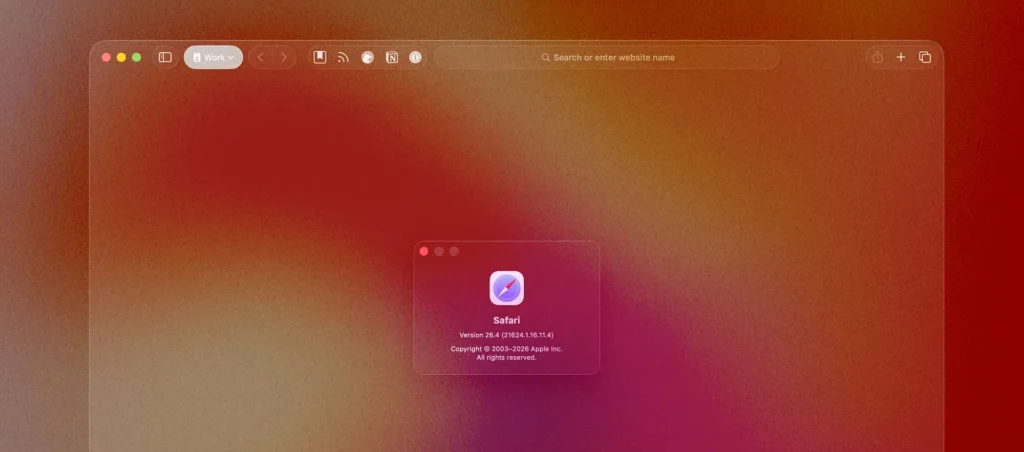
Safari ships only on Apple platforms, and it remains the second most popular browser — an arrangement that complicates any cross-browser QA pass. Declan Chidlow laid out the available approaches for testing Safari on a budget.
Pseudo-element and CSS deep dives
::checkmark
Sunkanmi Fafowora offered a first look at ::checkmark, a pseudo-element addressing the long-standing difficulty of styling checkmarks. It applies to the checked-state indicators of radios and selects as well, not just checkboxes.
Combining border-shape with shape()
Temani Afif showed that pairing border-shape with the shape() function yields more shape styles than clip-path alone, and lets you swap between them easily.

A guide to sibling-index() and sibling-count()
Durgesh Pawar compiled a deep dive on sibling-index() and sibling-count(), walking through the layouts these almost-Baseline CSS functions enable. Pawar is also writing a two-part series on View Transition gotchas on CSS-Tricks.
More on anchors with data attributes and advanced attr()
When the anchor attribute was dropped — eliminating an HTML-based route for anchor associations — the author demonstrated an alternative using data attributes plus advanced attr(). The article surveys several HTML syntaxes:
<!-- anchor attribute -->
<div anchor="anchorA">Boat A</div>
<div id="anchorA">Anchor A</div>

<!-- Data attributes with custom ident (requires attr()) -->
<div>Boat A</div>
<div>Anchor A</div>

<!-- Data attributes (requires attr() and ident()) -->
<div>Boat A</div>
<div>Anchor A</div>
State of CSS 2026 is live

As always, the survey (State of CSS 2026) tracks how developers keep pace with CSS — something that grows harder each year. This edition trims scope deliberately. From the opening text:
Take a deep breath. Calm down. It’s ok if you don’t know every single new CSS property. The truth is, very few of us do.
Look, one of this survey’s goals has always been to help keep developers up to date on the latest and greatest CSS improvements. But the downside is that all this progress can sometimes feel overwhelming.
That’s why this year we made a conscious effort to reduce the number of features covered in the survey, focusing instead on the ones that matter most.
Platform releases
- Firefox 151
- Container style queries (now Baseline)
- Document Picture-in-Picture API (desktop only, no Safari support)