Chrome is built on Chromium, which is open source: Chrome is Chromium plus Google's additions layered on top. The catch is in what "on top" means — those additions ship inside Chromium itself rather than being appended to it later. So a team that wants its own Chromium-based browser and no tie to Google has to strip that material out, not merely decline to add it.
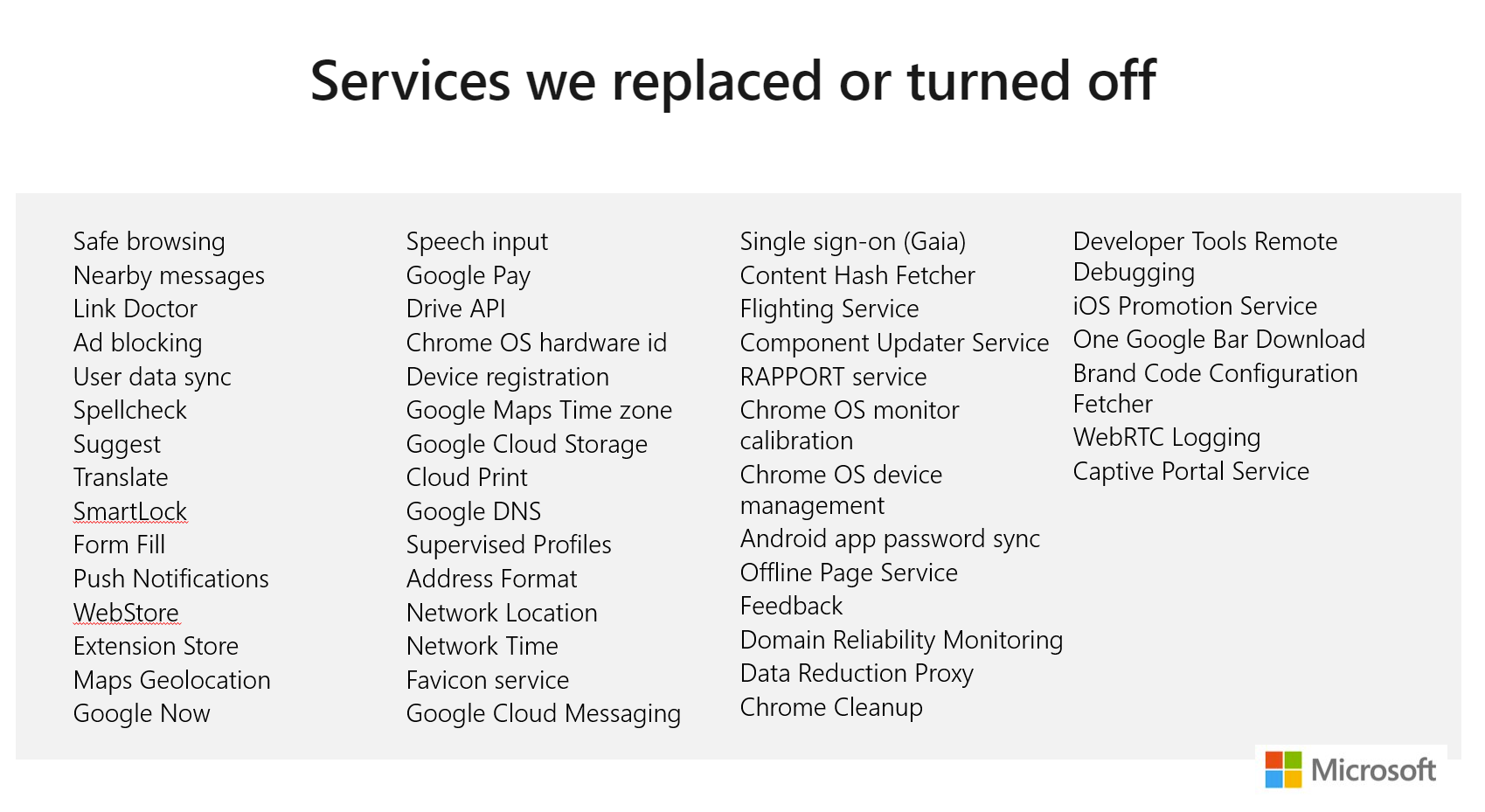
Several vendors have already done that work, among them Microsoft with Edge, Vivaldi, and Brave. In 2019 The Verge covered Microsoft's list of the Google-related pieces it removed from its Chromium-based Edge ("Microsoft reveals all the Google things it removed in its Chromium Edge browser"):
What Abramov's thread showed
Dan Abramov raised the question while asking around:
https://twitter.com/dan_abramov/status/1475691811830181890
The takeaway from that thread: Chromium is not simply the core browser machinery to which Chrome adds extras. Anyone building on Chromium instead starts by removing things from Chromium.
ungoogled-chromium and its stated philosophy
Forking remains the escape hatch that open source promises, and the best-known fork is ungoogled-chromium. Its philosophy is laid out as four points:
- Remove all remaining background requests to any web services while building and running the browser
- Remove all code specific to Google web services
- Remove all uses of pre-made binaries from the source code, and replace them with user-provided alternatives when possible.
- Disable features that inhibit control and transparency, and add or modify features that promote them (these changes will almost always require manual activation or enabling).
The wider engine picture
The browser world is converging on Chromium. Apple will likely hold on to WebKit, but Mozilla has not been faring well for some time, and its revenue comes from Google anyway, which makes a long-term competitive Mozilla engine hard to picture.
A cleaner, company-agnostic version of Chromium would be a healthier foundation for the ecosystem — possibly under a different name. Let most browsers build on it if they will, but let the innovation proceed from a level playing field.




