
Custom schemes and who gets to honor them
URL schemes such as http:// or ftp:// look like low-level plumbing, but developers can in fact register new ones inside installed applications. The complication is that registering a scheme is only half the job: any app that handles link clicks also has to recognize it.
In 2017, Microsoft Edge shipped its own scheme:
microsoft-edge:// Following that link opens the page in Edge, even if another browser is set as the user's default — so a site owner could, in principle, force every visitor through Edge. Daniel Aleksandersen built EdgeDeflector to defeat that behavior, writing that users who have taken the trouble to configure a different default browser should be allowed to keep using it.
The topic has resurfaced because Brave now supports the microsoft-edge:// scheme, with Firefox considering the same. Much of the discussion centers on Windows 11, but on a Mac the scheme does what it intends across all the browsers tested:


The downside of withholding support is that clicking such a link may simply do nothing rather than open the URL at all.
Where the pattern originated
Aleksandersen traces the practice back further than Edge. Before iOS 14 shipped in September 2020, iPhone and iPad users could not change their default browser. Google, which offers many iOS apps including a Chrome shell, introduced a googlechrome: URL scheme in February 2014, using it to send people from Search or Mail to Chrome instead of Safari.
The original sin was Apple’s, but Microsoft is gulping the juice of the apple with gusto.
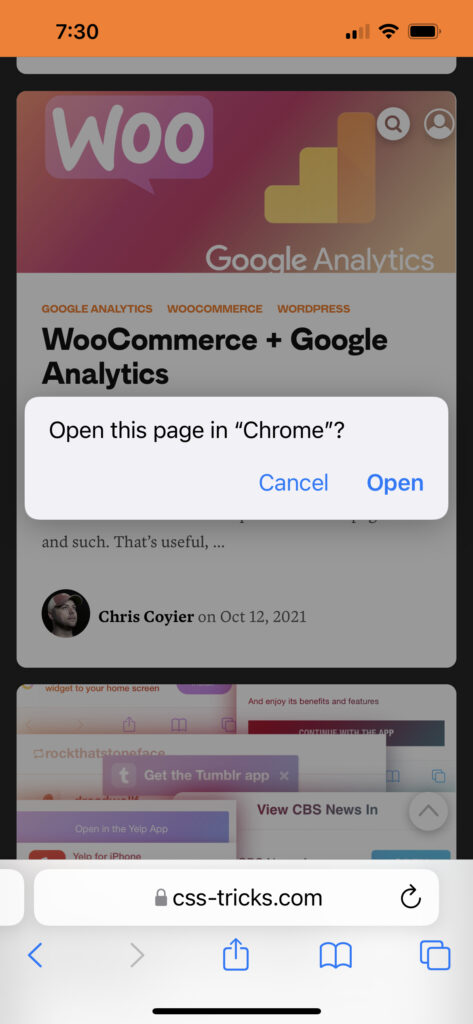
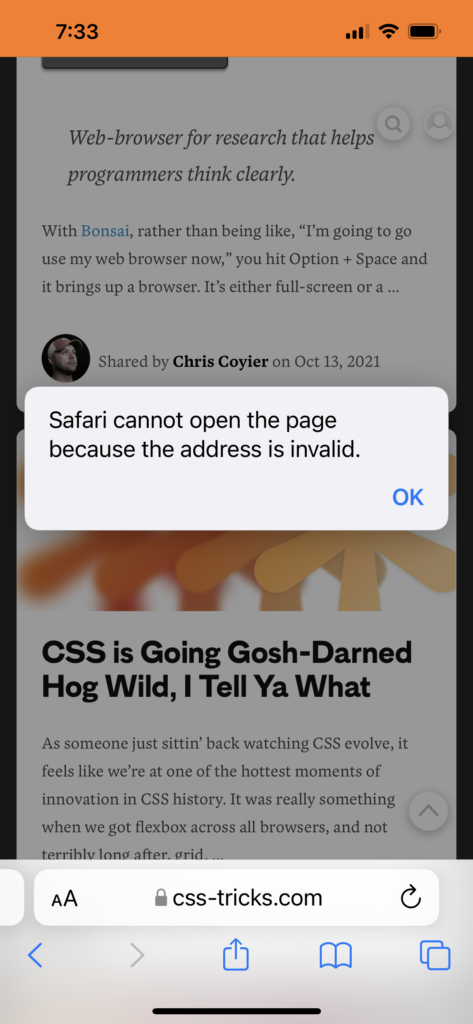
In other words, Google built the mechanism, but Apple's platform policy made it possible. Testing on an iPhone 13 with and without Chrome installed:
For anyone building software in this space, the sensible behavior would be to intercept these schemes and open the link in the browser the user is already in. The web is the web; no particular URL should need to open in a particular browser.