Interop 2023: another year of cross-browser fixes
Major browser vendors and other stakeholders are once again collaborating on Interop, the joint effort to resolve the most persistent browser compatibility problems. After the first full-scale run in 2022, Interop 2023 expands to 26 focus areas. For the first time, the project accepted proposals from the wider community—including frameworks, large companies, and individual developers—before finalizing the roadmap.
The focus areas are tracked and scored publicly through Web Platform Tests (WPT). Scores reflect test pass rates, and developers can request changes to the test sets by filing issues against the WPT repository.
What’s in scope this year
Interop 2023 covers a broad range of CSS, HTML, JavaScript, and API features. The complete list is available in the project document, but the highlights worth watching include:
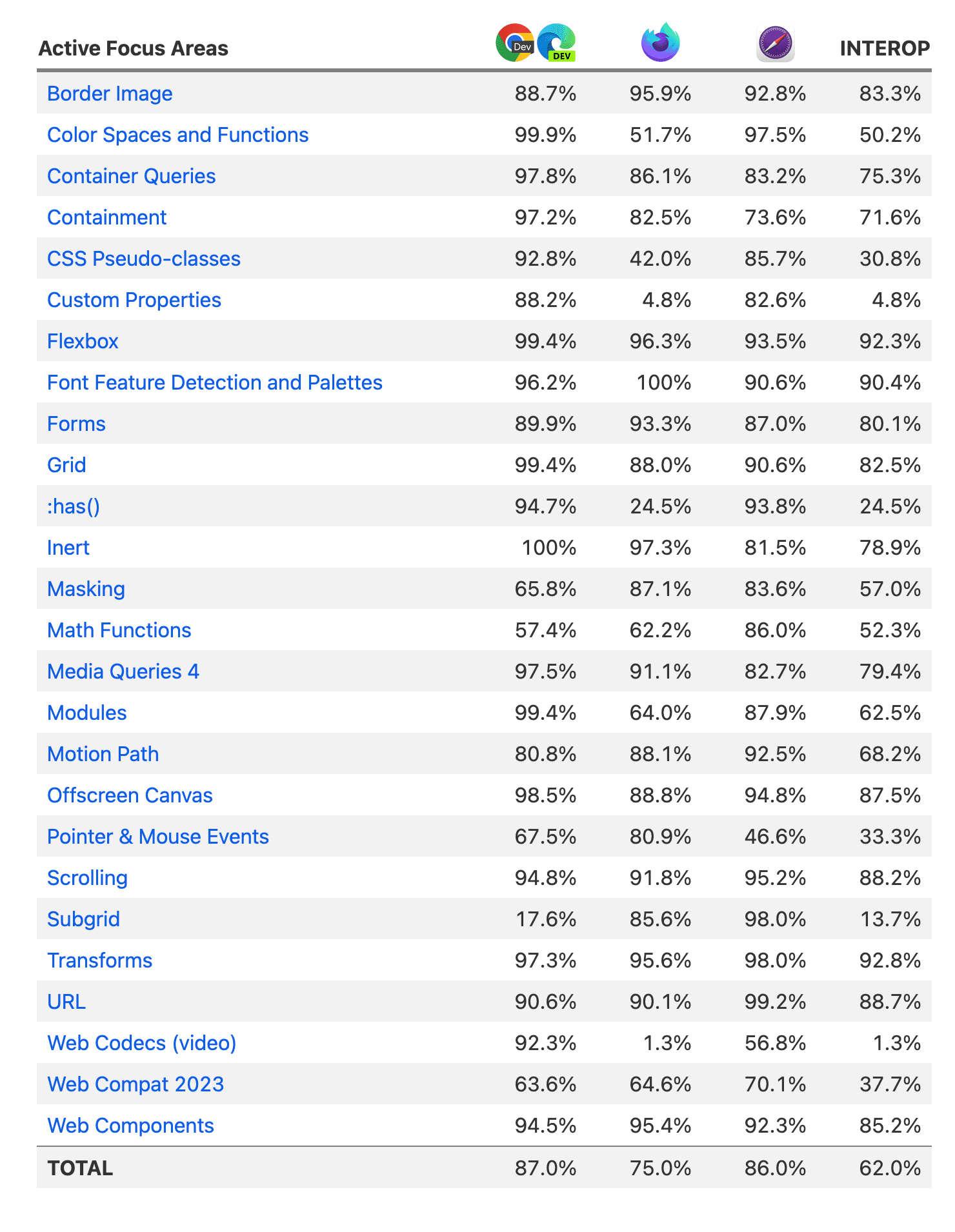
- Container Queries: Chrome and Safari shipped container queries in 2022, and Firefox 110 is expected to add support. This focus area’s tests aim to make sure the feature behaves consistently with the spec and across all engines.
:has(): The CSS pseudo-class often described as a parent selector. Interop work will ensure it works reliably for use cases like styling a figure differently based on whether it contains a caption.- Custom Properties via
@property: Beyond the long-supported basic CSS variables, this focus area targets the@propertyat-rule, which enables property type checking, default values, and inherited value control from within a stylesheet. - CSS Masking: Support for masking properties has been inconsistent across browsers, making creative image effects harder to apply. Interop aims to stabilize these APIs.
- OffscreenCanvas: A canvas that is decoupled from the DOM, letting developers run rendering tasks in a Web Worker thread—useful when canvas drawing competes with user interaction for main-thread time.
- Pointer and mouse events: This covers pointer and mouse behavior including hit testing and scrolling areas. Touch and stylus input are excluded, due to a lack of existing WPT coverage in that area.
- WebCodecs (video): The API exposes access to codecs already in the browser, so developers can work with individual video frames and audio chunks directly.
- Web Components: Interop will focus on the interoperability of foundational component technologies including Custom Elements and Shadow DOM.
Other areas on the list include CSS flexbox, Grid, media queries, the inert attribute, modules in Web Workers, URL handling, web forms, and a catch-all “Web Compat 2023” area for small bugs that cause known site compatibility issues despite not fitting neatly into any single feature group.
Tracking progress
Throughout 2023, progress can be followed on the Interop 2023 dashboard, which shows current scores and remaining issues across all major browser engines.
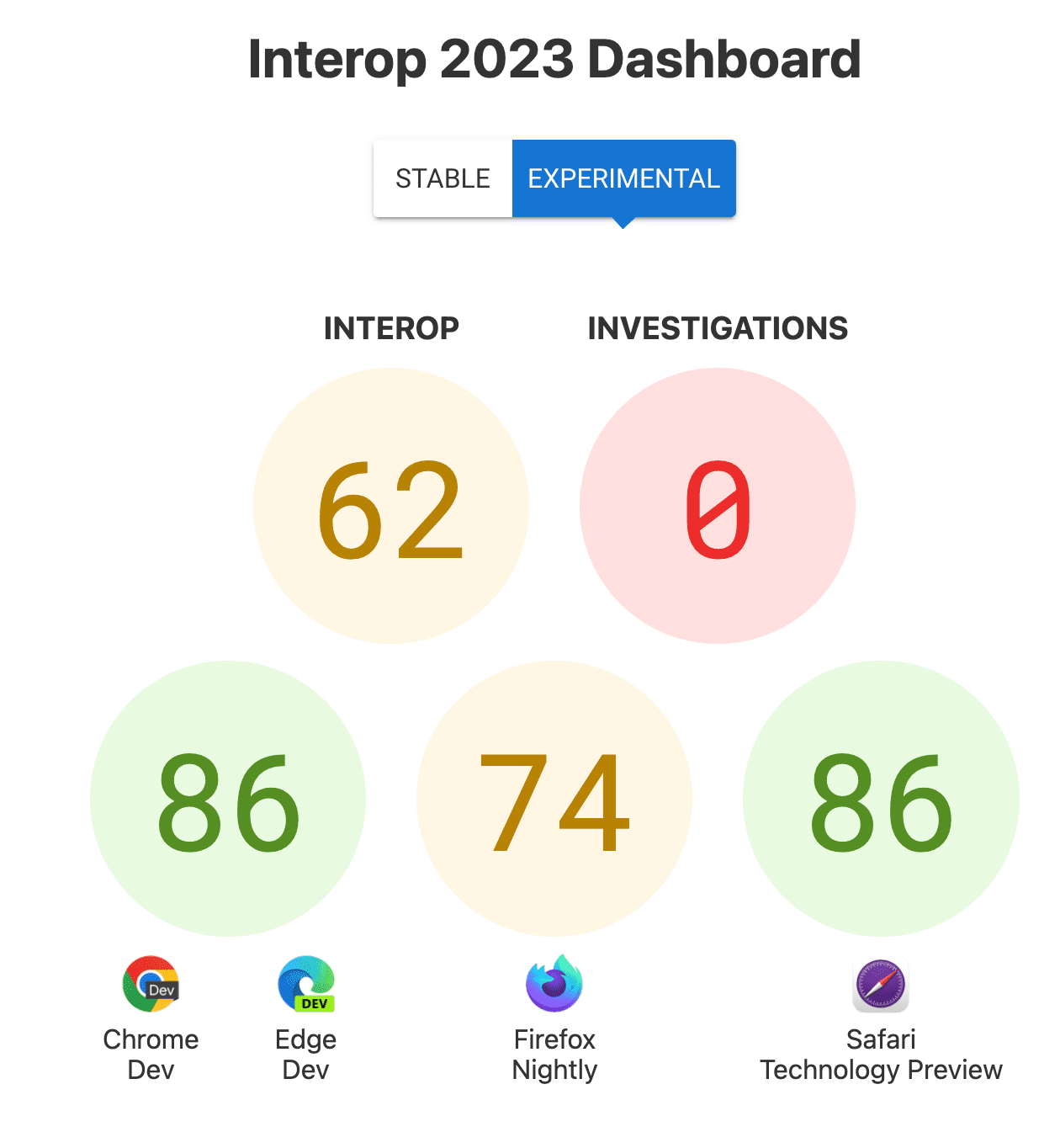
If you have feedback or want to contribute to improvements in Web Platform Tests, you can file an issue to request changes to the test sets used for scoring.
Report cards and learn more
The major browser vendors have each published details of their participation:


