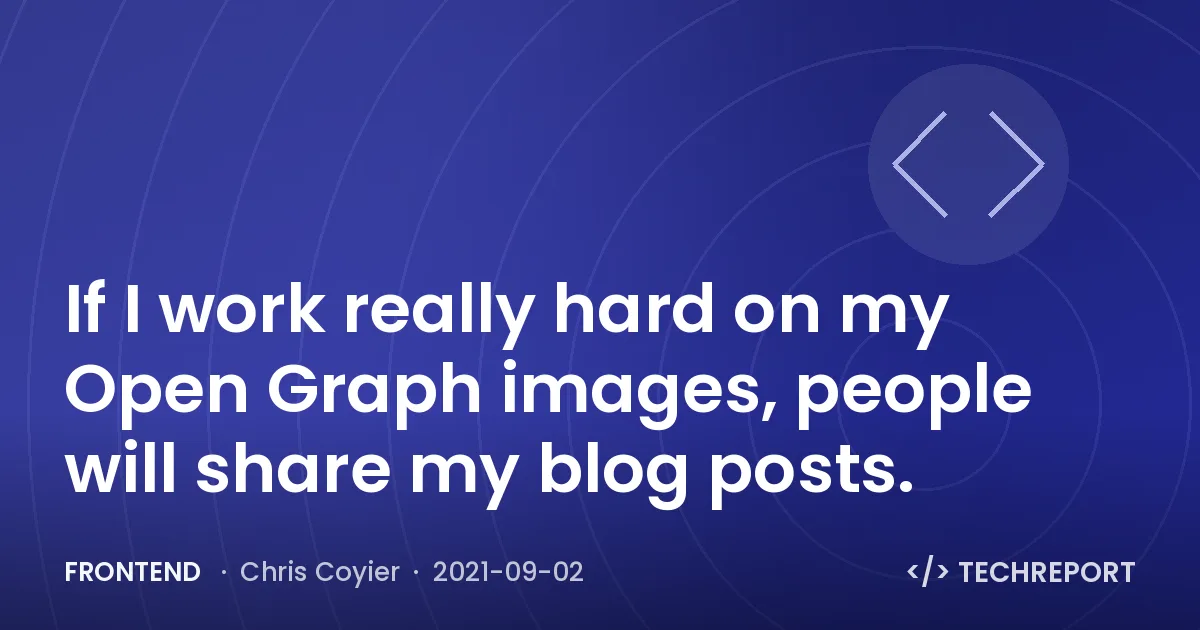
The auto-generated card pattern
Zach's setup gives every blog post its own URL serving a social card design, rendered by a headless browser such as Puppeteer and then used as the real Open Graph meta image. That means the card shows up on Twitter, Facebook, iMessage, Slack, Discord, and any other surface that renders that kind of preview.
CSS-Tricks has a decent solution in progress for WordPress, but its templates can't be controlled with HTML/CSS the way Zach's can.
The counterargument
Jim Nielsen supplies the opposing view in "Quibbles With Social Share Imagery":
I feel like they've been hijacked by auto-generated computer imagery serving as attention-grabbing filler more than supportive expression.
Jim Nielsen
The dynamic is straightforward: an Open Graph image is a free, large, clickable target for hungry fingers, so we add one even when it's boring — auto-generated text over a title with branding. Jim's post includes examples.
Where CSS-Tricks draws the line
The critique lands, and there's some guilt here, but CSS-Tricks is arguably a cut above for three reasons:
- A variety of templates keeps the output from looking identical, including a quote design.
- Custom imagery is folded into the final card, so most cards are somewhat visually unique.
- Branding isn't the only thing on the card — the author is usually incorporated, giving the person a bit of recognition rather than only promoting the site.