
Global share numbers move, but they don't tell you what to build
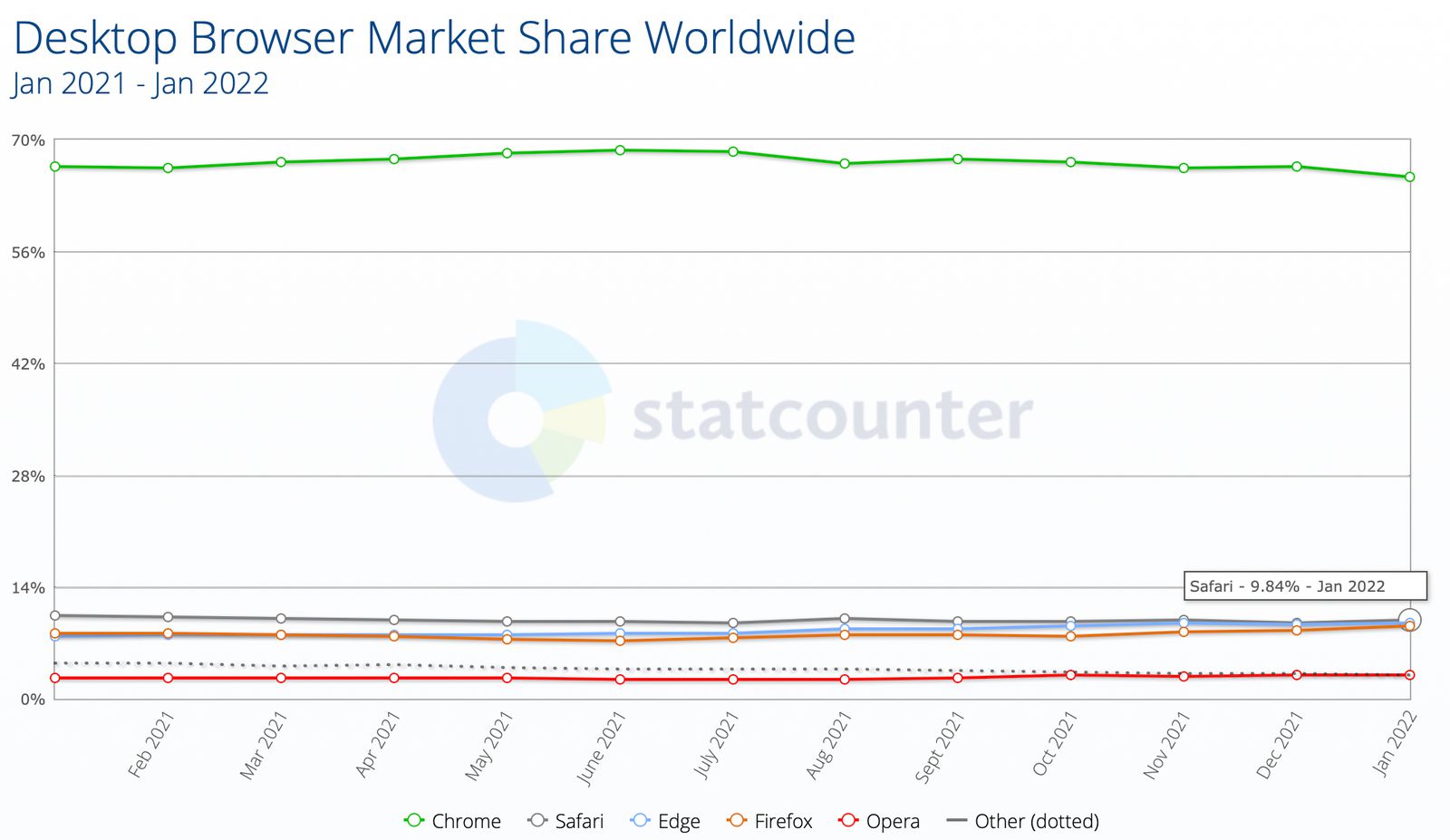
Stories about one browser overtaking another are fun reading. Microsoft Edge is now used on 9.54 percent of desktops worldwide, trailing Apple's Safari at 9.84 percent by just 0.3 percent, while Google Chrome holds first place with 65.38 percent and Mozilla Firefox sits fourth at 9.18 percent. Safari stood at 10.38 percent in January 2021, and if that decline continues, Apple could fall to third or fourth place before long.
Change the scope and the picture changes with it. Within Europe, Edge has already passed Safari; in North America the gap remains 5 percent.
Site-level analytics beat worldwide averages
None of this should influence what you support. Global figures belong in casual nerdy conversation, not in decisions about which browsers to target. Instrument your own site with basic analytics, collect data from real visits, and choose based on that. It is the only data that counts.
The same objection applies to treating global usage as a baseline for what web development should support in 2022. Globally, IE's share is under 0.5 percent, and even in Japan, where IE usage runs higher than elsewhere, it sits near 2 percent and is trending down — so the rationale for keeping IE support has largely evaporated.
Large organizations do not decide this way either. Google, when it "dropped" IE 11, still serves a perfectly fine baseline experience, and made the call after doing the math. WordPress, which powers roughly a third of the whole internet, weighed usage of its own product before discussing dropping IE11 support.
If you are launching something brand new, you will have analytics of your own soon enough, and you can base future-facing support choices on that as the numbers arrive.




