Roguelikes That Refuse to Die
The roguelike genre has a peculiar relationship with permanence. The original Rogue dates back to around 1980, built for character-based terminals before home networking was common. By the early 1990s, Usenet communities like rec.games.roguelike were forming around the emerging genre, giving players and developers a place to trade variants and design philosophies.
That collaborative foundation shaped what followed. NetHack was developed across networked systems before most people had internet access. Angband required a coordinated relicensing effort decades after its start just to become fully open source. Pixel Dungeon was declared complete — and immediately forked by its community into dozens of new games.
The same spirit drives annual events like the 7DRL challenge, where developers build a complete roguelike in seven days, and the Roguelike Celebration conference. These spaces keep iteration fast and ideas public, allowing small projects to leave lasting marks. The ten games below all started small. None of them stayed that way.
The Deep Simulation
Cataclysm: Dark Days Ahead drops you into a world where everything has already collapsed. Cities sit abandoned, labs hum with leftover experiments, and forests reclaim the edges of civilization. You scavenge through wreckage while hunger, injury, weather, and time press in from all sides. Written in C++, it started as a fork and never stopped growing as contributors layered in new systems.
The simulation runs continuously and rewards system knowledge. You can wire in cybernetics, mutate into something barely recognizable, or assemble armored vehicles from salvage. None of it is scripted — it all emerges from the underlying rules. The depth spills over into the community itself, where players argue about nutrition, physics, and crafting logic in pull requests.
The Ancestral Dungeon
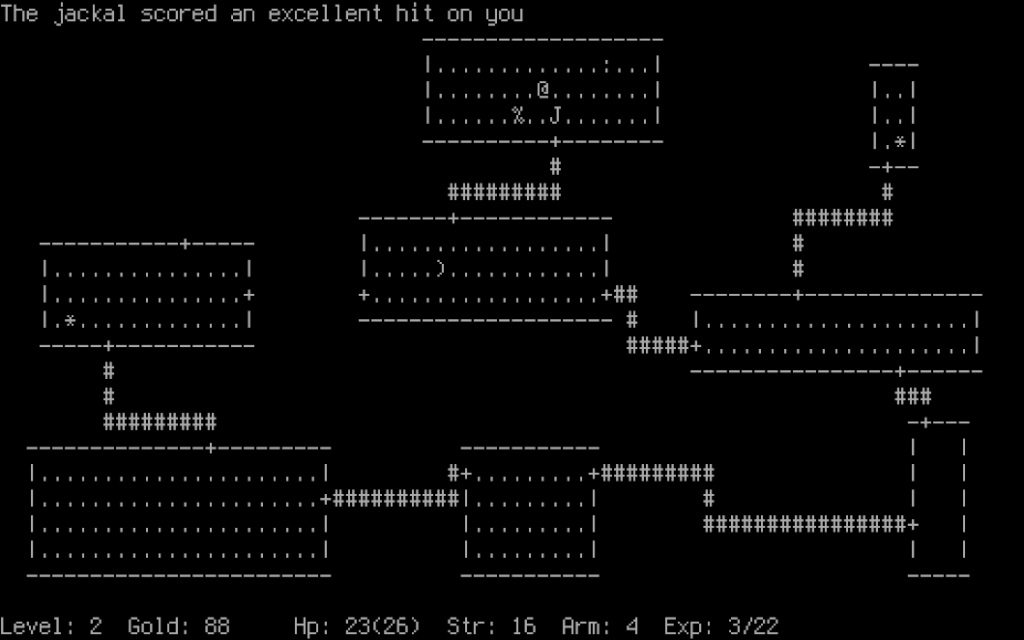
NetHack first shipped in 1987 as a fork of Hack, itself descended from Rogue. The C-based game drops you into a dungeon packed with shrines, traps, cursed gear, and monsters that seem personally invested in your downfall. Every object follows its own rules, and those rules collide in ways that feel almost vindictive. After decades of contributions, the game is dense with edge cases, hidden mechanics, and bizarre outcomes. The deeper you go, the more the dungeon anticipates whatever terrible idea you plan to try next.
Development continues: NetHack 5.0.0 was recently announced. The release notes capture the game's systemic humor well — illiterate heroes who receive spellbooks from their deities get the spell forced directly into their minds, fleeing leprechauns bury gold after teleporting, and monsters can blind you with a camera.
If ASCII or 2D tilesets aren't your preference, community member @JamesIV4 has built a 3D version playable on web, Windows, macOS, Linux, and Android. It uses the neth4ck project to run NetHack compiled to WebAssembly, with a React hooks/Zustand frontend and Three.js renderer.
Shared-Server Survival
Dungeon Crawl Stone Soup unfolds across a network of dungeon branches, each tuned to test a different kind of mistake. You select a species, a background, and possibly a god to follow, and those choices carry through everything that follows. Magic, religion, and skills pull in different directions, keeps builds evolving under pressure rather than settling into fixed patterns. The C++ codebase's fork history dates to 2006 when the community revived a slowing project. Its development philosophy sometimes involves deleting features as much as adding them.
The game supports offline play and public servers where other players' ghosts appear and spectators watch runs unfold in real time. Resources stay tight, every decision stacks, and you live with the outcome.
The Branching Lineage
Angband stretches downward from a quiet town into a massive dungeon with decades of accumulated history. Written in C, it traces its lineage back to Moria in the 1980s. Forks spun out early and often into dozens of variants — some tweaking balance, others rebuilding systems or shifting the setting entirely. Ideas move between branches, get reworked, and resurface elsewhere years later.
Despite its age, updates continue and the surrounding community remains active with ladders, forums, and live servers. Angband's transition to GitHub split development into stable mainline and experimental offshoots. As David L. Craddock describes in Dungeon Hacks, these development branches acted as a "secret lab" where the team could experiment freely — building and discarding features without endangering official releases. This model accelerated development and made experimentation sustainable.
Environmental Clarity
Brogue builds a dungeon with unusual clarity and intent. Rooms connect in ways that funnel you into decisions. Light drops into darkness, fire spreads through terrain, and gas drifts across the battlefield — the environment joins every fight. This C-based design has inspired an active mod scene with dozens of community variants experimenting on the same foundation.
The original Brogue stopped receiving official updates years ago, but development continued as Brogue Community Edition, with contributors maintaining and shipping new releases.
Mobile Roguelikes, Forked Twice
Pixel Dungeon structures its Java-based design as quick-hit layers. Sewers give way to prisons, then caves, then worse. Every level adds a small twist — a trap, a new enemy, a bad surprise behind a door that should have stayed closed. Built as a free passion project with no monetization hooks, it depends on tight design and fast pacing. Runs stay short; the urge to start another does not.
The game went open source in 2014 and was declared complete a year later. The community treated that as a starting point, spawning dozens of forks and variants still updated today.
Shattered Pixel Dungeon is the most prominent of those forks. It began as a small balance mod and grew into a full game over years of continuous updates. Regions feel more distinct, enemy and item options open multiple viable paths, and community feedback feeds directly into development. A decade later it has seen dozens of releases, millions of downloads, and remains committed to pure roguelike principles — no permanent upgrades, just better decisions each run.
Doom, but turn-based
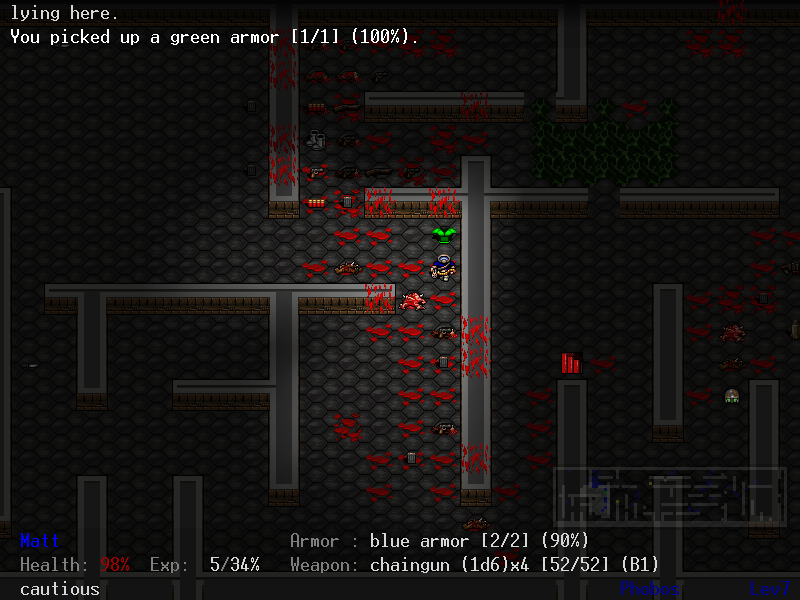 DRL, written in Free Pascal, takes the frenetic energy of a 90s shooter and slows it down just enough for deliberate movement. The result is a turn-based roguelike that still manages to feel immediate, with tight corridors, heavy weaponry, and encounters that escalate quickly. Built on the structure of short, punishing runs, it rewards aggressive play but punishes hesitation. The project has roots in the early 2000s, originally under a name that referenced its FPS inspiration before a trademark notice pushed it fully into open source. It continues to receive updates, preserving the intensity of its source material in a format that fits a coffee break.
## Build a dungeon worth defending
DRL, written in Free Pascal, takes the frenetic energy of a 90s shooter and slows it down just enough for deliberate movement. The result is a turn-based roguelike that still manages to feel immediate, with tight corridors, heavy weaponry, and encounters that escalate quickly. Built on the structure of short, punishing runs, it rewards aggressive play but punishes hesitation. The project has roots in the early 2000s, originally under a name that referenced its FPS inspiration before a trademark notice pushed it fully into open source. It continues to receive updates, preserving the intensity of its source material in a format that fits a coffee break.
## Build a dungeon worth defending
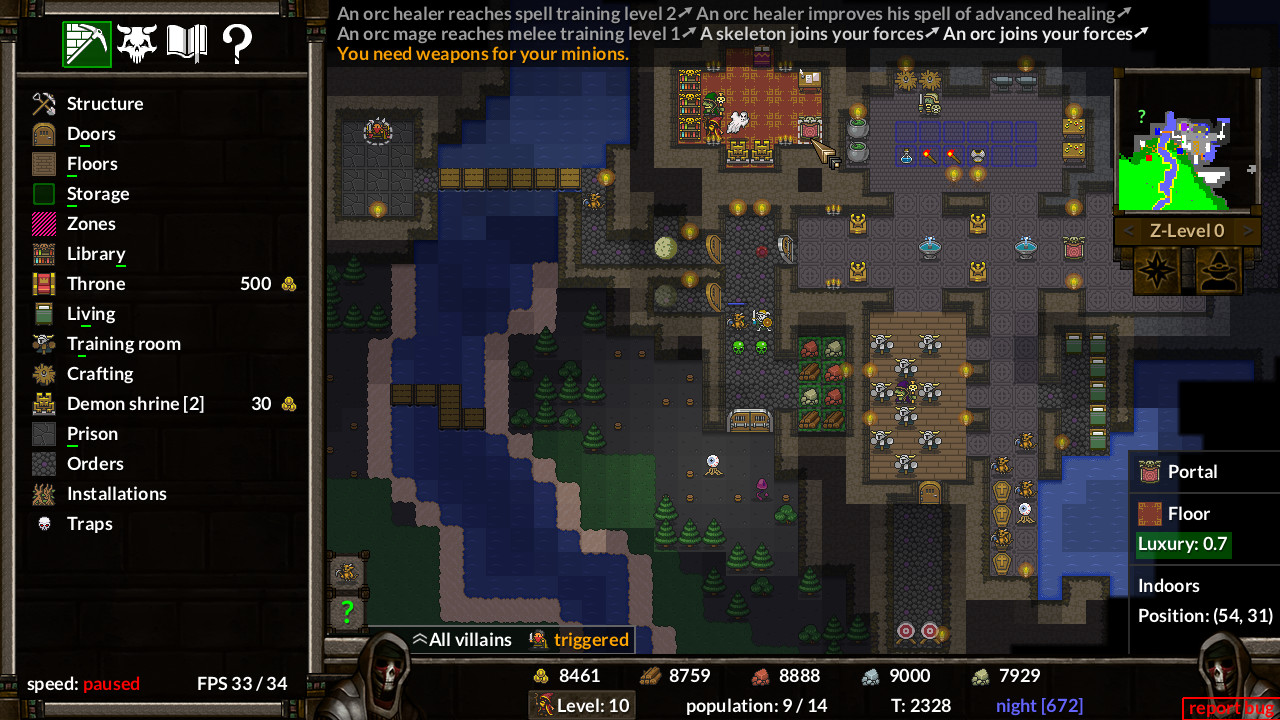 KeeperRL flips the typical roguelike setup upside down. Written in C++, it starts with you carving rooms and laying traps underground, constructing a dungeon designed to repel the heroes who will inevitably come knocking. The surface world responds with raids, and your own minions have to be trained and managed—sometimes causing more trouble than they solve. You can jump into tactical combat directly or let the systems operate on their own. Fire spreads, creatures react to their environment, and the dungeon itself takes on a character shaped by your choices. The open source model is equally distinctive: the full version is available through wildlife charity donations, while a free ASCII build remains available for those who want the pure terminal experience.
## Geometry as the enemy
KeeperRL flips the typical roguelike setup upside down. Written in C++, it starts with you carving rooms and laying traps underground, constructing a dungeon designed to repel the heroes who will inevitably come knocking. The surface world responds with raids, and your own minions have to be trained and managed—sometimes causing more trouble than they solve. You can jump into tactical combat directly or let the systems operate on their own. Fire spreads, creatures react to their environment, and the dungeon itself takes on a character shaped by your choices. The open source model is equally distinctive: the full version is available through wildlife charity donations, while a free ASCII build remains available for those who want the pure terminal experience.
## Geometry as the enemy
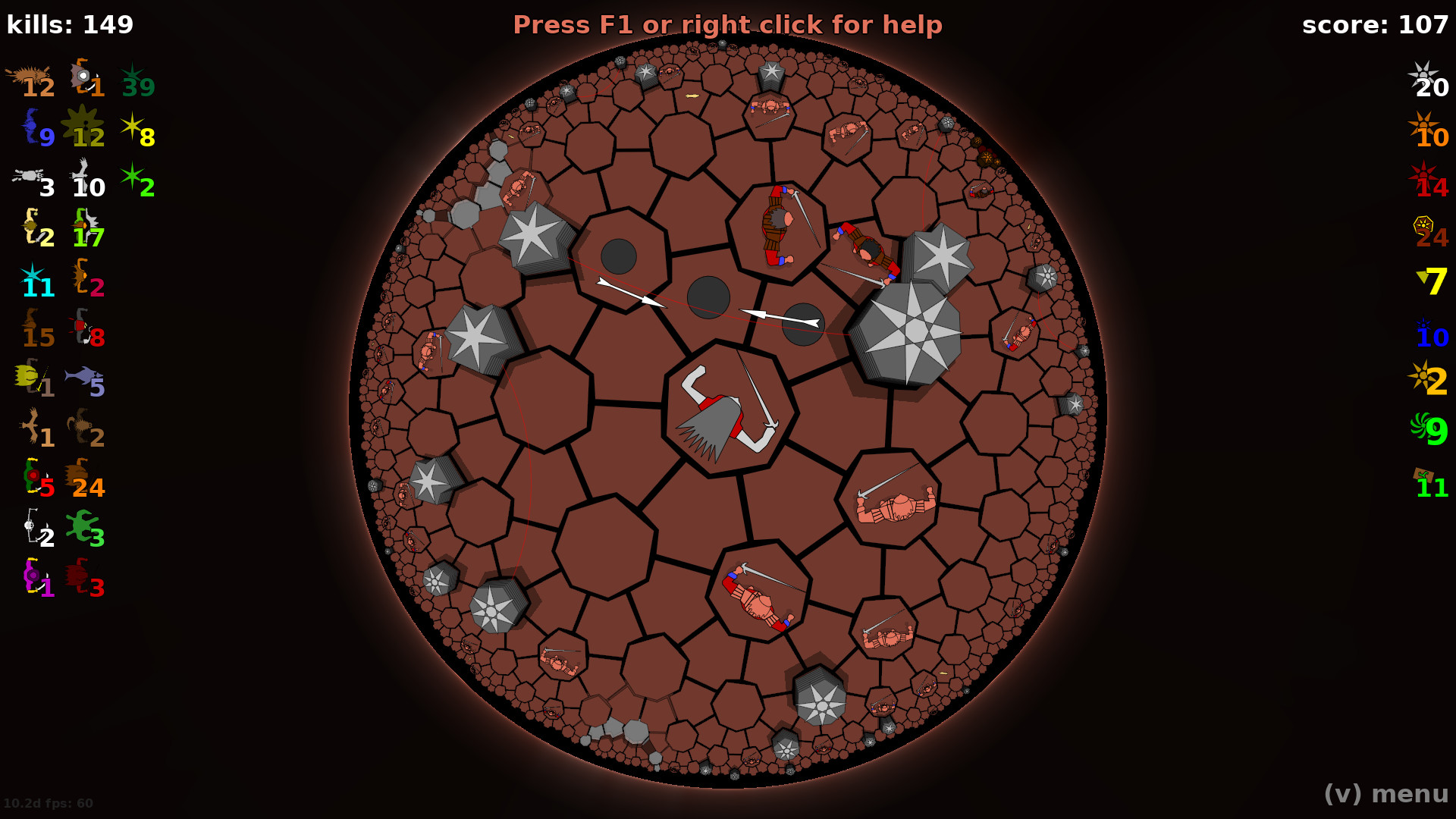 HyperRogue takes the core loop of a roguelike—moving, collecting, surviving—and drops it into a world where the normal rules of space no longer apply. Built on hyperbolic geometry in C++, its world expands faster than intuition can track, making navigation as much of a challenge as combat. Parallel paths drift apart, retracing steps requires precise maneuvering, and positioning against enemies demands a completely new spatial logic. Each of its many distinct regions layers unique hazards and mechanics on top of this unstable foundation. Gathering treasure, avoiding being overwhelmed, and pushing deeper are the only constants. The developer, @ZenoRogue, treats the project as a long-running experiment, using new lands and systems to explore how games behave when the geometry underneath them shifts.
## The common thread
What ties these projects together is that they refuse to go stale. Contributions keep arriving—new systems, revised mechanics, and experiments pushed into odd corners just to see what sticks. Some have evolved with updated graphical interfaces while others stay true to their terminal origins, and a few let you choose between both. The same momentum appears in the wider terminal ecosystem, with tools like Ghostty, Charm’s suite, and Ratatui continuing to stretch what the CLI can do.
Tight feedback loops, visible systems, and communities that stick around. That is what keeps roguelikes alive, and it is the same foundation that keeps the terminal relevant. These projects don't get abandoned, they get forked.
## One more for the road
HyperRogue takes the core loop of a roguelike—moving, collecting, surviving—and drops it into a world where the normal rules of space no longer apply. Built on hyperbolic geometry in C++, its world expands faster than intuition can track, making navigation as much of a challenge as combat. Parallel paths drift apart, retracing steps requires precise maneuvering, and positioning against enemies demands a completely new spatial logic. Each of its many distinct regions layers unique hazards and mechanics on top of this unstable foundation. Gathering treasure, avoiding being overwhelmed, and pushing deeper are the only constants. The developer, @ZenoRogue, treats the project as a long-running experiment, using new lands and systems to explore how games behave when the geometry underneath them shifts.
## The common thread
What ties these projects together is that they refuse to go stale. Contributions keep arriving—new systems, revised mechanics, and experiments pushed into odd corners just to see what sticks. Some have evolved with updated graphical interfaces while others stay true to their terminal origins, and a few let you choose between both. The same momentum appears in the wider terminal ecosystem, with tools like Ghostty, Charm’s suite, and Ratatui continuing to stretch what the CLI can do.
Tight feedback loops, visible systems, and communities that stick around. That is what keeps roguelikes alive, and it is the same foundation that keeps the terminal relevant. These projects don't get abandoned, they get forked.
## One more for the road