ExecuTorch in production: Meta’s on-device model stack
Meta has been rolling out ExecuTorch, its open-source inference runtime for edge devices, across its family of apps over the past year. Built with PyTorch 2.x technologies and developed in collaboration with Arm, Apple, and Qualcomm, ExecuTorch converts models into a compact, stable representation for on-device deployment. Its modular runtime is designed for portability across platforms while remaining compatible with PyTorch.
The move has delivered measurable gains in latency, efficiency, and user-facing performance compared to Meta’s previous on-device ML stack. Below are examples of ExecuTorch-powered features now live on Android and iOS across Instagram, WhatsApp, Messenger, and Facebook.
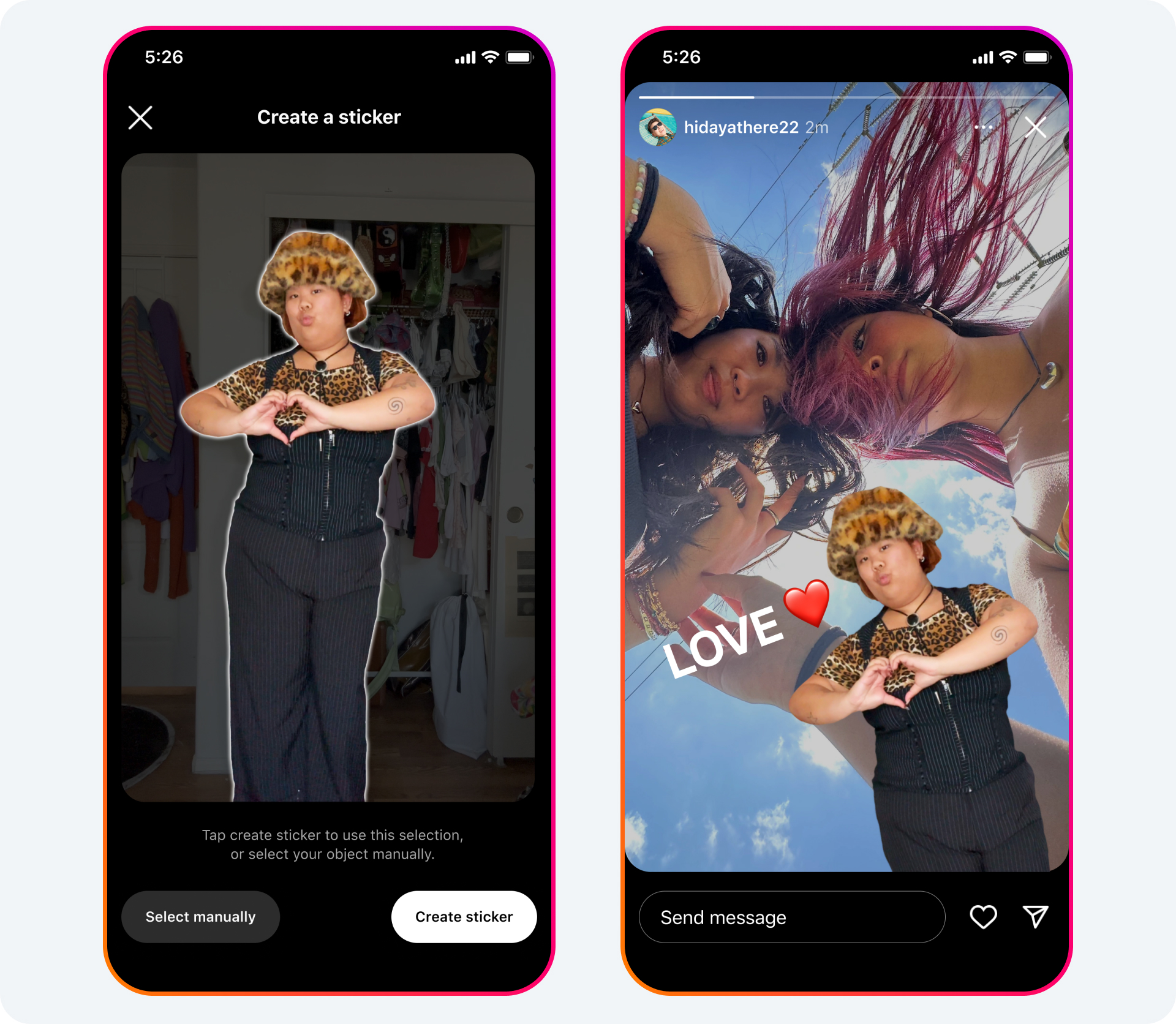
Instagram Cutouts
Instagram’s Cutouts feature lets users turn photos and videos into animated stickers for Reels and Stories. Under the hood, it runs SqueezeSAM, a lightweight variant of Meta’s Segment Anything Model. By migrating Cutouts to ExecuTorch, Instagram saw significantly faster inference on both Android and iOS compared with the older stack, which translated into higher daily active user engagement with the feature.
WhatsApp call and video quality
WhatsApp relies on bandwidth estimation models to adapt video streaming quality to available network conditions. These models must be both accurate and efficient. By moving them to ExecuTorch, WhatsApp reduced model load time and average inference time substantially, and saw improvements in app not responsive (ANR) metrics. The team also added fuzzing tests to strengthen security guarantees relative to PyTorch mobile.
Given the positive results, WhatsApp is now migrating additional models — including on-device noise cancellation and video enhancement — to ExecuTorch.

End-to-end encryption on Messenger
Messenger’s end-to-end encryption (E2EE) requires that message data never leaves the device unencrypted. ExecuTorch enabled Meta to move several server-side models on-device, preserving the E2EE environment while keeping features functional.
One such model is language identification (LID), which detects the language of incoming text to power downstream tasks like translation, summarization, and content recommendations. Running LID on-device via ExecuTorch is significantly faster and reduces server and network load. Other models moved on-device for Messenger include video call quality optimization (similar to WhatsApp’s bandwidth estimation) and image cutouts. These shifts freed up infrastructure capacity and enabled broader global scaling of the features.
Facebook Stories music suggestions
Facebook’s SceneX model handles image recognition, captioning, generative backgrounds, and safety checks. With ExecuTorch, SceneX now powers background music recommendations for Facebook Stories based on image content. The rollout brought performance improvements across low- to high-end devices compared to the older stack. Additional models for image enhancement and call noise reduction are in A/B testing.
Going forward
Meta’s production deployments demonstrate ExecuTorch’s viability for large-scale on-device ML challenges. The project is open source; contributions and feedback are welcome via the GitHub repository, and discussion happens on the ExecuTorch Discord server.


