

June’s headline releases: new Issues and Copilot
The big news this month is the beta launch of the new GitHub Issues, a reimagined version of the platform’s project management tool. The update makes it possible to link multiple issues via task lists, switch between project boards and spreadsheet-style tables, and add custom fields to issues. The goal is to keep management overhead low, even as projects grow more complex.
GitHub also opened a technical preview of GitHub Copilot, an AI pair programmer that suggests whole lines or functions based on the context of the code you’re writing. Examples and FAQs are available on the GitHub Copilot page.
Enterprise and repository updates
GitHub Enterprise Server 3.1 is now generally available. Highlights include workflow visualizations for GitHub Actions, automerge for pull requests, and performance optimizations for large, busy repositories. Full details are in the 3.1.0 release notes.
For organizations using IP allow lists, installation access tokens now respect those configurations, meaning token-based requests are subject to the same IP restrictions as other access.
On the pull request front, tools for discovering and resolving conversations are now generally available. Comments can be found directly in the “files changed” tab, and repository settings can now require that all conversations be resolved before a merge is allowed. Also new: requesting a review from a team with more than 100 members triggers a confirmation dialog before the request is sent.
Actions, Desktop, and Packages
GitHub Actions workflows can now be triggered by discussion and discussion_comment events, opening the door to Discussions-based automation. Environments—with their custom protection rules and secrets—are also now generally available for workflow jobs.
GitHub Desktop 2.9 builds on the drag-and-drop features from 2.7 with the ability to squash and reorder commits, create a branch from an earlier commit, and amend the last commit:

Desktop 2.9 also delivers a native build for Apple Silicon machines, which should improve performance and reduce crashes on M1 hardware.
The GitHub Packages Container registry (ghcr.io) is now generally available, giving teams a consolidated place to publish, manage, and consume container images.
Issues and themes
Alongside the new Issues experience, GitHub introduced issues forms for public repositories. Maintainers can build structured forms with required fields to capture consistent, complete detail from contributors:

New state icons for issues and pull requests make it easier to tell open, closed, merged, and other states apart at a glance:

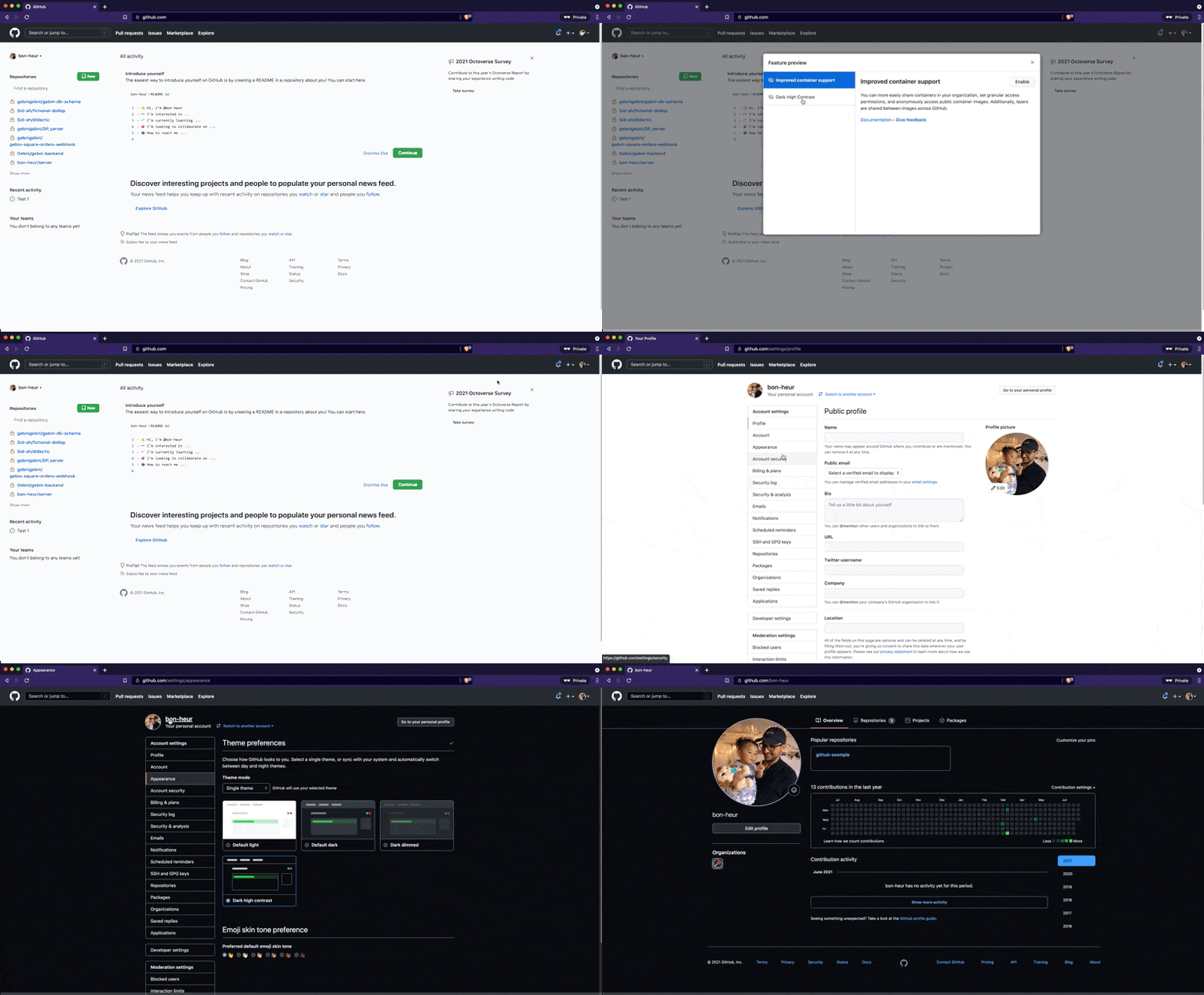
For those who prefer a darker UI, a dark high contrast theme is now available to all github.com users as a public beta. It can be enabled through the Feature Preview settings in the profile menu, then selected from the Appearance page in profile settings:
Release reactions
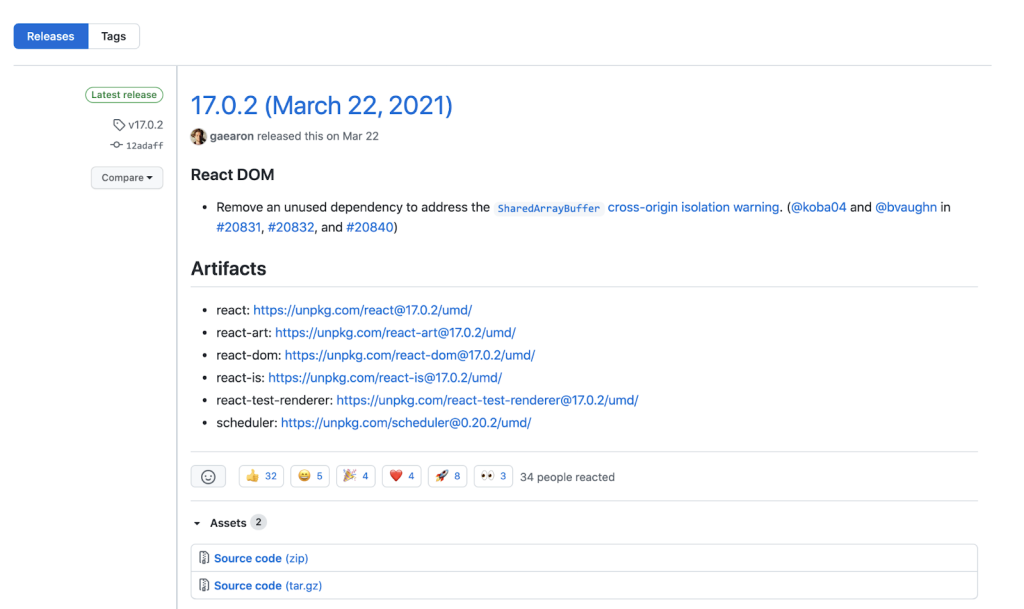
Release pages now support emoji reactions, so teams can mark a release with 🎉 or 🚀 to show support without digging into comments:
Security and scanning updates
June brought a sizable batch of code scanning improvements. Code scanning alerts now support free text search, allowing you to find a specific alert even if you don’t recall its exact name. You can also configure severity levels to control which alerts cause a pull request check to fail.
For CodeQL users, the CLI now supports creating databases for multiple languages in a single command, which simplifies analysis on third-party CI/CD systems. CodeQL also adds beta support for C++20, with the caveat that only GCC on Linux is currently supported and C++20 modules are not yet covered. The code scanning API now returns the CodeQL query version used for an analysis, which helps with reproducing findings or confirming the latest queries were run. Diagnostic information is now generated for all supported languages.
Dependabot also picked up a series of updates:
- Security and version updates now support
pip21.1.2,pip-tools6.1.0, andpipenv2021-05-29. - Version updates add support for Terraform 1.0, including lockfiles, providers, and private registries.
- Update scheduling is now uniform: each repository is assigned a random start time to avoid load spikes.
A few more security items shipped in June:
- Secret scanning on private repositories now supports user-defined patterns for GitHub Advanced Security customers. New patterns trigger a search of the entire git history as well as future commits.
- RubyGems, Adobe, and OpenAI have joined the secret scanning integrator program. GitHub will scan public repository commits for exposed API keys and forward findings to the relevant vendor for automatic revocation.
- Security alert notifications are now opt-in. You’ll only receive them for repositories where you’ve chosen
All Activityor configured the repository to includeSecurity alerts.


