
Even and odd functions: definitions and basic properties
An even function satisfies f(x) = f(-x) for its entire domain; its graph is symmetric about the y-axis. Common examples include cos(x) and x².
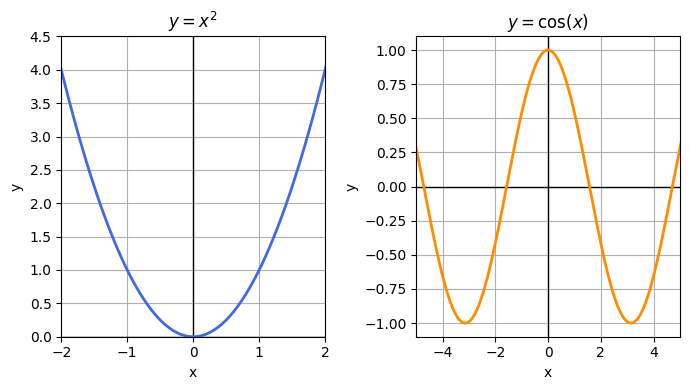
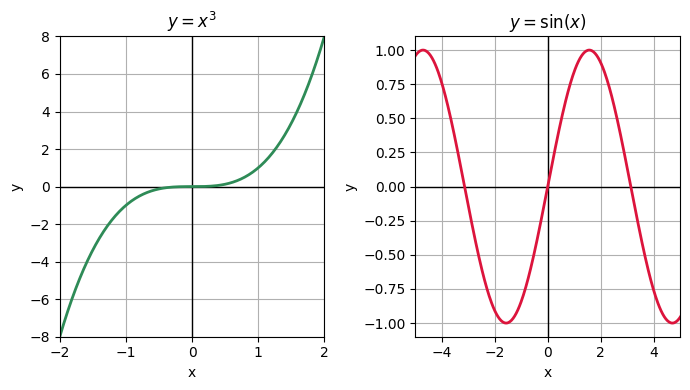
An odd function satisfies f(-x) = -f(x) for its entire domain; its graph is reflected across the origin. A necessary consequence is that every odd function must have f(0) = 0. Examples include sin(x) and x³.
These classifications carry over naturally to sums and products. The sum of two even functions is even, and the sum of two odd functions is odd. Products follow a sign-like rule: even × even = even, odd × odd = even, and odd × even = odd. The product rule is easy to verify by substituting -x into the composed function and applying each factor's property.
Integrals over symmetric intervals
For an even function f(x) integrated over a symmetric interval [-a, a], the integral simplifies considerably. Splitting the interval at zero:
∫[-a,a] f(x) dx = ∫[-a,0] f(x) dx + ∫[0,a] f(x) dx
On the first term, substitute u = -x. Because f is even, f(-u) = f(u), and reversing the bounds of integration after the substitution yields:

∫[-a,0] f(x) dx = ∫[0,a] f(u) du
Since the integration variable is a dummy, the two parts are identical, giving:

∫[-a,a] f(x) dx = 2 ∫[0,a] f(x) dx

The argument for an odd function is analogous, but the first half of the integral is the negative of the second half, so the total integral over [-a, a] is zero.
Decomposing any function into even and odd parts
Any arbitrary function g(x) can be written as the sum of an even function e(x) and an odd function o(x). To find these components, start by assuming the decomposition and evaluate it at -x:
g(-x) = e(x) - o(x)
Adding this to the original equation g(x) = e(x) + o(x) isolates the even part:
e(x) = (g(x) + g(-x)) / 2
Subtracting instead isolates the odd part:
o(x) = (g(x) - g(-x)) / 2
This construction always works: for any g, the function e(x) is genuinely even and o(x) is genuinely odd, and their sum reconstructs the original function.


