The Metaverse Is Not a Place — It’s a Moving Target
Ask a handful of people about the metaverse and you’ll get a dozen different responses: a virtual land of opportunity, another avenue for harassment, the new Facebook, or jargon soup of Web3, NFT, blockchain, and VR. Some call it the future of the internet. What’s clear is that there is no clear definition — the metaverse is in its very early stages and still evolving.
The core promise is a virtual community where people can play, work, socialize, and transact. That may sound familiar because it’s nearly the same description given to the World Wide Web in the 1990s. Since then, precursors like Second Life (2003) have offered persistent virtual worlds where users create avatars, explore, build, shop, and trade virtual property. More recently, Fortnite has expanded from a video game platform into hosting virtual concerts by artists like Travis Scott and Ariana Grande, pushing beyond gaming into virtual events and entertainment.
The metaverse aspires to be a network of many interconnected virtual worlds — an immersive, three-dimensional space mirroring much of what we do in reality. But today, those worlds exist in silos. Each requires its own identity; none are interconnected. It’s less like the web and more like a collection of distinct apps with nothing in common.
The Designer’s Dilemma
The hype around metaverse-related announcements from celebrities, influencers, and global brands is intense. For designers and the companies they work for, FOMO is real. It can be tempting to jump right in — converting real money to virtual currency, buying virtual land, or collecting non-fungible tokens. But this impulsive, cannonball approach is exactly what to avoid. The better path is purposeful: take a few steps, plan, and focus on your approach before diving into the metaverse.
Deciding Whether the Metaverse Is Actually for You
Before committing resources, it pays to interrogate why the company wants to enter the metaverse at all. Is the goal tied to a concrete business outcome, or is it about making a news splash because competitors are announcing land grabs? A clear-eyed rationale will serve as an anchor through the evaluation process.
Get Inside the Experience First
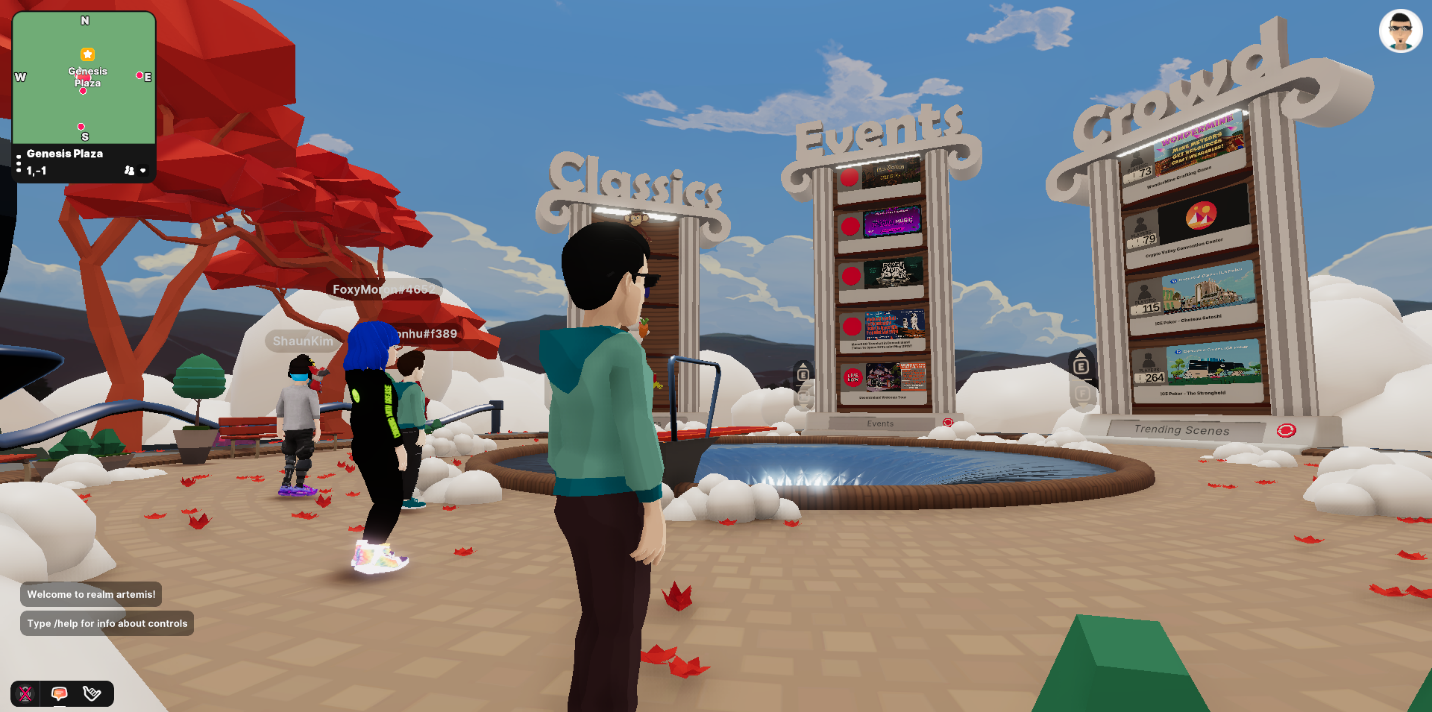
You don't need to buy hardware to start exploring. Platforms like Decentraland and The Sandbox run on a standard computer through a browser — create an avatar and wander around as a guest to understand navigation and wayfinding. In Decentraland, the M key opens a map to help you traverse the various districts. Genesis Plaza in Decentraland is a natural gathering point where you can observe how other avatars behave — who moves with intent versus who is stuck, what draws crowds, and where people seem frustrated.
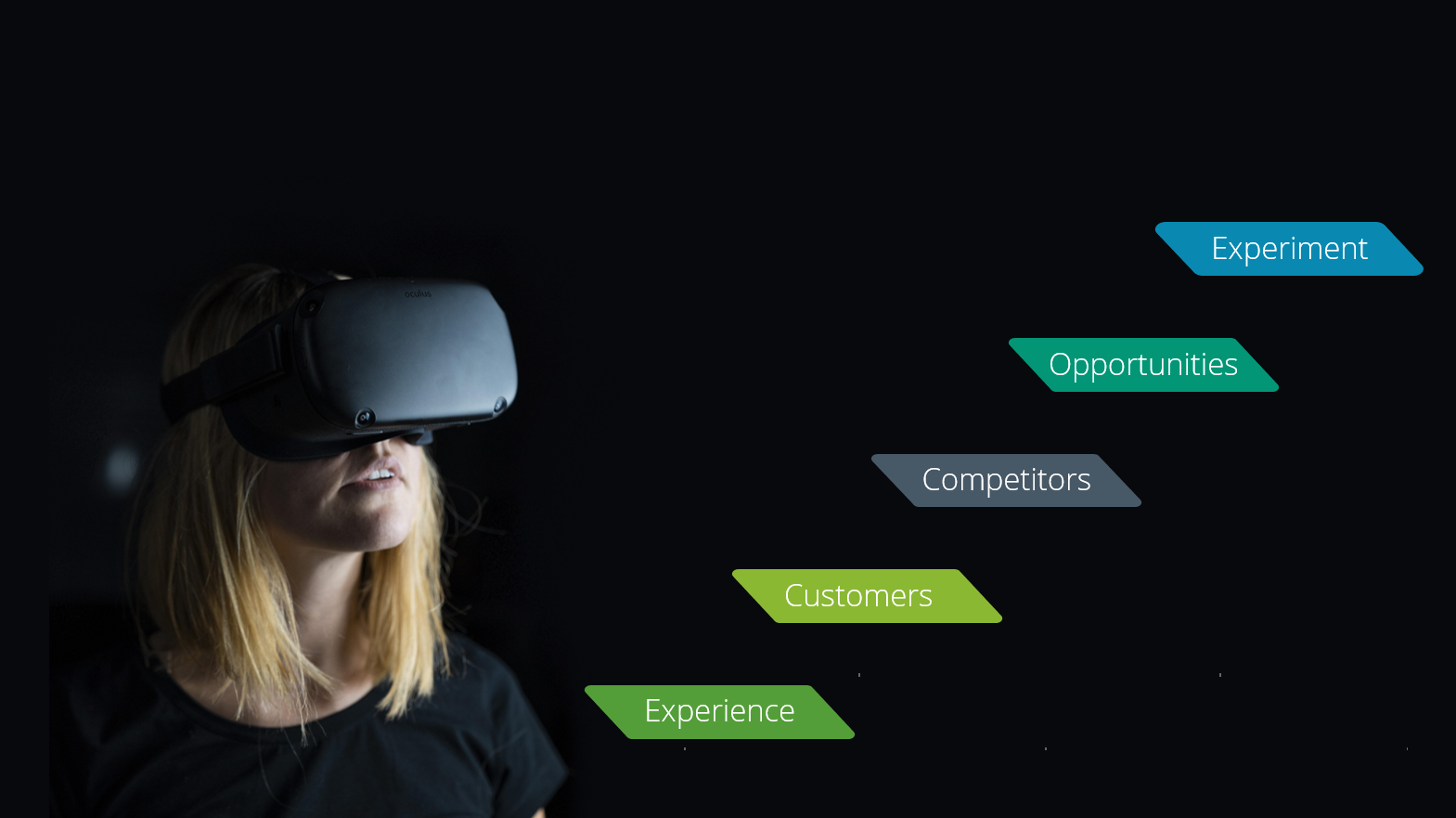
The full effect of immersion only becomes clear inside a VR headset, though. The Oculus Quest 2 is an affordable entry point below the four-figure price tags of high-end PC or console rigs, and it will get you into places like Horizon Worlds. The shift is significant — you physically block out your surroundings and must commit to the experience, since checking email or snacking is no longer trivial. As you tour these worlds, watch where groups gather and ask what is pulling them there. Have seasoned users show you around; it smooths out the early learning curve.
Measure Customer Readiness Against Adoption Profiles
The metaverse may not be relevant to every customer base. Everett Rogers' technology adoption life cycle segments the market into five groups by speed to adoption. Innovators (2.5%) are tech hobbyists willing to risk novelty; early adopters are selective and serve as role models whose choices lower uncertainty for others; the early majority (~34%) waits until products feel practical; the late majority (~34%) adopts under peer pressure or necessity after bugs are ironed out; laggards (~16%) only shift when forced to.
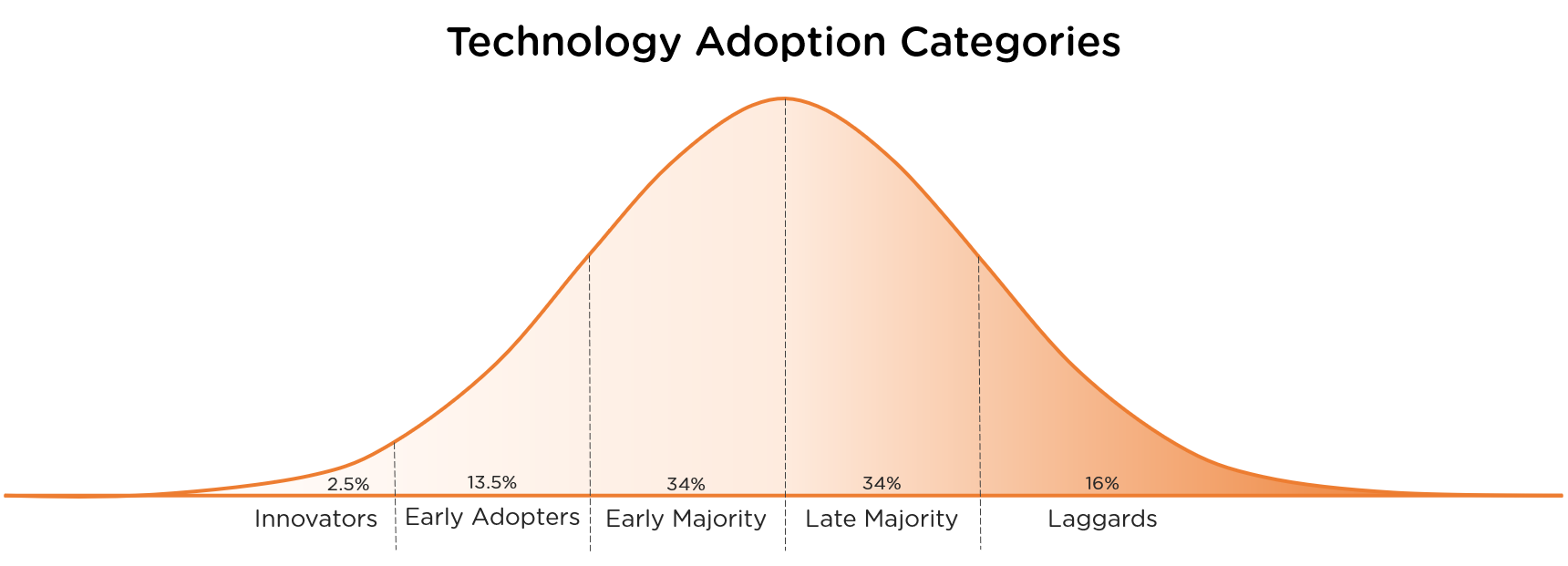
Map your customers to these profiles. If they cluster on the laggard and late-majority side, they probably won't be exploring virtual worlds soon. If they resemble innovators and early adopters, there's a strong chance they expect to find you there. Gartner suggests it will still be years before a sub-segment of the early majority begins to move in. Consider how your customers behave with technology today: are they passive media consumers, or are they active gamers? Gaming is the closest current parallel to the metaverse, so scrutinize how your brand operates there now if at all. Consumer gaming habits offer a reasonable proxy for how much attention they will divert to your business in the metaverse.
Read What Competitors Are Doing
This is a land-grab phase where hype inflates every announcement. Sorting through what rivals actually try, and what works, is useful information. In food and beverage, activities fall into a few patterns:
- Virtual events that drive real-world revenue: For Halloween 2021, Chipotle ran its annual Boorito event inside Roblox. Avatars could accessorize with virtual costumes and visit a virtual cashier to get an IRL promo code for free burritos. The promotion gave away $1 million in burritos.
- Multi-sensory experiments: There have been real-world dining tests where customers eat tiny pre-portioned bites while wearing a VR headset tuned to imagery, music, and narration to establish ambience.
- First-mover groundwork: In February, McDonald's filed trademark applications covering a virtual restaurant selling "actual and virtual goods" with home delivery. Rather than executing a full campaign, laying the legal foundation now allows scope to move later.
Parallel ventures are emerging outside the mainstream chains. Gary Vaynerchuk, for example, is working on Fly Fish Club, a members-only dining venue where an NFT functions as the membership token, granting access to culinary experiences starting in 2023 — similar to a country club, but with an on-chain key. Starbucks announced an NFT plan for later this year, though specifying that it is not aimed at speculative trading but at linking benefits and exclusive experiences to physical loyalty — conceptually reminiscent of the brand's limited-run $450 prepaid metal holiday cards, which had a secondary market on eBay.
These range from tentative experiments to large structural bets, and the spectrum tells you how much appetite your own organization should have.
Separate Useful Proposals from Hype
Once you have evaluated customers and competitive behavior, gather people who are internal or external video gamers, VR users, and metaverse tinkerers. Involve them while you evaluate what to build. A productive set of questions includes:
- Is there meaningful value in being the first to establish a presence in your sector?
- Where in the value chain could a virtual presence serve customers, staff, or partners — through existing offerings reimagined, net-new products, or accessing a new client segment?
- Are employee training or orientation scenarios where a VR experience would see faster tangible returns, even if they are less prominent than customer-facing efforts?
- Does the company have the talent pipeline to build, operate, market, and support a presence there?
- Is the organization genuinely comfortable experimenting, tolerating failed initiatives, and iterating in public?
Work through these as potential projects, scoring them with the standard product triad of viability, business feasibility, and user desirability. If the honest answer to several crucial questions is "no," the conclusion may simply be that the time is not right — an acceptable outcome from the exercise, and you can repeat the scan on a schedule while conditions change. Otherwise, you will likely be weighing a handful of low-effort bets versus one or two larger commitments.
Begin Small, But Not on Autopilot
Starting small works for many companies — either by creating avatar costumes or other digital loyalty perks, or by opening a fully declared virtual branch, in the style of JP Morgan's Onyx lounge. The risk is transplanting old playbooks wholesale into a channel that does not behave like the old ones. Iteration requires genuine adaptation, not a repeat of existing campaign strategies.
Your earlier exploration will serve as grounding; it will be clear from experience that conventions are loose inside virtual worlds, which provides a large creative surface to work with, yet leaves structural clues sparse. Hardware realities also qualify any grand plan: discomfort from wearing headsets, trying to sit fully in both a virtual and physical environment, running down battery life, and formatting experiences for spatial depth rather than a flat canvas. Your earlier field trips give you something no pitch deck can, since you will have inherited the same pain points your users carry.
Designing Responsibly in an Emerging Medium
Designers naturally mirror the surrounding enthusiasm for a novel interactivity, but that interest must be matched by a duty of care toward the people inside these worlds.
- Design ethically: optimize engagement, not addiction, and take an advocate stance for user needs.
- Make policy for people, not technology: treat privacy, security, equity, and mental well-being as central workflows, not an afterthought.
- Codify anti-harassment measures: build on platform-level protections, and plan for prevention and recourse from the start.
Action can wait for perfect clarity, and small steps will get a practice going. The journey is iterative — but it should start only after the destination has been properly questioned.
Enter the Metaverse on a Schedule, Not a Cannonball
Following technology trends is rarely a productive end in itself. For the metaverse, the advice is to move deliberately, matching your organization's investment to its strategic needs and your customers' readiness. The “cannonball” approach — diving in without a clear hypothesis — tends to produce expensive missteps. A more measured “diving board” strategy, by contrast, uses the technology's maturation as a timing signal rather than a deadline.
That measured approach means paying attention not just to what the platforms can do, but to what your users are actually able to do. Gauging customer aptitude for immersive interfaces before committing a full product roadmap lets you set realistic milestones. Entering the space when your company, its audience, and the underlying tech are all ready at once converts what would have been an experiment into a contained, testable initiative.
Reference Material to Inform Your Blueprint
Several sources offer useful grounding if you're starting to chart this territory, from definitions of the space to practical VR design guidance:
- "What Is the Metaverse, Exactly?", Eric Ravenscraft
- Designing For Virtual Reality, ustwo
- "How Will the Metaverse Be Designed?", Liz Stinson
- "A Manifesto for the Metaverse", Lara Lesmes and Fredrik Hellberg
- AI 2041: Ten Visions For Our Future (Chapter 5: My Haunting Idol), Kai-Fu Lee and Chen Qiufan
- Ready Player One (2018) — a dystopian look at a 2045 metaverse
For those ready to dive deeper into related design methodology, these pieces are a good next step:
- Alternatives to Typical Technical Illustrations and Data Visualisations
- Navigating the Challenges of Modern Open-Source Authoring: Lessons Learned
- Crafting Experiences: Uniting Rikyu’s Wisdom With Brand Experience Principles
- The Importance of Graceful Degradation in Accessible Interface Design