Real-time Postgres as a Data Pipeline destination
Stripe Data Pipeline now supports real-time sync to Postgres. Applications that depend on live Stripe state — a subscription service deciding who keeps paid features, an ecommerce shop fulfilling orders on payment confirmation — can read that state from a Postgres database instead of a custom integration.
Until now, developers kept those databases current themselves: repeatedly calling Stripe APIs or running webhook infrastructure that copies changes across, then monitoring the integration, handling failed or out-of-order events, and periodically verifying that stored data still matches Stripe. Data Pipeline takes over the sync end to end, covering payment, customer, subscription and other Stripe data.
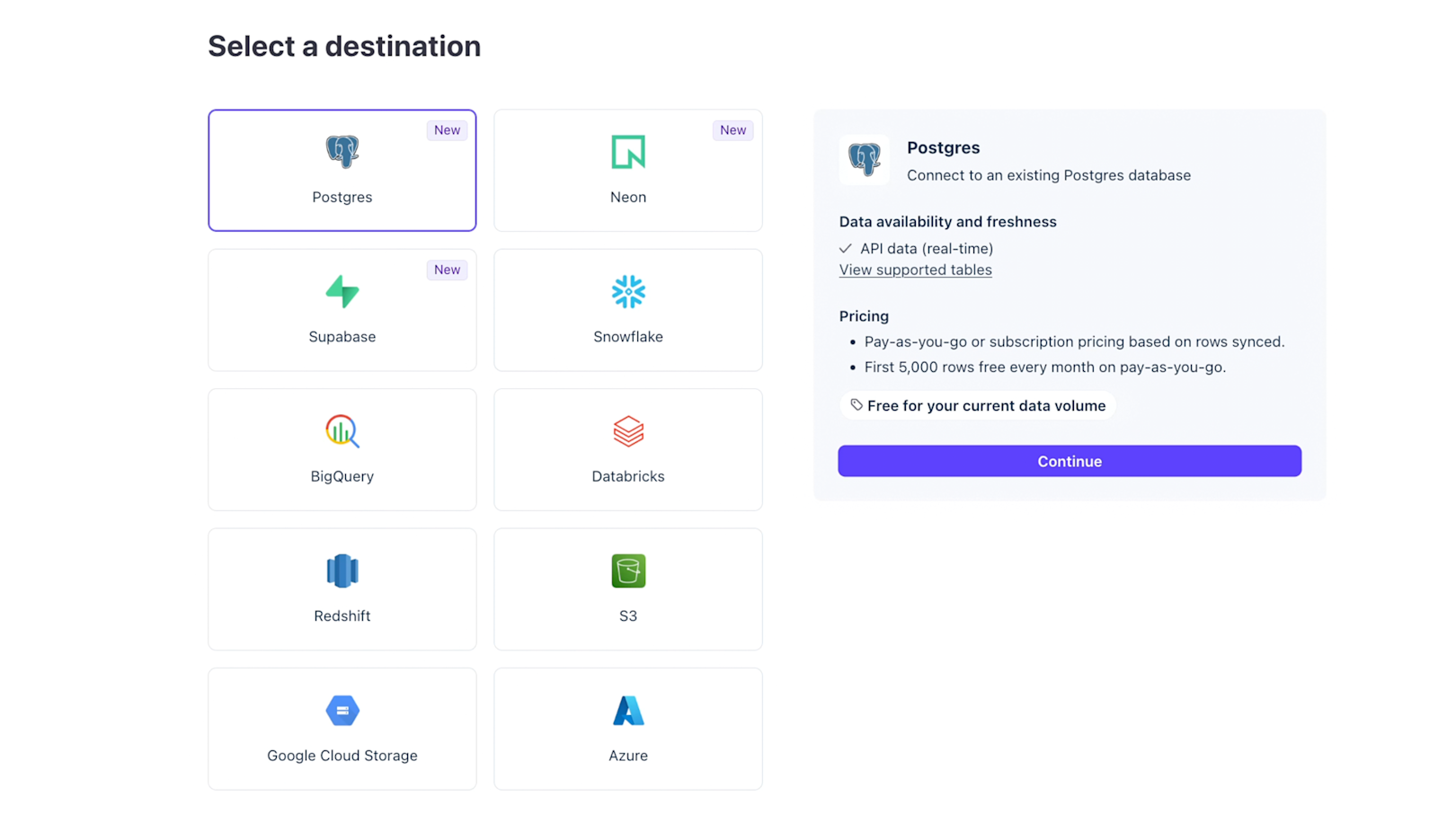
Setup and ongoing synchronization
Data Pipeline was already used to move Stripe data to data warehouses and cloud storage for analytics and reporting; Anthropic, Cursor and Lime cite uses such as month-end reconciliation, revenue and churn reporting, and automated financial reporting.
The Postgres destination supports databases hosted by Supabase, AWS, Neon, Databricks Lakebase and other providers. Setup requires no code: connect the database, choose the Stripe tables you need, and Data Pipeline backfills them and keeps them synchronized as the underlying data in Stripe changes.
After the initial backfill, updates reach Postgres in seconds. Data Pipeline also audits the synchronized records against the source in Stripe on a regular basis and resolves discrepancies, yielding a reliable copy of Stripe data and one less system for developers to build, monitor and debug.
Availability and next destinations
Postgres is the first Data Pipeline destination with real-time sync. Support for Snowflake, Google BigQuery, Amazon Redshift, Databricks and cloud storage platforms is coming soon.
Real-time sync to Postgres is in public preview and free to get started. Pipelines are created in the Stripe Dashboard; documentation is available for the Postgres real-time sync.