PGConf.DE 2025: Technical Depth and Community News from Berlin
PGConf.DE 2025 drew 340 attendees to a Berlin hotel familiar to those who attended PGConf.EU 2022. The conference floor, built around a spacious atrium, handled the crowd comfortably. Andreas "ads" Scherbaum opened the event true to form: "We are in Germany, let's start on time!"
VACUUM Through the Ages
A central theme emerged early: how PostgreSQL's core subsystems have evolved. My own talk, Modern VACUUM, grew out of internal discussions at CYBERTEC — VACUUM has changed so much that even experienced consultants needed a refresher. The presentation traced the full arc:
- Why VACUUM exists in the first place
- The base feature set from version 8.3
- Key milestones along the way:
- Visibility map (8.4, 9.6)
- Parallelism (9.5, 13)
- Index skipping (12, 14)
- IO improvements (12)
- Freezing tweaks (14, 16)
- Memory efficiency (17)
- PostgreSQL 18 preview: dynamic
autovacuum_max_workersand the newautovacuum_vacuum_max_thresholdsetting
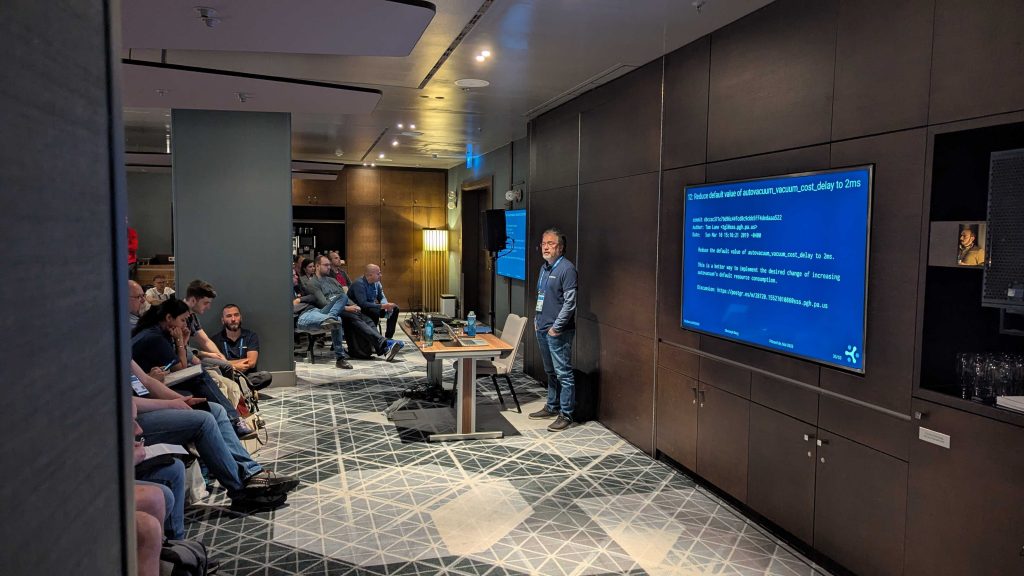
Peter Eisentraut followed with Modern SSL, using a similar "then, now, next" structure to trace PostgreSQL's encryption timeline. Laurenz Albe compared Oracle and PostgreSQL on ACID compliance, revealing that Oracle's isolation levels are messier than commonly assumed — full serializability is missing, and even repeatable read comes with significant gotchas that PostgreSQL handles more gracefully.
Windows Reality Checks and Transaction Systems
András Váczi delivered a practical session on running PostgreSQL on Windows, covering backup headaches and tool compatibility issues that rarely surface in Linux-centric discussions. Earlier, Bernd Patolla discussed Oracle-to-PostgreSQL migration, and Sergey Dudoladov walked through the life cycle of a query in PostgreSQL.
Deep Dives: SLRU and Memory Metrics
Day two offered a choice between Devrim Gündüz on extensions and Álvaro Herrera on SLRU internals. I chose the latter. Herrera's deep dive covered the SLRU (Simple Least Recently Used) overhaul in PostgreSQL 17 — better performance, tunable configurations, and talk of future patches. One slide prompted me to send a photo to colleague Ants Aasma, the patch author, sparking a mini remote collaboration right from the conference floor.
Josef Machytka then tackled PostgreSQL's confusing memory usage metrics. The core problem: shared buffers skew every memory-monitoring tool. The short-term answer is patching each tool individually; a long-term solution remains open.
Polina Bungina provided a clear walkthrough of Patroni's architecture and the design trade-offs behind the standard PostgreSQL high availability solution.
Lightning Talks and Community Announcements
The lightning talk session balanced humor with technical substance:
- Julian Markwort joked about fixing DB — Deutsche Bahn, not databases
- Bernd Helmle demonstrated major speedups from sort support added to
btree_gistin PostgreSQL 18 - Devrim ripped through 75 slides in 5 minutes, finishing ahead of schedule
Valerie Kaplan, Diego Calvo de Nó, and Jan Karremans introduced the Open Alliance for PostgreSQL Education, a new initiative co-founded by CYBERTEC. The goal is standardized certification and training for PostgreSQL DBAs, potentially with shared course materials across vendors. It's a welcome direction for an ecosystem that has long lacked formal credentialing.
Day-to-Day Community
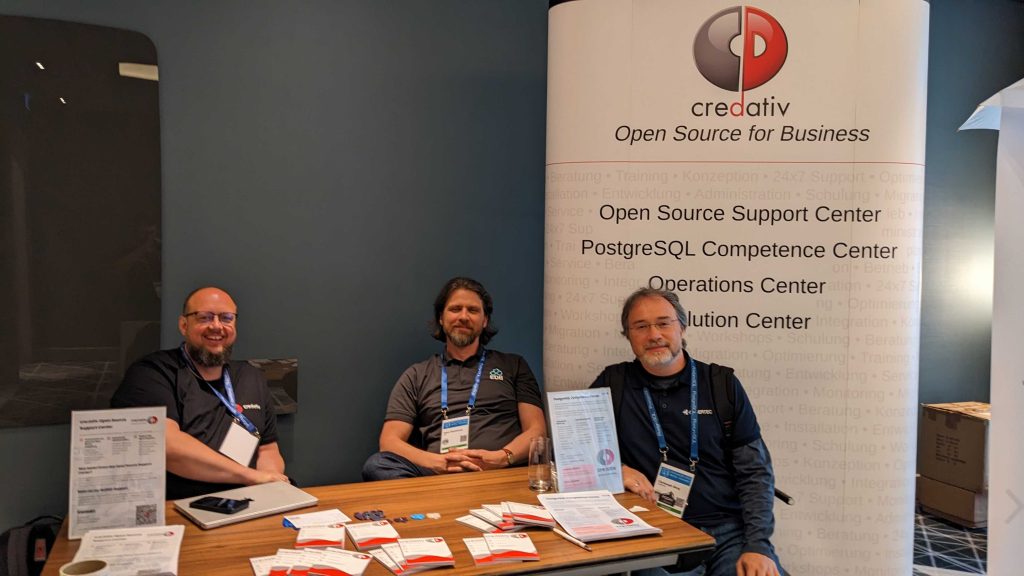
Between sessions, the hallways offered the usual conference value. I caught up with former colleagues from credativ, who are independent again after a period under VC ownership. Platinum sponsor keynotes closed day one — mostly solid, though one speaker's persistent mispronunciation of "Postgre" made an early exit tempting. The evening ended with hallway conversations and good red wine.
The journey home had its own drama: a highway lockdown stretched a six-hour drive into nine. The silver lining was a stop at Julian's place, where he offered cake and drinks. PGConf.DE 2025 delivered practical insights on VACUUM evolution, high availability architecture, and DBA certification — proof that PostgreSQL keeps maturing, and that these gatherings remain essential for staying current.