
Six Signals of a Healthy Open Source Community
Open source projects live or die by their communities. The software itself matters, of course, but the people who build, maintain, and contribute to it determine whether a project grows or stagnates. For maintainers and organizers, that means paying attention to community health just as much as code quality.
Research from the 2021 State of the Octoverse identifies six consistent themes across sustainable open source communities. These aren't aspirational ideas—they're concrete practices that correlate with productivity and contributor retention.
Start With a README
The README is usually the first thing a potential contributor sees. It should explain what the project does, link to relevant documentation, and describe how to get involved. Despite how basic this sounds, 14.1% of open source projects still lack one, according to the report. The difference matters: repositories with READMEs are 55% more productive than those without.
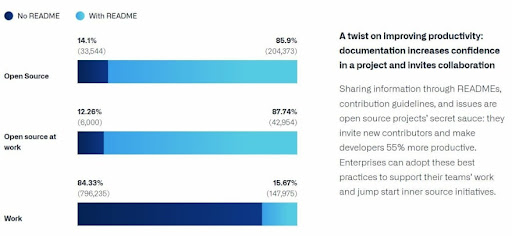
Organizations can go further with organizational profile READMEs, which give an overview of the types of projects a group works on and the community it's building. A README shouldn't replace a project website—having both helps with discoverability and gives non-developers a place to learn about the project. Websites are also useful for hosting documentation, videos, and product demos.
Tag Good First Issues
New contributors often struggle to figure out where they can help. The good-first-issue label, available by default in all repositories, signals that a task is approachable for someone without deep project knowledge. According to Project Contour maintainer Nick Young, these should be issues any maintainer could easily complete—ensuring that maintainers can support newcomers while giving contributors a manageable entry point.
Write Contribution Guidelines
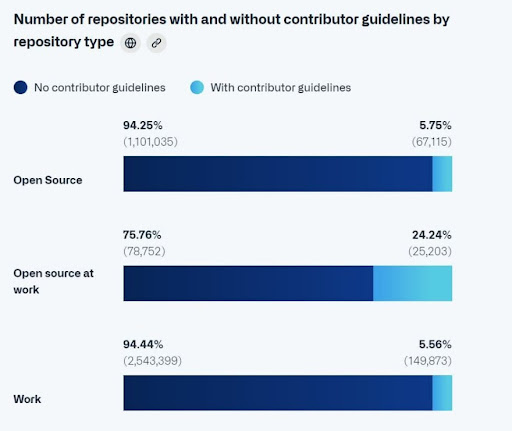
Contribution guidelines act as rules of engagement for anyone looking to participate. They cover how to get started, when to submit an issue, how to open a pull request, and similar practical details. These guidelines reduce ambiguity and friction for contributors. Over 65,000 repositories still lack them, yet those with contribution guidelines are 17% more productive. The guidelines also help "elevate the quality" of a project by making it more attractive to serious contributors.
Enforce a Code of Conduct
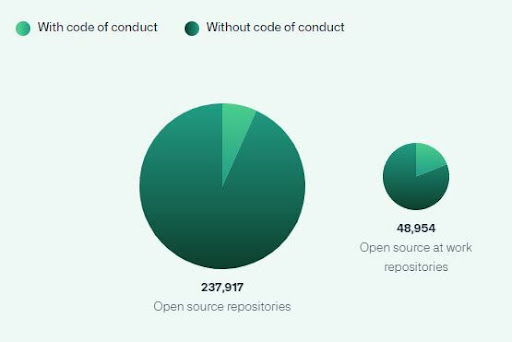
While contribution guidelines define how people work on the project, a Code of Conduct defines how people interact with each other. The majority of open source repositories still don't have one, according to the Octoverse report. A Code of Conduct only works if it's enforced, but having one establishes expectations for respectful, welcoming behavior. Maintainers can adapt existing codes to fit their community's needs rather than starting from scratch.
Keep Discussions Respectful
None of the structural pieces—READMEs, guidelines, codes of conduct—matter if conversations devolve into conflict. GitHub Discussions, like any online forum, can attract people who feel shielded by anonymity. Maintainers should actively moderate disrespectful behavior, encourage healthy debate, and respond to questions consistently.
Respectful language in GitHub Discussions signal a community is safe, welcoming, and trusted.
Communities that maintain civil discussions are more productive and attract better contributors. That means the maintainer's job extends beyond code review to curating the tone of the community itself.
Commit to Mentorship
Many developers join open source projects for the experience and networking opportunities. Maintainers must recognize that not everyone arrives with the same skill level. Senior contributors who mentor newcomers improve the quality of code and build a pipeline of future maintainers.
Fun and learning fuel newcomers' initial attraction to open source communities.
Paul Copplestone from Supabase describes the approach directly: mentors should teach not just the project, but the underlying language. Supabase maintainers are committed to teaching developers Postgres, for example. Projects that foster this kind of mentorship see benefits in productivity, satisfaction, and contributor retention.
The full findings, including top projects and community statistics, are available in the 2021 State of the Octoverse report.