Standouts from the Universe 2025 Open Source Zone
The Open Source Zone at Universe 2025 brought together a dozen projects spanning backend development, browser engineering, creative coding, and team collaboration. While the projects differed widely in scope, each showcased the kind of practical engineering that attracts contributors and users alike. Here is a closer look at what they demonstrated this year.
Appwrite: Streamlining backend development
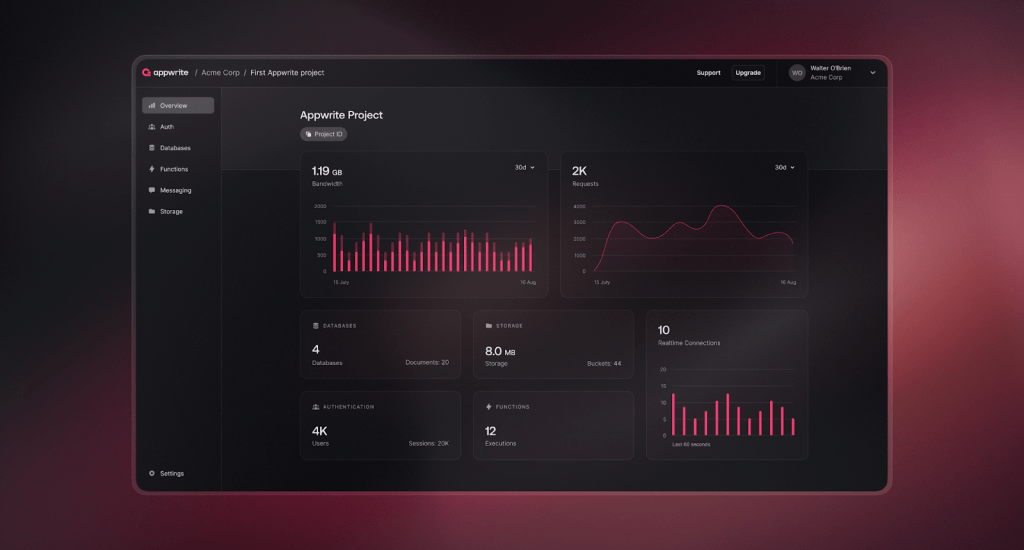
Appwrite provides an open source backend platform with APIs for databases, authentication, and storage, aiming to remove boilerplate from web and mobile development. Created in 2019 by Eldad Fux as a weekend project, it has grown into one of the faster-rising developer platforms on GitHub, with over 50,000 stars and hundreds of contributors worldwide.
GoReleaser: Automating Go releases
GoReleaser handles packaging, publishing, and distribution for Go projects. The project began in 2015 as a simple release.sh script before @caarlos0 rewrote it in Go with YAML configuration. That rewrite laid the foundation for a tool now used by paying customers and internal teams at GitHub, including for the GitHub CLI. The project has over 15,000 stars.

Homebrew: The macOS package manager standard
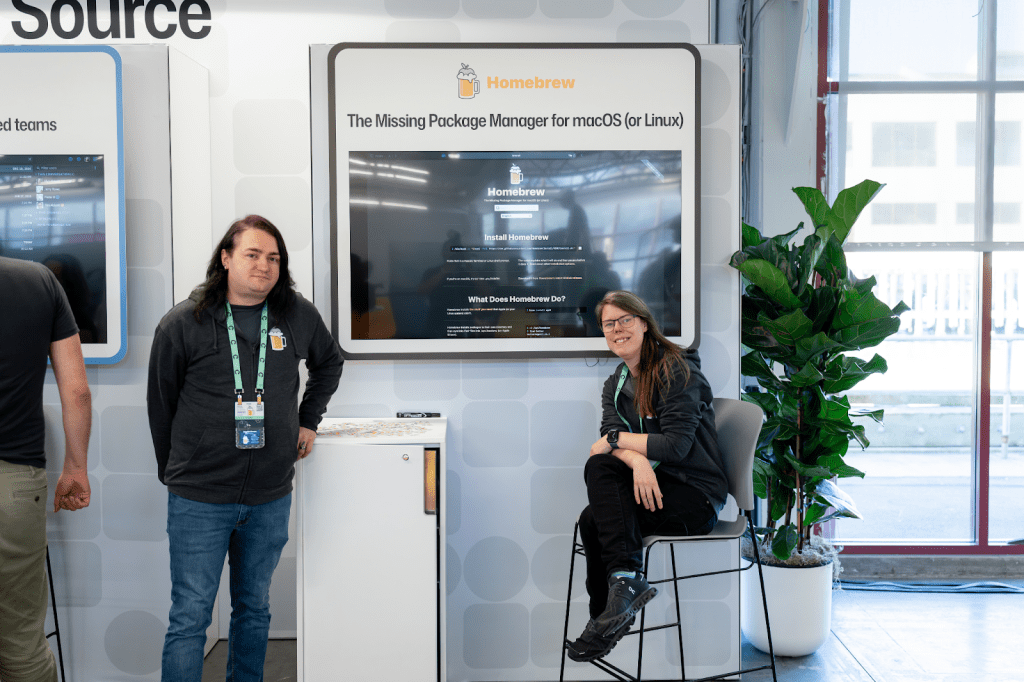
Homebrew remains the default package manager for macOS, providing command-line installation and management for millions of developers across data science and DevOps. Lead maintainer Issy Long called GitHub Universe "a great opportunity to re-energize by meeting users and fellow maintainers."
Thanks for having us! GitHub Universe was a great opportunity to re-energize by meeting users and fellow maintainers.
Ladybird: Building a browser from scratch
Ladybird is an independent browser project built from scratch with a focus on performance, security, and privacy. It started in 2018 as a small HTML viewer inside the SerenityOS operating system before maturing into a standalone browser with a growing contributor base of 1200 contributors.
Moondream: Lightweight visual AI
Moondream is an open source visual language model designed to run without GPUs or complex infrastructure. Its roughly 1 GB footprint allows it to operate on laptops and edge devices while supporting tasks like image captioning, object detection, gaze tracking, and document reading through natural language prompts. With over 6 million downloads, Moondream has found adoption in fields ranging from healthcare to robotics.
Oh My Zsh: Customizing the command line
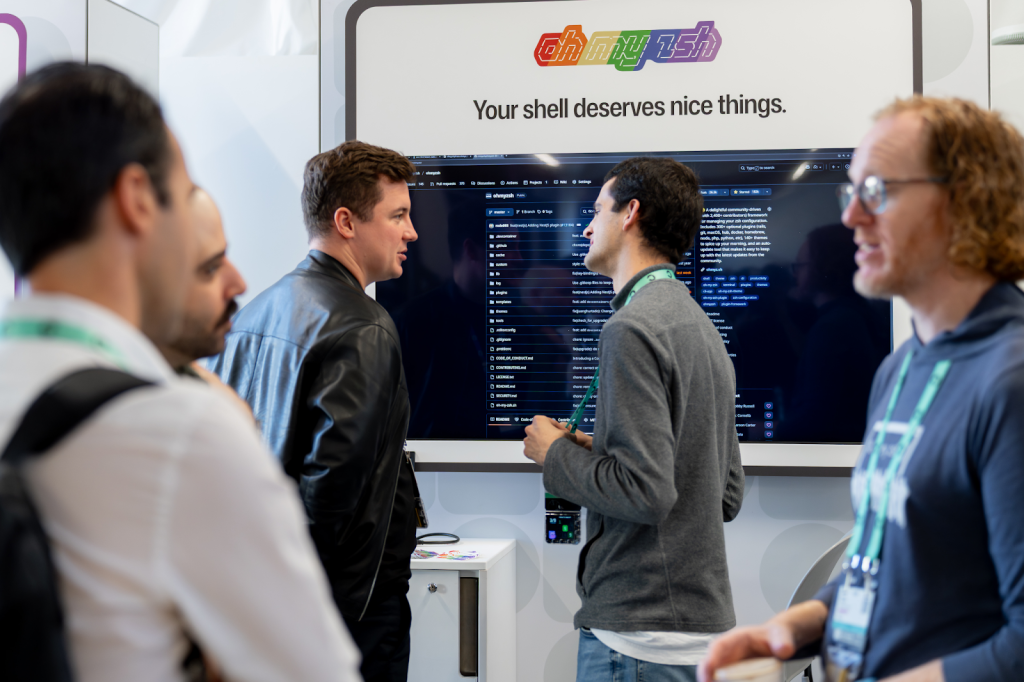
Oh My Zsh provides a community-driven framework for managing Zsh configurations, offering hundreds of plugins and themes. The project began in 2009 as a weekend project by Robby Russell and has since become one of the most widely used frameworks for shell customization.
OpenCV: The computer vision standard
OpenCV remains the most widely used open source computer vision library, supporting robotics, medical imaging, and AI research. It began in 1999 as an Intel research project and now has over 40,000 GitHub stars, with applications ranging from autonomous vehicles to Instagram filters.
OSPSB: A practical security baseline for projects
The Open Source Project Security Baseline (OSPSB) from the OpenSSF community offers maintainers a concrete checklist of minimum security requirements. Instead of vague guidance, it provides maturity levels and self-assessment tools that let projects evaluate their strengths and weaknesses. The framework is also supported by the GitHub Secure Open Source Fund to help maintainers maintain resilience.
As Xavier René-Corail, Senior Director at GitHub Security Research, put it:
The resilience and sustainability of open source is a shared responsibility between maintainers and users. Beyond telling consumers why they should trust your project, Baseline will also tell them where they can contribute to security improvements.
Creative coding with p5.js and Processing
p5.js is a JavaScript library designed to make coding approachable for artists, educators, and developers. Processing, its companion environment, teaches programming through visual art and interactive media, bringing creative coding into classrooms and communities.
PixiJS: High-performance web graphics
PixiJS is an HTML5 engine for 2D graphics built on WebGL and WebGPU. Its API supports custom shaders, advanced text rendering, multi-touch input, and accessibility features. With more than 46,000 GitHub stars and over 12 years of development, it has powered games like Happy Wheels and Subway Surfers, as well as art installations such as The Met's Open Access animations, including a physics-based rendering of Kandinsky's Violett and an interactive take on Monet's water lilies.
SparkJS: Gaussian splatting for the web
Spark is a 3D Gaussian Splatting renderer for THREE.js. It brings real-time splat rendering to browsers with correct sorting, animation support, and compatibility with formats like .PLY, .SPZ, and .KSPLAT. Gaussian Splatting represents objects as millions of tiny, semi-transparent ellipsoids rather than polygon meshes, yielding photorealistic detail and fast performance across computer vision and neural rendering.
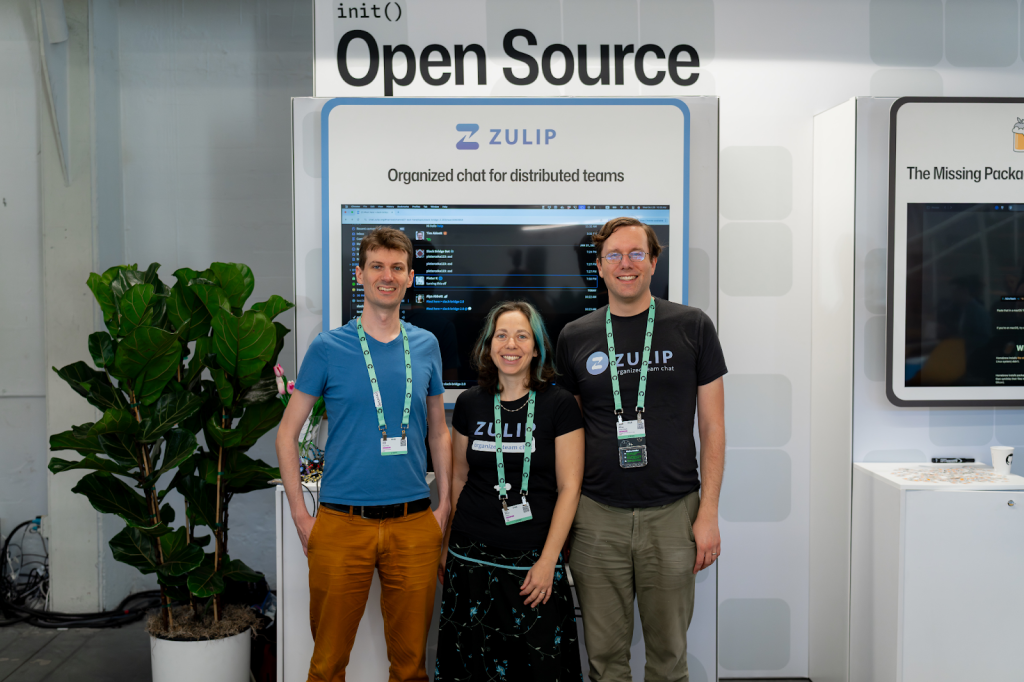
Zulip: Organized team communication
Zulip differentiates itself from other chat platforms through topic-based threading that keeps conversations organized and searchable over time. Founded as a startup in 2012, it was acquired by Dropbox in 2014 and open sourced in 2015. Today, the project counts over 1500 contributors and serves communities, classrooms, nonprofits, and companies.