
From Modding Games to Automating Game Builds
Keirron Stach, known on GitHub as Hookkshot, didn't start his development journey with a degree or a formal bootcamp. Like many in the GitHub Actions community, he was drawn in early by the intersection of gaming and programming. The spark came when he was around ten years old, experimenting with The Sims.
I was playing the Sims and wanted to make a small website for my character, I don’t remember why, but ever since, I have been hooked on programming and making software.
Today, Stach balances full-time work with building games as a hobby, aiming to eventually release titles under his own company brand. It's that side project—and the logistical friction around it—that led him to build his first GitHub Action.
Speed Up Testing with Discord Dispatch Deploy
Game developers often rely on pre-release players to provide feedback, and Discord is a popular hub for that kind of alpha testing. Stach kept running into the same bottleneck: getting a fresh build into the hands of testers took too long. The gap? A reliable way to ship builds directly to Discord servers.
We could build our application but couldn’t deploy it to the Discord servers. I asked around and no one has done one, so I thought, "hey, why don’t I be the one". This way I could contribute to the community as well.
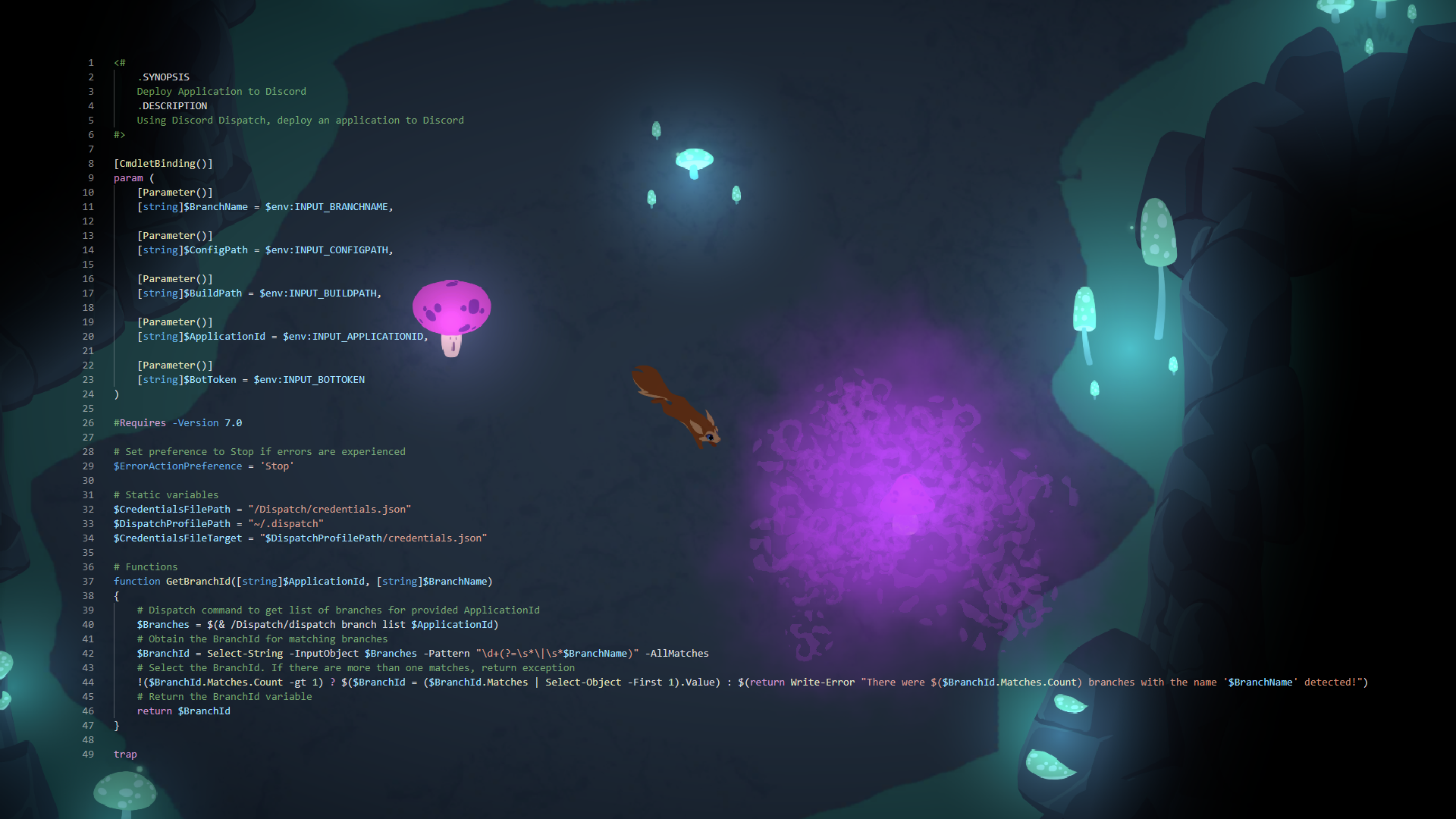
The result is discord-dispatch-deploy, a GitHub Action that deploys a single application to Discord using Dispatch. For Stach, the value is immediate: shorter feedback loops mean testers get playable versions sooner, and the team can iterate faster.
Citing his own game development work as the motivation, Stach gave this example of the pipeline in action:
While the Action is still in alpha, the roadmap is already formed. Stach plans to expand it into a full release with more configuration options for builds and deployment conditions.
We want to extend it to a full release with more features for configuring the build and options when the deploy happens. We may make a version 2 if we feel it could be useful as well.
The Docker Learning Curve
Building his first Action didn't come without friction. Stach points to working with Docker and understanding how it integrates with Actions as the steepest part of the learning curve. The core difficulty wasn't writing the Action itself, but making the image set up for fast and consistent executions.
There was a few speed bumps and tumbles but it got there in the end. The hardest part was having quick and reliable installed dependencies to the docker image for Dispatch to run.
Despite those early obstacles, the experience paid off. For Stach, the biggest takeaway wasn't just a working Action—it was a newfound appreciation for isolated build environments.
I think the biggest thing I learned was the power of things like docker images to deploy and run code in a separate environment. It has been a great process.
Why Use GitHub Actions
Aside from automating deployment, Stach values the shift in workflow that Actions provides. He describes the tooling as both fun and easy to pick up, with one notable outcome: the automation has given more development time back for actual game creation. For anyone interested in trying it out, GitHub's Learning Lab course is a practical starting point, and the Discord Dispatch Deploy action—along with many others—is available on the GitHub Marketplace.