Why Interview Questions Fail Before the Interview Starts
A user interview script is where most preparation effort is invested — and where it most often goes wrong. You can build hypotheses, recruit carefully, schedule perfectly, and set the stage, but if the questions are weak, the entire session produces unreliable data. This is especially true for teams that delegate interviewing to non-designers.
The good news: asking better questions is a trainable skill. The bad news: several common mistakes are intuitive, which makes them easy to repeat. Here are six frequent pitfalls and how to fix them, followed by six techniques for turning decent questions into sharper instruments.
Six Mistakes to Eliminate From Your Script
Asking About Hypotheticals
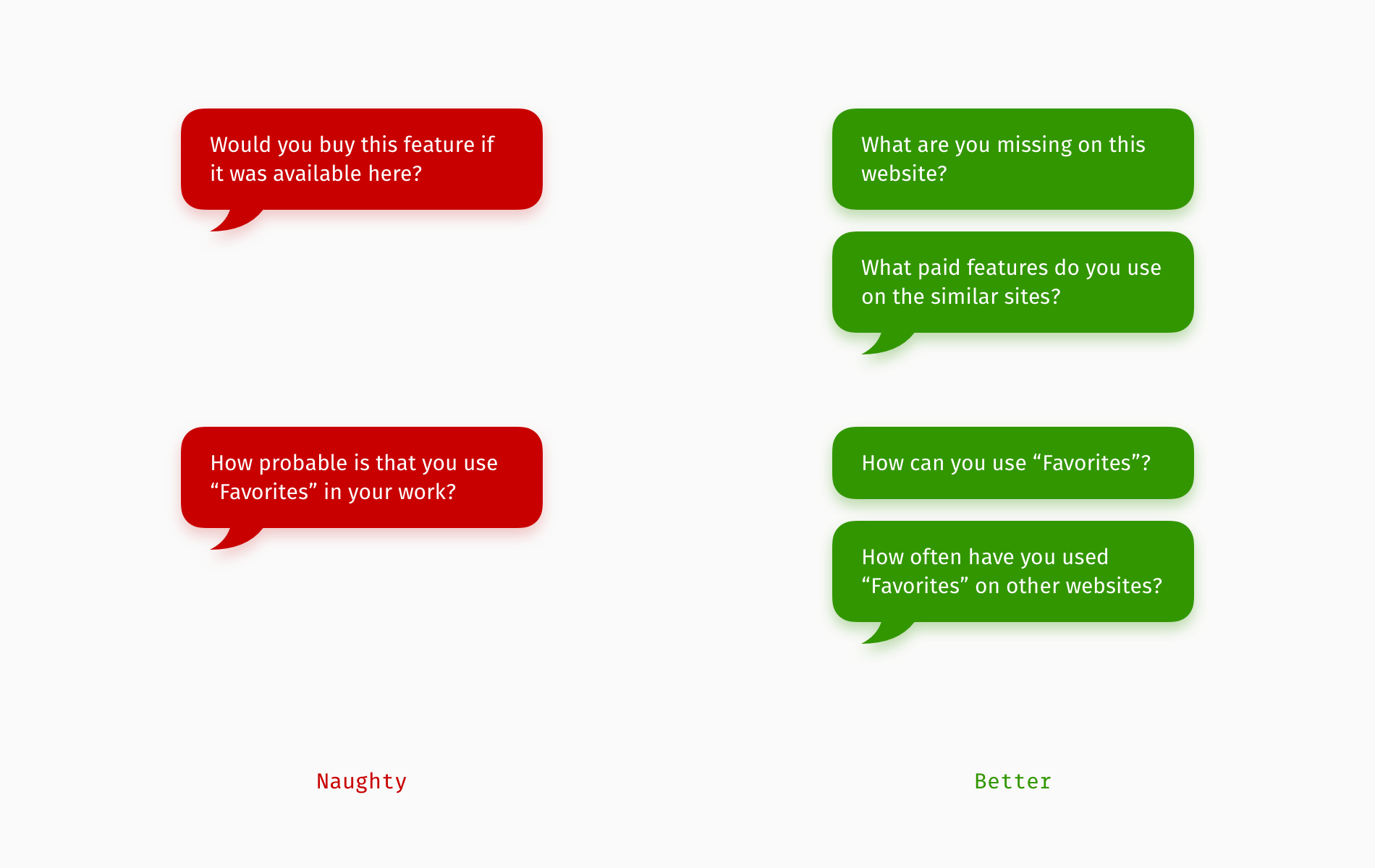
Direct questions about whether users will use a new feature feel productive but rarely yield accurate answers. People will say they like an idea while showing no willingness to pay for it or change their habits to use it. Past behavior is a far better predictor than stated preference. If a user never saves articles for later on any news site, they are unlikely to start on yours. As Jakob Nielsen put it: “Users spend most of their time on other sites.”
Relying on Yes-or-No Questions
Closed questions often stem from a desire for approval. But they do little to reveal motives or thinking patterns — reserved interviewees will simply answer and stop. That said, closed questions have a place: they can rein in a talkative participant or confirm information gathered through open questions. When the goal is rich insight, open questions are the better default.
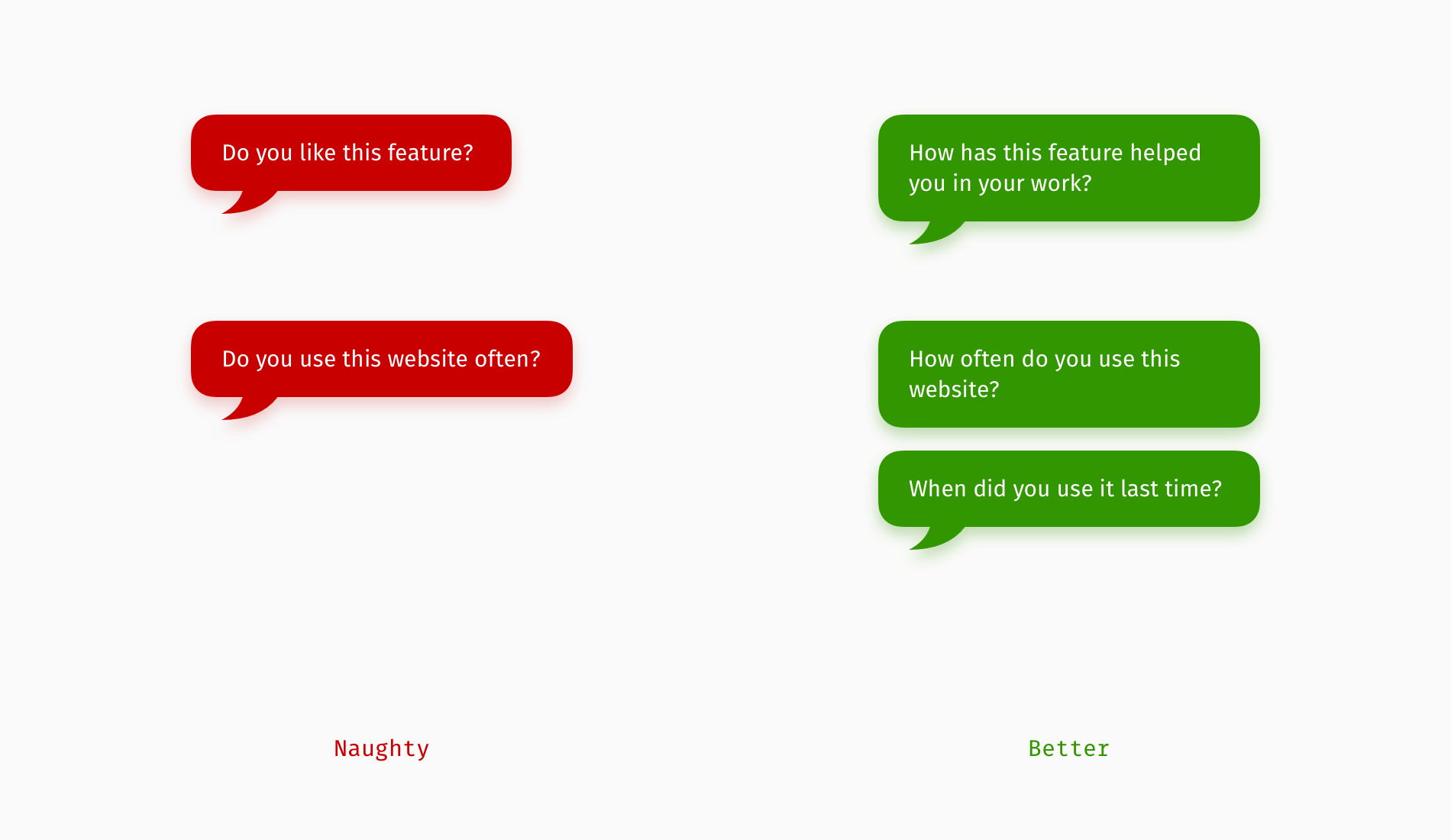
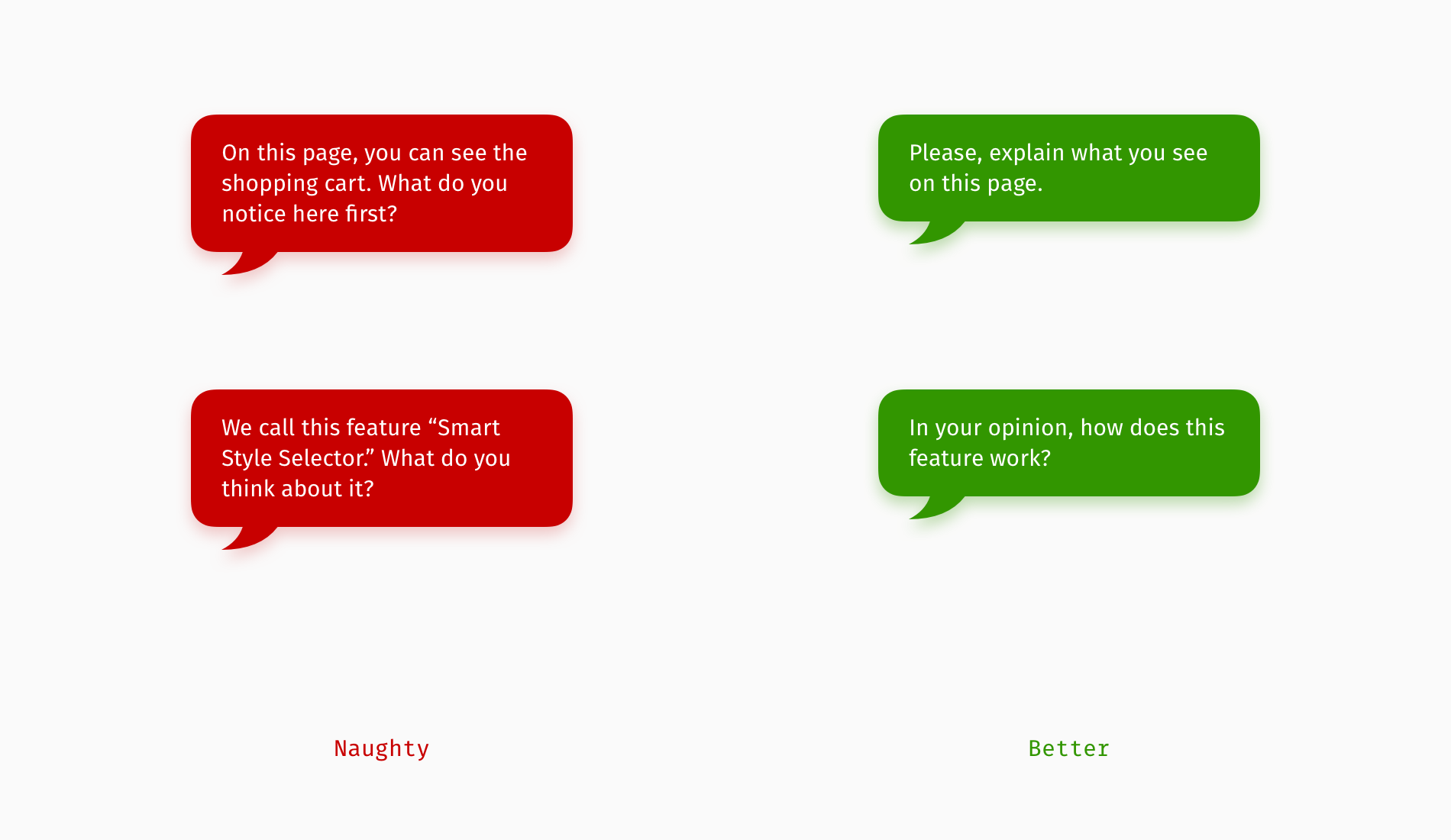
Leading the Witness
Offering options or hinting at expected answers is polite in casual conversation but harmful in interviews. Users under pressure tend to agree with whatever is roughly close to the truth rather than compose their own answer. Build questions one step at a time, letting each question emerge from the previous answer.
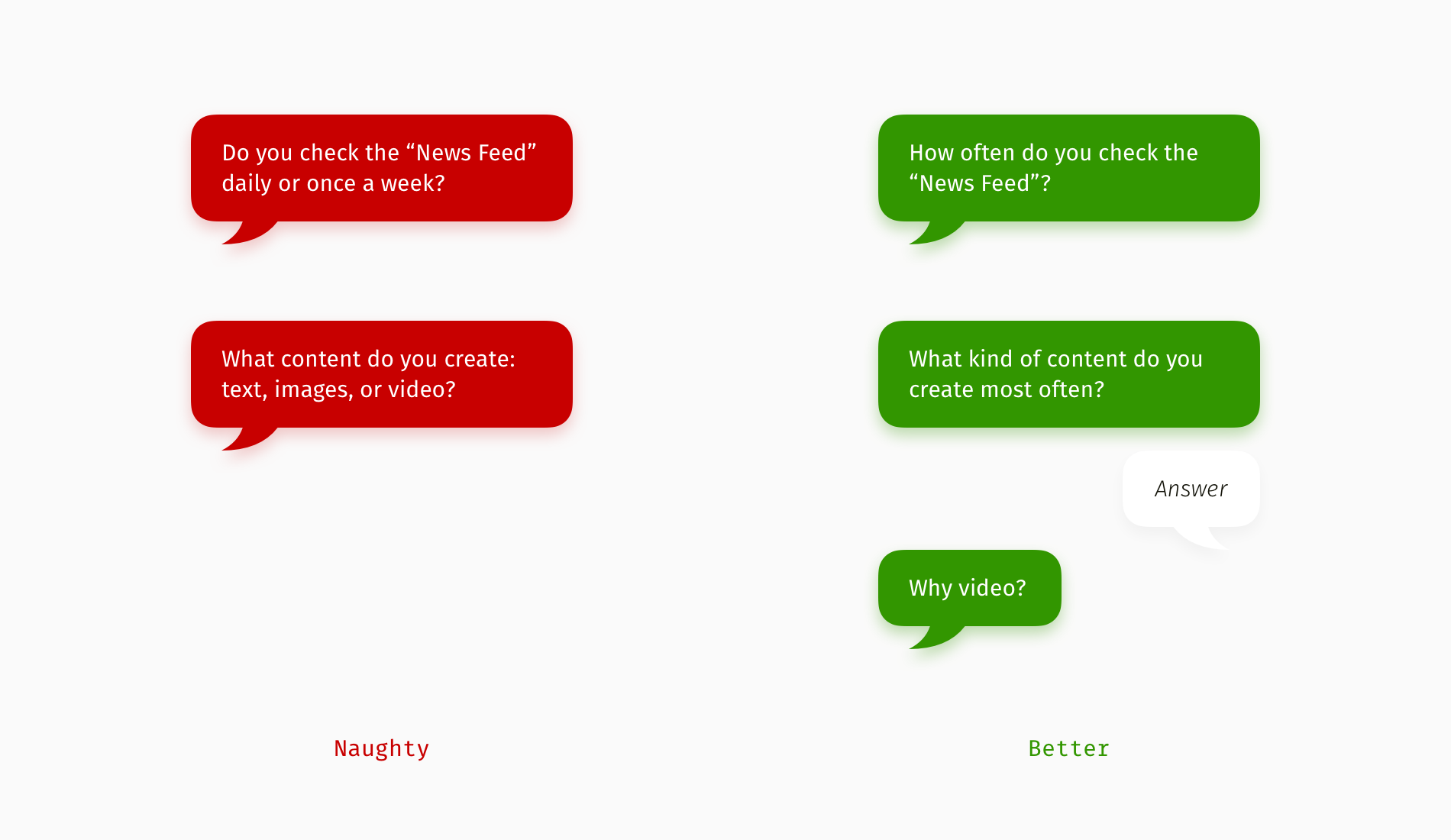
Making It About You
When idea authors use possessive language — “our” feature, “we” built — users feel compelled to admire rather than critique. Replace possessive pronouns with neutral references like “this site” or “that application.” As a pro tip: consider hiding or understating your job title and relationship to the product.
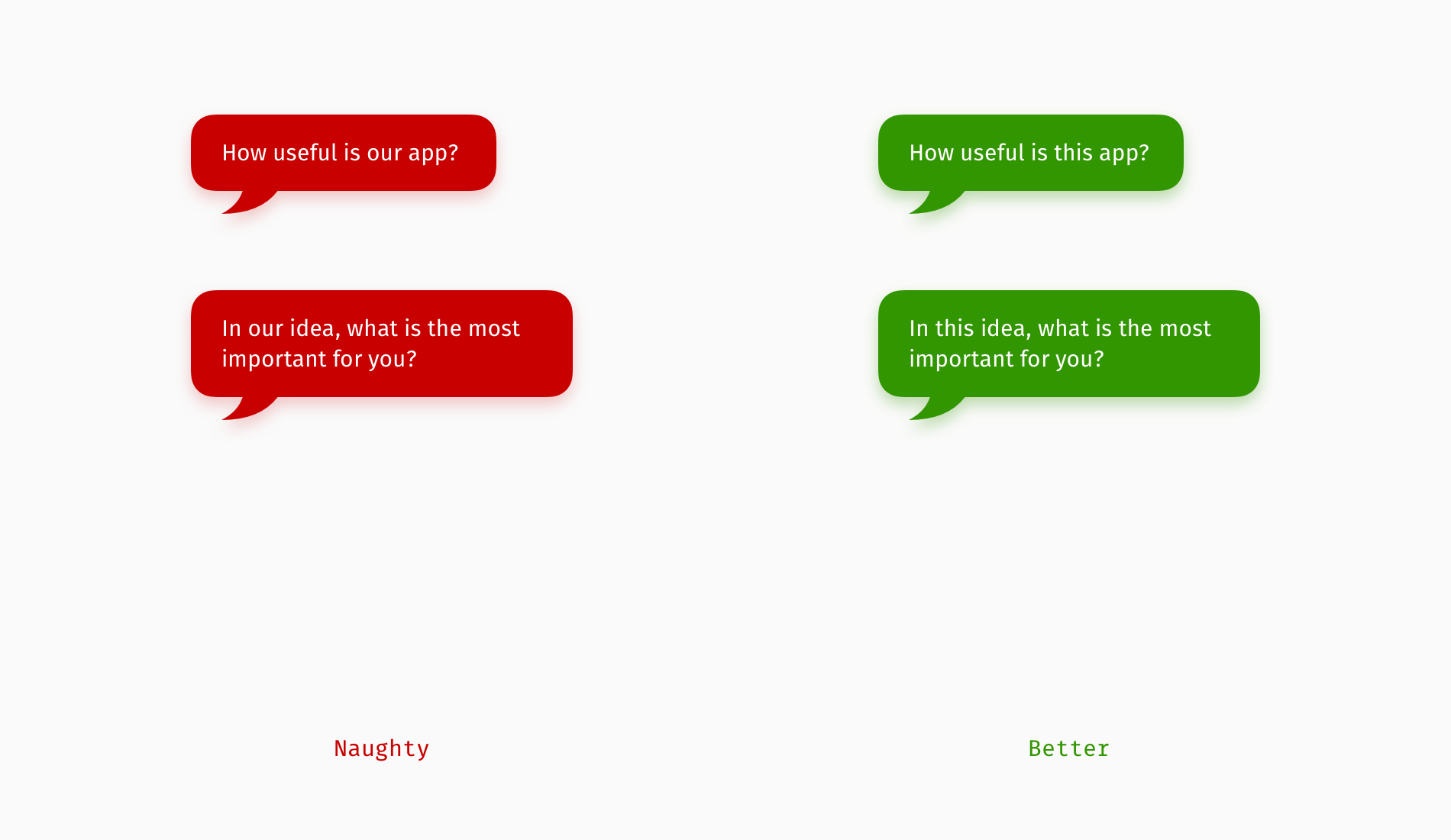
Stacking Multiple Questions
Stacked questions arise from the fear of being interrupted or forgetting your next point. They force the interviewee to memorize a list and pick whichever question they find easiest. Ask one question at a time. You may discover that a comprehensive answer removes the need for planned follow-ups entirely.
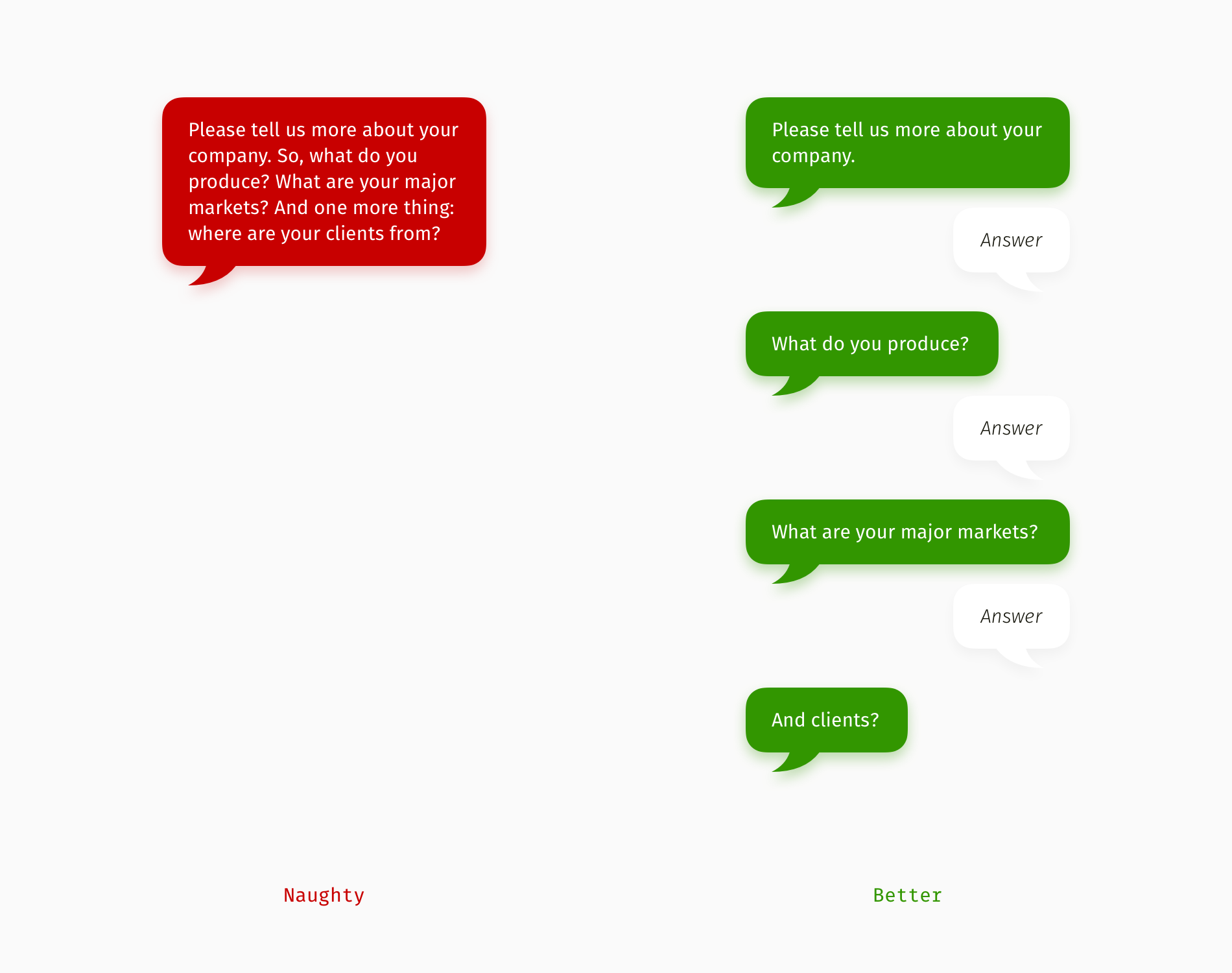
Explaining Instead of Listening
Teams develop internal language — “dashboard,” “smart update,” “inclusion,” “trigger” — and assume users share it. If you explain a concept before the user has a chance to define it, you lose the opportunity to learn how the product should speak to them. Let users first reveal their own understanding; then create self-explanatory solutions instead of pushing explanations during the interview.
Six Ways to Sharpen Good Questions
Cut Through Clutter With Storytelling
Open questions are useful, but too often they produce generic summaries. Ask for a recent or most prominent experience instead. Storytelling grounds answers in real situations, reduces socially desirable responses, and lets interviewees prioritize what matters to them — usually by talking longest about what matters most.
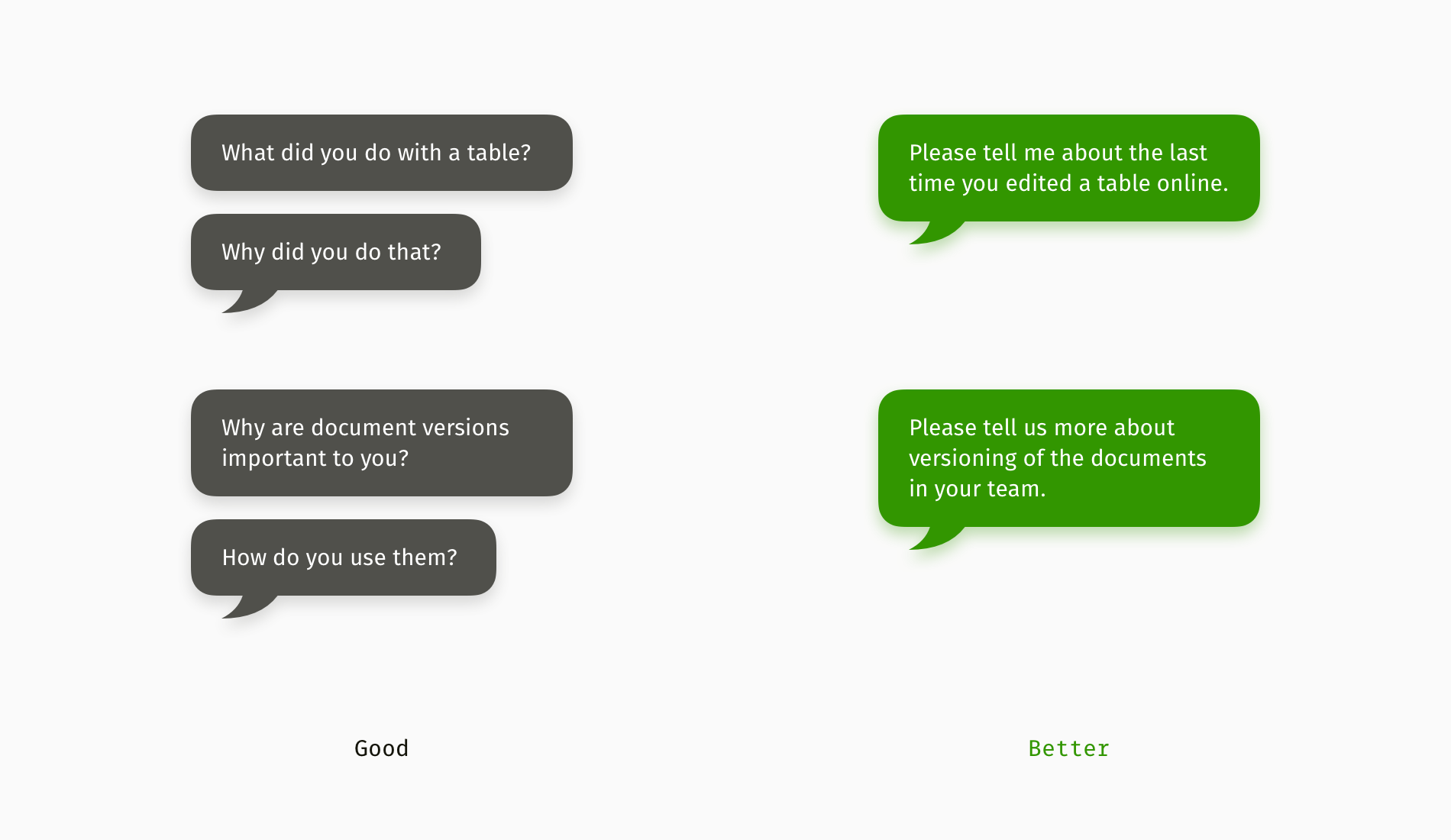
Follow Up With Specific Examples
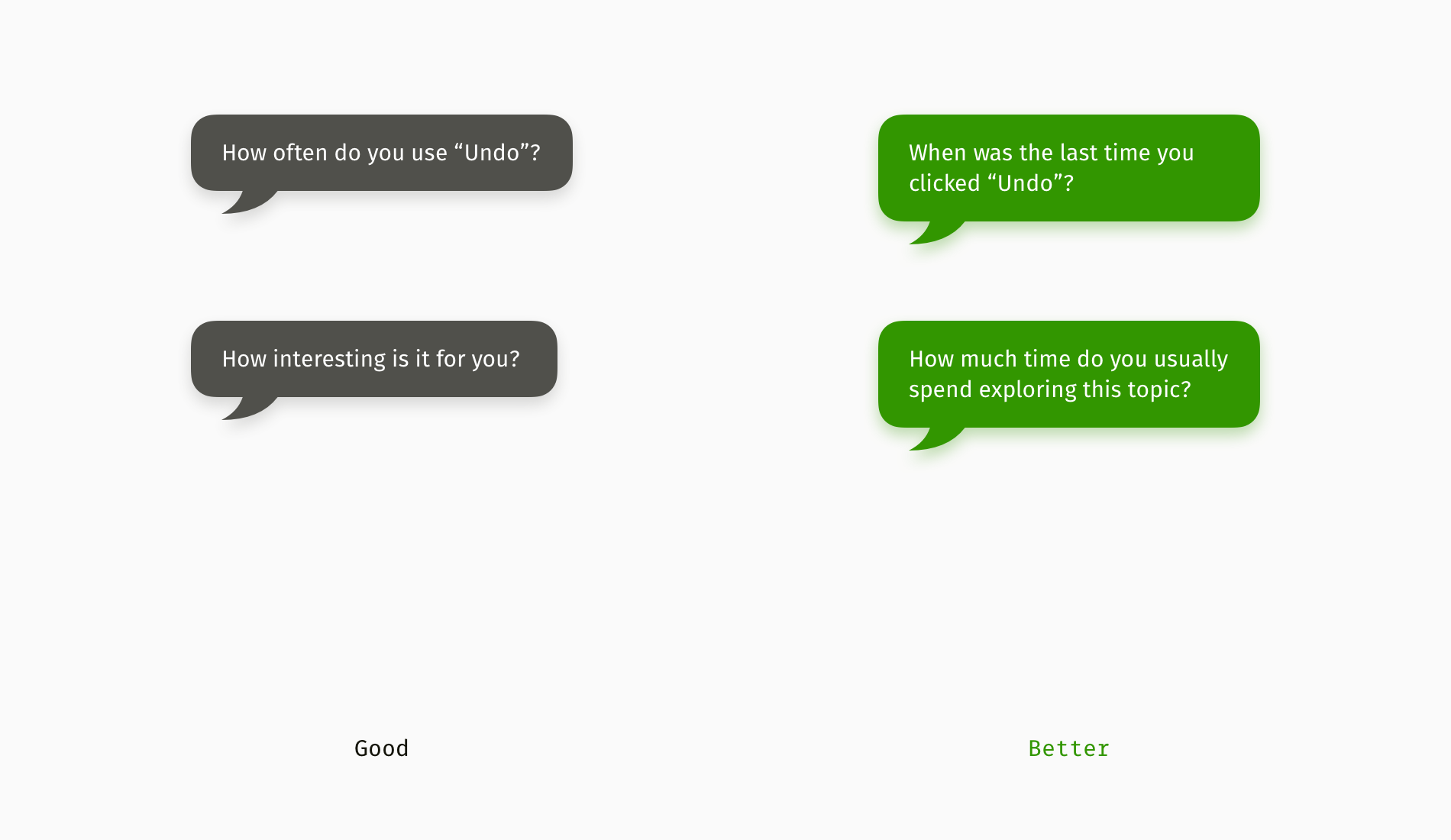
A general answer about attitude or regularity is only the first step. Immediately ask for a recent, concrete example. This exposes exaggerations or gaps and gives you the detail needed to act on the insight.
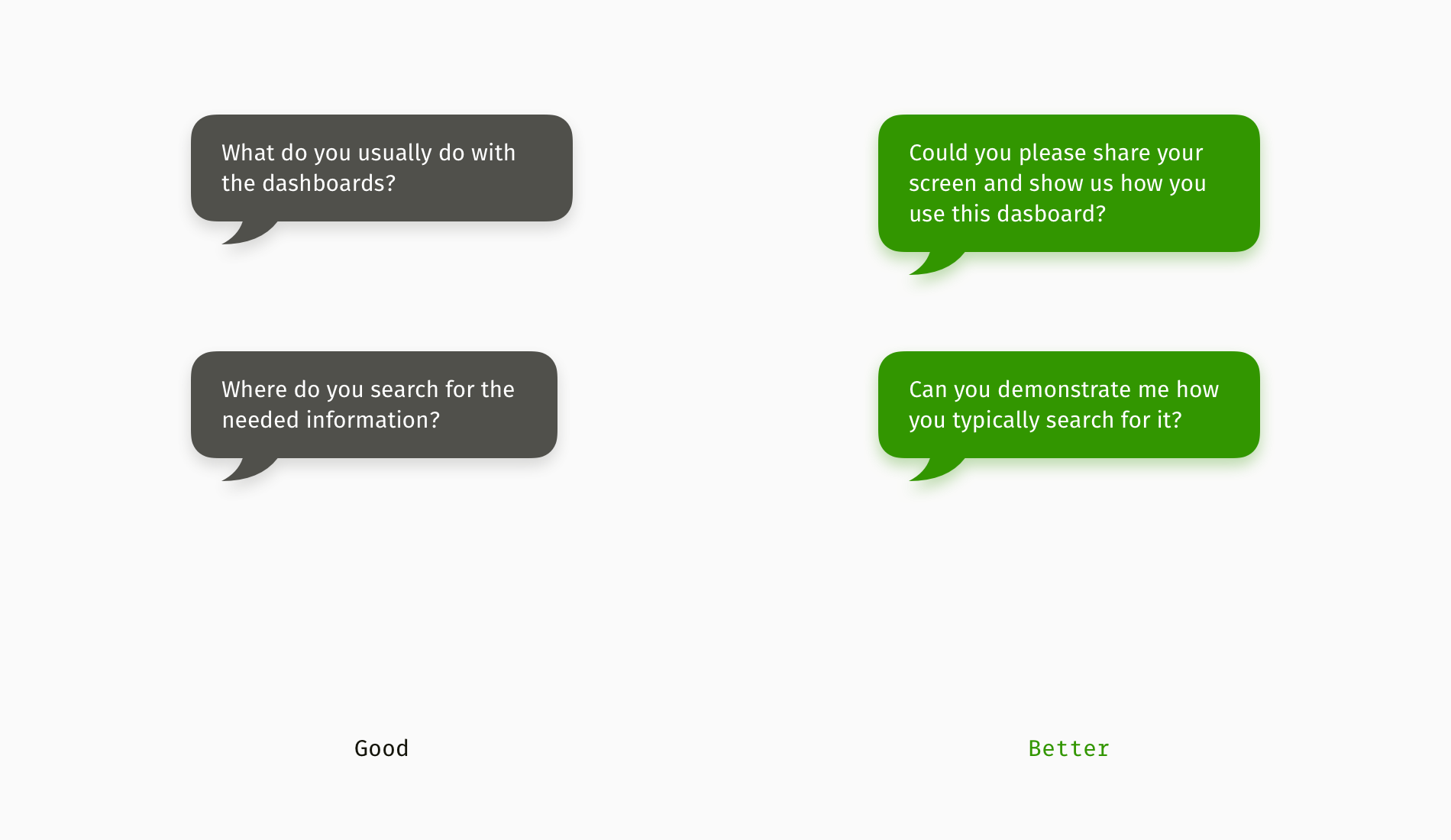
Observe Instead of Asking
When you can interview people in their natural environment, ask them to demonstrate real tasks rather than describe them. You will see their actual shortcuts, comfort level, software environment, and mental model — information that self-reporting rarely captures accurately.
Unbox Vague Language
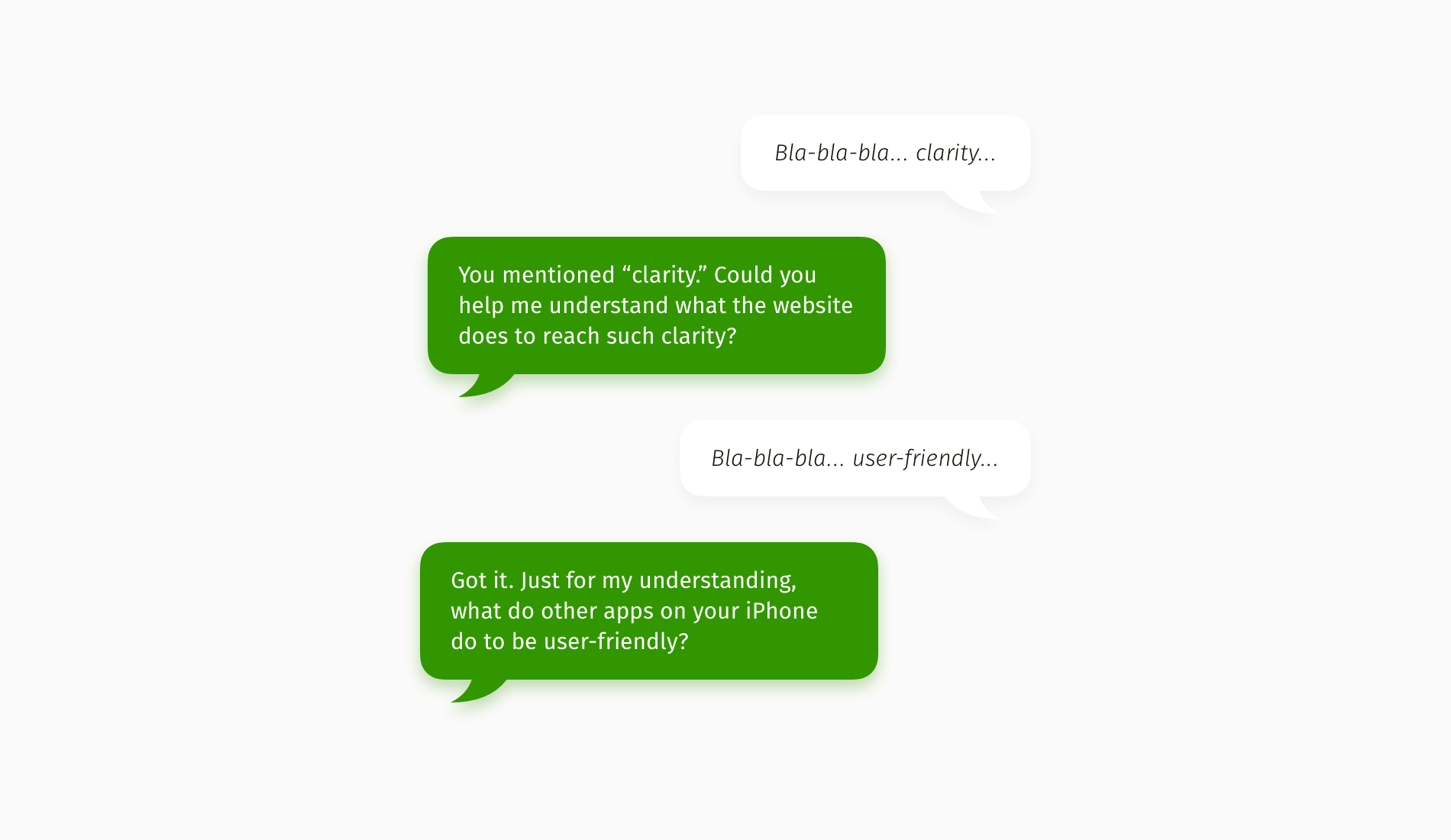
Words like “comfort,” “accessibility,” “support,” or “user-friendly” mean different things to different people. These abstract nouns cannot be documented as-is. “Nothing is clear enough” is the right starting assumption. Turn abstract concepts into verbs: instead of asking whether something is convenient, ask what the user does when it isn’t.
Quantify Generalizations
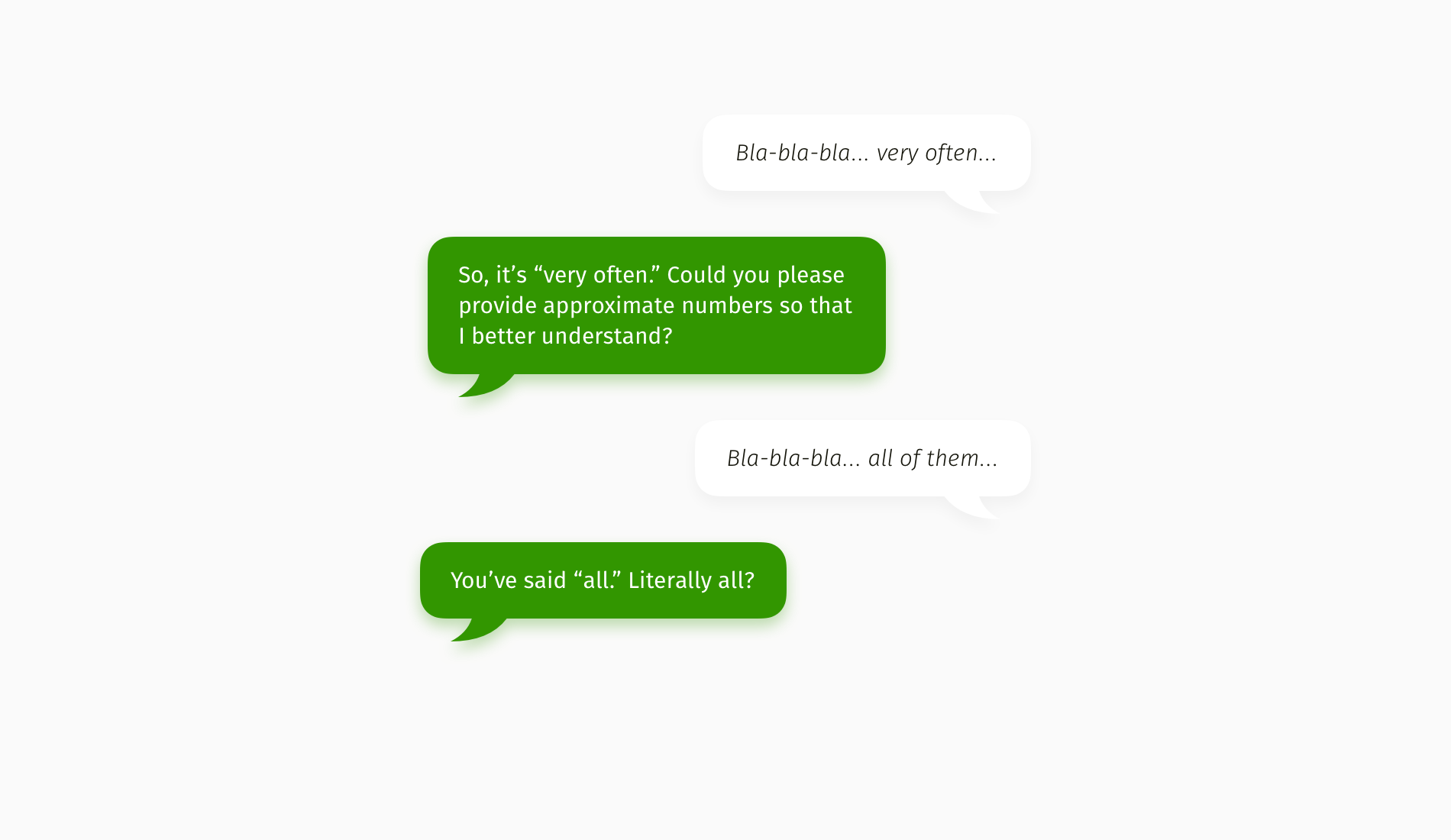
Generalizations — “all,” “never,” “always,” “often” — are as fuzzy as abstract nouns. Quantify them. Ask for approximate numbers or proportions. A user’s “very frequent” might mean “more than half” in one context while “a lot” could mean 50 emails per day or 5 cybersecurity alerts per year. Proportions give you comparable scale.
Use WH-Questions Deliberately
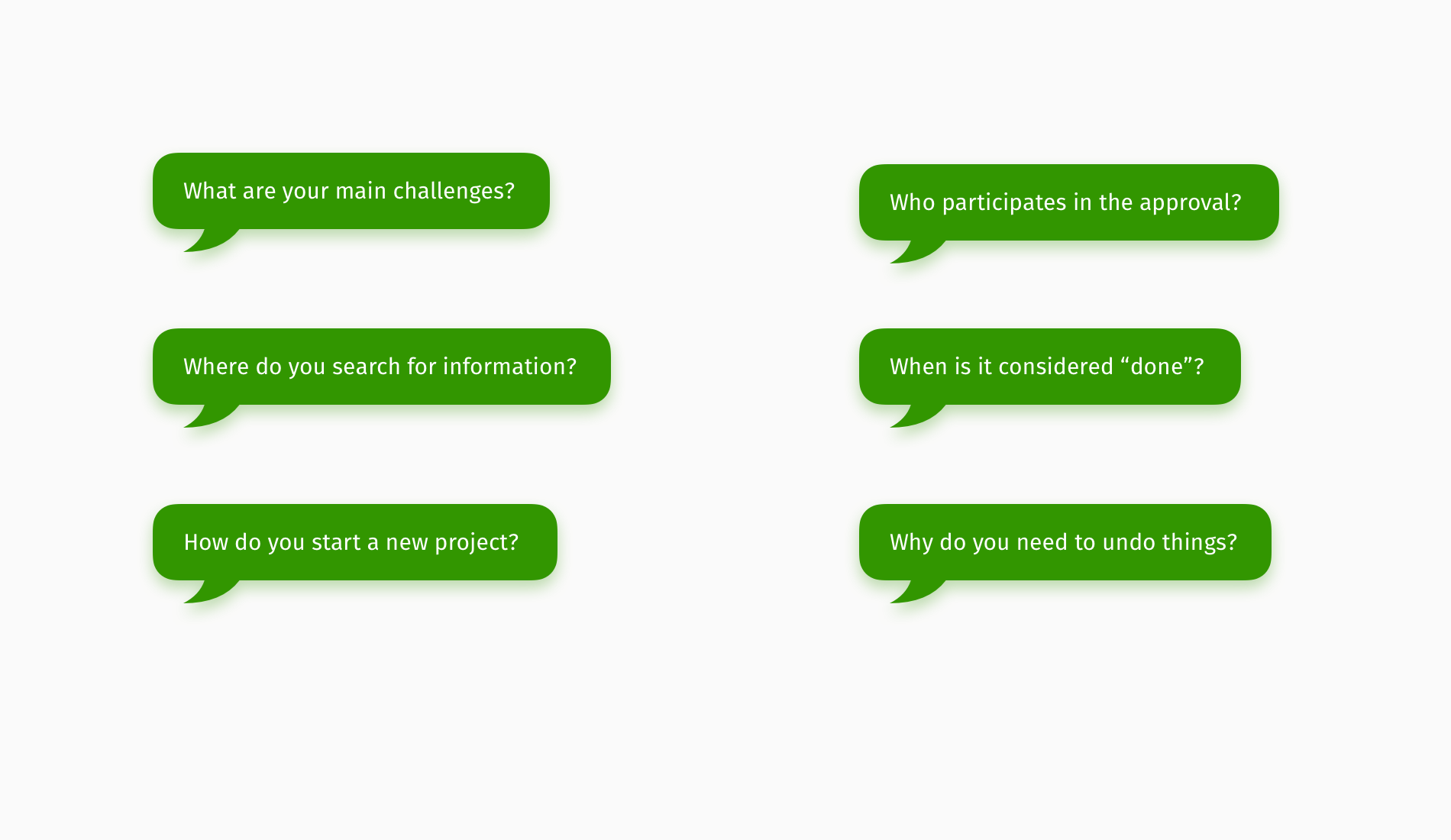
WH-questions — what, where, when, who, how — are the primary interviewing instrument. The most powerful is “why,” though asking it directly can feel abrasive. Camouflage it: “What are you trying to achieve when you…?” or “Could you explain the reason or value of…?” This allows you to ask several rounds of “why” without straining the conversation.
Core Principles When in Doubt
Experience holds more truth than a hypothesis.
Ask about past cases and comparable experiences from other areas of a user’s life, not about imagined futures.
Let Them Tell Their Story; Your Ideas Can Wait
The interview exists to explore truth, not to sell. If you pressure a user into agreeing with you, you learn only that the rest of your audience may not agree either. When testing specific hypotheses, prototyping and testing are stronger methods than interviewing.
If You Cannot Imagine It, You Don’t Get It
In a one- or two-hour session, it is easy to nod along and assume you understand. Challenge every statement internally: Is this true? Why are they telling me this? What precisely do they mean?
Further Resources
- The Mom Test: How to Talk to Customers and Learn If Your Business is a Good Idea when Everyone is Lying to You, by Rob Fitzpatrick
- User Interviews: How, When, and Why to Conduct Them, by Kara Pernice (Nielsen Norman Group)
- The 3 Types of User Interviews, by Maria Rosala (Nielsen Norman Group)
- The Art of the User Interview, by Nick Babich (Springboard)
- How to Conduct User Interviews (Interaction Design Foundation)
- First Rule of Usability? Don’t Listen to Users, by Jakob Nielsen (Nielsen Norman Group)
- Interviewing Users, by Jakob Nielsen (Nielsen Norman Group)