When Test-First Development Actually Pays Off
Test-driven development (TDD) is built on a simple three-step cycle that goes by the familiar name "red, green, refactor."
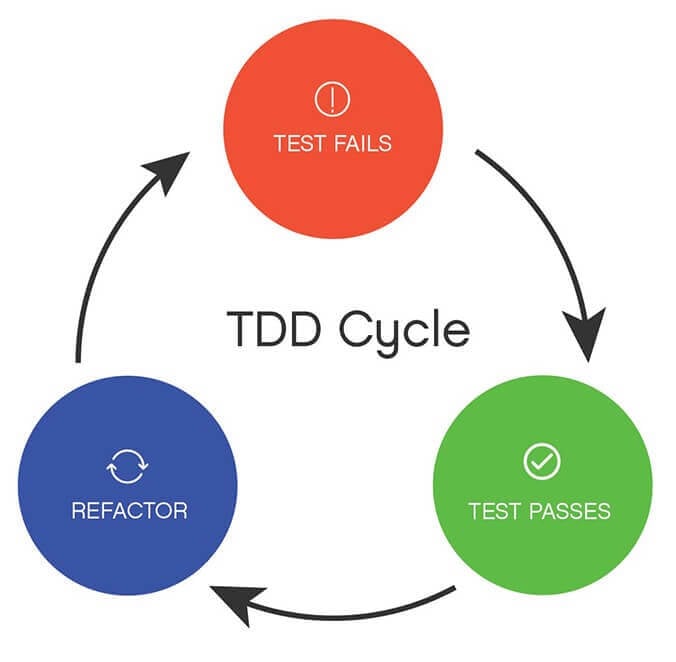
The mechanics are straightforward:
- 🚨 Red: Write a failing test for a function or module before the implementation exists.
- ✅ Green: Write the minimum amount of code needed to make that test pass.
- 🌀 Refactor: Clean up the code, knowing that the test you just wrote will catch any regressions introduced along the way.
- 🔁 Repeat: Continue the cycle until the feature is complete.
The pragmatic question, of course, is when this workflow is actually worth following. TDD is a tool, not a ritual. It shines in specific scenarios where the requirements are clear enough that writing tests first doesn't feel like guesswork. Here are the situations where the red-green-refactor cycle consistently earns its keep.
Bug Fixes
The highest-value use of TDD is arguably in bug fixing. When something is broken, the first step should be reproducing that bug in a test. That exercise alone forces you to confirm your understanding of the root cause before you touch any production code. When the test finally goes green, you have concrete proof that the fix is real and targeted, rather than a change that merely happens to make the error message go away.
This is an approach worth following nearly every time, especially in codebases that already have decent test coverage. Open source libraries are a particularly good fit, since regressions there have a wide blast radius.
Pure Utility Functions
Not every utility function needs its own unit tests — many are better covered indirectly through integration tests of the features that use them. But when a pure function is complex enough to warrant isolated testing, TDD is a natural fit. Pure functions take well-defined inputs and produce well-defined outputs, which means the test cases are essentially documentation of the requirements.
A real-world example: formatting a currency amount field as a user types. The input space is finite and the expected outputs are easy to enumerate, but the logic gets surprisingly tricky once you account for currencies that don't support decimal amounts. That kind of function is a perfect candidate for writing a table of input/output pairs as failing tests first, then implementing until they all pass.
User Interfaces With Clear Requirements
TDD for UI code only became practical with the arrival of Testing Library. Before that, the dominant testing tools pushed developers toward implementation details. To write a test first, you had to know ahead of time that you'd be creating a private method named makeDonation that takes amount and currency as arguments — before you'd even designed the component. That's not test-driven development; that's just going through motions while locking in implementation decisions prematurely.
Testing Library changed the equation by letting tests describe what a user actually experiences. When tests are written from that outside-in perspective, TDD becomes viable for UI work: you can specify the behavior of a login form — what the user sees, what they can type, what happens when they submit — without deciding on the component structure first.
This works when the UI has a well-defined design and user experience. If you know what the interface should do, you can write the test first and let it guide your implementation. If the UI is still in flux and you're exploring interaction patterns, forcing TDD will only slow you down.
When to Skip the Ritual
Exploratory coding, prototyping, and anything where the final shape of the solution is still uncertain are poor fits for TDD. The same logic applies to adding type annotations or creating abstractions. These are all investments in code that may not survive contact with real users. Writing elaborate tests for code you might throw away is wasted effort, and the sunk cost of those investments can subtly push you toward a suboptimal design just to justify the work already done.